#Product Trends
AI in Dentistry: Applications, Benefits, and Challenges
Bringing non-human electronic eyes to oral care
The digital transformation of healthcare extends to all branches of patient care and treatment. Oral health, or dentistry, is one of these branches, and medical AI computers look to provide benefits ranging from customized dental plans to robotics in healthcare.
What Is AI in Dentistry?
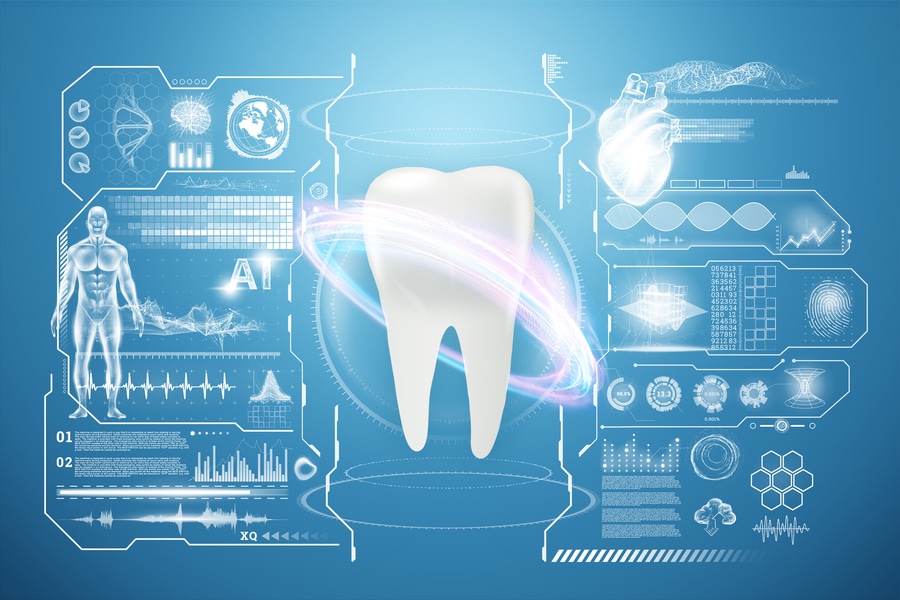
Artificial intelligence (AI) is a technology that lets computers act like humans in some ways, such as planning ahead and understanding language. Dentistry, which focuses on the health of teeth, gums, and the mouth, benefits from AI in many ways.
AI has been adopted in all dental specialties:
Operative dentistry
Oral and maxillofacial surgery
Orthodontics
Periodontics
Prosthodontics
Key Applications of AI in Dentistry
AI can collect, organize, and study large amounts of information. By using advanced computer programs like machine learning and deep learning, it can do things that regular medical computers cannot. In dentistry, this includes tasks such as:
Diagnostic Assistance
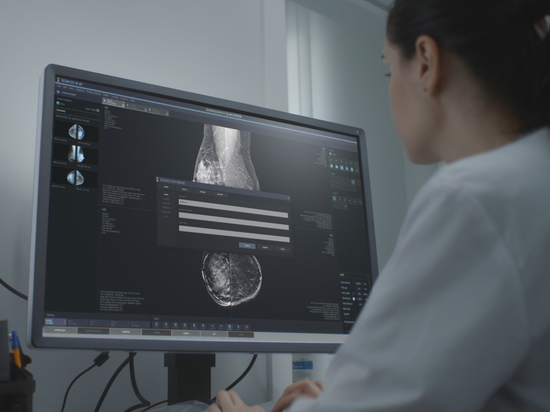
The most common use of AI in dentistry is finding problems like bone loss, tooth decay, and gum disease. AI can spot even small changes in a patient's mouth and jaw. Dentists can quickly and accurately diagnose issues by looking at images with AI.
Treatment Planning
AI is very helpful in making and fitting artificial teeth and other mouth parts. These replacements can be made very accurately and customized for each person. Computer programs can show how a patient's appearance will change before and after treatment. Dentists can show these images to patients to help them understand and feel more comfortable.
Robotics and Automation
Robots are already used in healthcare, like the well-known Da Vinci systems that help with surgeries. Dentists use a similar robot called Yomi, which uses AI to guide the dentist during dental implant procedures, making sure the implant is placed at the right angle, depth, and position.
Administrative Efficiency
AI can handle large amounts of information, which makes it great for office tasks. With machine learning, AI can keep track of patients' progress and treatments in dental office software. It can also warn staff about patients who might miss appointments, not pay bills, or fall behind on their treatment.
Benefits of AI in Dental Practice
The application of AI in dentistry, once set up and running properly, provides numerous benefits to the dental practice.
AI helps dentists find oral diseases more accurately and earlier. This lets them make better decisions faster, choose the best treatments for patients, and avoid unnecessary procedures.
AI-based dental treatment plans let dentists adjust procedures for each patient's needs. This leads to better results and saves time and money by avoiding unnecessary standard treatments.
AI can help dentists predict how treatments will turn out before they start, leading to better results for patients both right away and in the future.
AI-powered robots can reduce damage to tissues during dental surgeries, helping patients recover faster and with better results.
Make your dental practice more profitable by making patient care more predictable, getting more patients to agree to treatments, and lowering the chances of insurance or government payment refusals.
Challenges of Using AI in Dentistry
Using AI in dentistry is still a new idea. Dental offices that want to start using it should think about the following:
Data Quality and Privacy
AI needs a lot of data to work well, and much of this is patient information. Keeping this data safe is very important in healthcare, including dentistry, and is protected by laws like HIPAA. Dental offices must make sure their AI devices have strong security features, like special security cards and secure logins.
Regulation and Standardization
Who validates the datasets used by the AI in the medical computers? How does the AI flag dental X-rays and similar scans? What standards do the algorithms follow when processing insurance claims and checking for payment integrity? These questions and more are addressed by the ADA and its various standards for AI use in dentistry. Dental offices looking to add AI to their workflow should review them closely.
Cost and Access
Finally, a dental office should decide if the technology is worth the high price, especially over time. What will the AI be used for? Helping with diagnosis? Automating office work? Helping patients stay involved? Costs include not just the equipment and software, but also connecting it to current tools and training staff to use it well. The company that makes the equipment can help answer these questions.
Maximize Your AI in Dentistry Through Cybernet Manufacturing
Artificial intelligence is becoming more common in all areas of healthcare, including dentistry. AI in dentistry means using artificial intelligence in dental care.
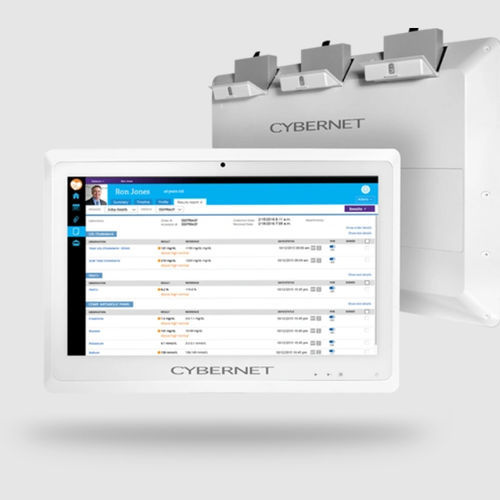
Contact Cybernet Manufacturing if you're interested in bringing AI into your dental practice. Our experts are well-versed in healthcare and will happily cover how our pre-built medical computers are applied in oral care, with and without AI. And don't worry if you can't find what you're looking for in our PC lineup. We have complete control of the design and build of our products, and are confident that we can build the right computer to meet your exact wants and needs.