#Product Trends
Requirements for Medical-Grade Monitors
Like any other medical device, monitors in healthcare must be designed and tested to precise standards.
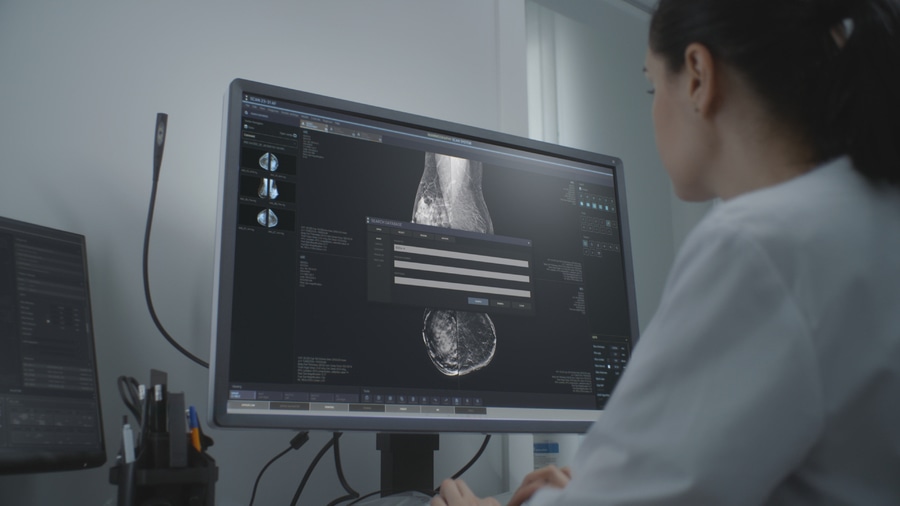
Computer monitors and displays have become an irreplaceable part of healthcare, with staff using them to review diagnostic information, treatment plans, and even support other devices.
However, the demands of healthcare work environments mean you cannot rely on just any monitor. Medical workflows demand medical-grade monitors, designed and certified specifically for the challenges of the healthcare sector.
Safety and Reliability
The most critical factor for medical-grade monitors is the same as for any other piece of medical equipment: that they be safe to use around the patient and reliable even under duress. For an electronic device like a medical monitor, this means having features like:
IEC 60601 Certifications
Any electronic device used in near-patient settings, such as a monitor, must meet IEC 60601-1 and 60601-1-2 requirements for power surge protection and electromagnetic resilience. Meeting these standards means that the monitor in question won’t transfer power surges to the patient, and won’t disrupt or be disrupted by other electronic devices operating nearby.
Ingress Protection
In medical workspaces, splashes of water or body fluids are a constant concern. If these fluids get inside the casing, they can short out electronics and cause the monitor to fail at the worst possible time. The constant cleaning and disinfection that healthcare requires to prevent the spread of pathogens poses a similar threat.
Thus, medical-grade monitors need to have a high degree of ingress protection in their front bezels. This sealed-tight design prevents dust and fluids from entering the casing and helps ensure reliability even under constant cleaning.
Cleaning and Disinfection Compatible
Beyond ingress protection protecting the internal components, medical monitors also need to be constructed from materials that can withstand repeated cleaning and disinfection cycles. This means using plastics that won’t degrade or break apart from exposure to harsh cleaning chemicals, as well as placing any anti-glare or privacy filters inside the monitor’s glass to protect them (more on those filters later).
Visibility and Functionality
Obviously, a medical-grade monitor’s first job is to display information for healthcare providers. If it can’t do that, it’s an expensive paperweight, not a valuable tool. Medical-grade touchscreen monitors must also be prepared for the unique challenges of working in the healthcare sector and registering inputs from gloved fingers.
Screen Resolution and Brightness
Healthcare providers cannot afford mistakes caused by misreading information on their monitor. Screen resolution and brightness are critical for preserving visibility, especially when dealing with hectic workflows and harsh hospital lighting.
High-definition resolution (1920x1080p) should be considered standard on general-purpose medical monitors, with higher resolutions for more specialized roles. For screen brightness, 250 nits is usually enough to provide full visibility.
Anti-Glare Filters
If the screen’s brightness alone isn’t enough to cut through the glare of hospital lights, healthcare groups can have anti-glare filters installed on their monitors. These chemical coatings help disperse light as it hits the screen, preventing glare spots that obscure information. These filters also offer ergonomic benefits, as they help prevent the eye strain and headaches associated with staring at a screen for long periods of time.
Touchscreen Reactivity
Touchscreen controls are a natural choice for medical monitors, as they remove the need for a keyboard and reduce clutter in the workspace. However, touchscreens can struggle to register inputs from users wearing nitrile gloves, which healthcare providers frequently do while administering treatment. Any medical-grade touchscreen monitor must have its sensitivity carefully calibrated to register inputs from gloved hands to remain usable.
Customization and Support Options
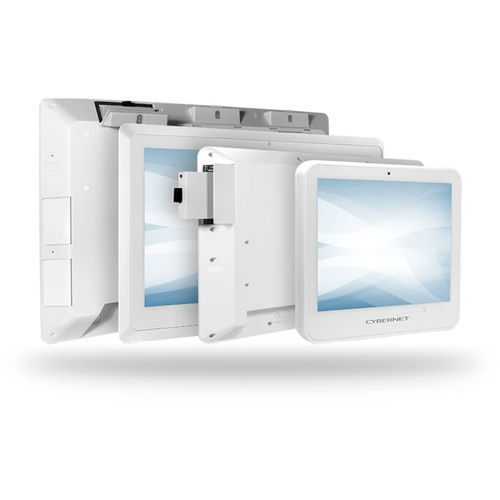
Medical monitors are not a one-size-fits-all solution; they can be customized to better suit the working environment and even support other devices, such as thin client PCs and peripherals.
VESA Compatibility
Given the wide range of applications for medical-grade monitors, it is absolutely critical that they feature VESA mounting solutions for easier installation and deployment. The universally standard VESA design ensures the monitor can attach to desktop stands, wall mounts, carts, and more.
Battery-Powered Options
While most medical monitors rely on conventional power outlets to provide electricity, battery-powered designs are also an option. These models are ideal for more mobile roles, such as on a cart, as providers no longer have to hunt for an outlet or manage cables connecting to a cart-mounted battery. These batteries are hot-swappable, meaning they can be exchanged as needed without powering down the monitor.
Implementing a battery-powered monitor has several notable advantages. First, the hot-swappable batteries weigh less than a cart-mounted battery, which means less physical strain for the healthcare provider using that cart. They also negate the need for cables connecting the monitor to the battery, removing a snagging and clutter hazard. And finally, they enable…
DC Power Support Capability
The power provided by hot-swappable batteries is direct current (DC), rather than the AC that comes from outlets or larger batteries. Smaller devices, such as printers, scanners, and thin client PCs, rely on DC power and need a cumbersome power brick to convert from one type of current to another.
A battery-powered monitor can provide the needed DC power directly to these devices, consolidating power sources and reducing cart weight.
Privacy Filters
Private health information must be strictly controlled and protected at all times. Even monitors that display this information are regulated, and many integrate privacy filters that reduce their viewing angle and prevent snooping eyes from peeking over the user’s shoulder. These filters can be damaged during cleaning and disinfection, so manufacturers must place them on the inside of the monitor’s glass to protect them from exposure.
A Necessity for Healthcare Settings
The demands that the healthcare sector places on its equipment for durability, functionality, and security mean you can’t rely on consumer-grade monitors fresh off the store shelf. Only medical-grade displays designed and built specifically for these settings can reliably deliver the performance that healthcare providers need.