#Industry News
Digital Transformation in Healthcare: A Path to Better Care
How Doctors Have Gone Bionic in Today's Medicine
The introduction of electronics has revolutionized many industries, not only making tasks easier but signaling a massive transformation in how things are done. For healthcare, digital transformation has forever changed patient care, affecting everything from patient scheduling to provider delivery of medical treatment.
Digital Transformation in Healthcare: An Overview
Key Technologies Driving Healthcare's Digital Transformation
Benefits of Digital Transformation in Healthcare
Navigating the Digital Landscape: Common Challenges & Solutions
What is Digital Transformation in Healthcare?
Digital transformation leverages digital technologies to change various aspects of a business, ranging from its operational workflows, organizational culture, to customer experiences. This transformation often involves the integration of electronic devices such as computers and software applications. Networking solutions also facilitate seamless connectivity and data exchange. In total, these technologies allow businesses to adapt to evolving market demands and improve overall efficiency, and create a more agile, innovative environment for customers and employees alike.
So, what is digital transformation in healthcare? Here, technologies like medical computers and QR codes aim to transform modern medicine's practices and processes. Unsurprisingly, most involve patient care in one form or another.
Digital transformation usually breaks down into four main areas:
Process Transformation brings greater efficiency and effectiveness to an industry's traditional operations. An example in healthcare is the replacement of paper patient files with electronic medical records (EMR).
Business Model Transformation looks to transform those operations. Remote Patient Monitoring (RPM) can be seen as an example for the healthcare industry. With it, providers and staff can keep track of several patients at once without meeting physically. This dramatically expands the provider's patient panel without loss of care.
Domain Transformation redefines an industry's products and services. Retail health clinics, urgent care centers, and other alternatives for non-emergency care are examples of Domain Transformation.
Cultural/Organizational Digital Transformation involves those technologies that upend an industry's standard processes. In healthcare, they would include artificial intelligence and remote surgeries through robots.
Key Technologies Driving Healthcare's Digital Transformation
Healthcare is a sprawling, multi-trillion-dollar industry. Dozens of technologies are easily involved in its digital transformation. The following are five prominent ones.
Telemedicine
Telemedicine, which encompasses the broader field of telehealth, utilizes real-time communication technologies such as video conferencing to connect patients with providers. Using devices like smartphones, tablets, and computers, both parties can engage in face-to-face interactions to discuss symptoms, receive diagnoses, and manage treatment plans.
The technology is particularly beneficial for the elderly, hospice patients, and with mobility challenges, allowing them all to receive medical assistance and consultations while in the comfort of their residences.
Artificial Intelligence
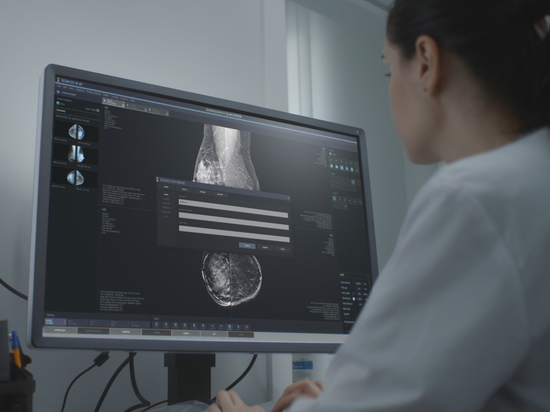
Artificial intelligence (AI) is a technology that simulates human thinking: learning, comprehension, analysis, and other cognitive processes. Healthcare, which generates enormous amounts of data, has found many uses for AI. Medical AI box PCs, for example, can view thousands of lesion images from a colonoscopy and learn to identify them in future cases.
Precision Medicine
Precision medicine personalizes treatment by intricately considering a patient's unique genetics, their surrounding environment, and lifestyle choices. Advanced technologies from gene-splicing to targeted medications to sophisticated AI systems ensure each patient receives care that is as distinctive as their individual makeup.
Internet of Medical Things (IoMT)
The Internet of Things (IoT) refers to the interconnection of various devices, such as sensors, software, and computers, through the Internet, creating an extensive network. A specialized segment of IoT is the Internet of Medical Things (IoMT), which focuses on connecting remote patient monitoring (RPM), smart hospital rooms, and various other medical devices and applications through digital healthcare networks. One notable application of this technology is the ability for a limited number of healthcare staff to monitor multiple patients simultaneously, enhancing efficiency and patient care.
Robotics
Robotics in healthcare encompasses a wide array of applications. Advanced robotic systems can assist surgeons in performing intricate and delicate procedures. Others support patients with disabilities through exoskeletons and assistive robots.
Benefits of Digital Transformation in Healthcare
Digital technologies have numerous positive impacts on medicine.
Manages routine but necessary non-medical tasks: appointment scheduling, patient record management, medical information, billing, etc. This increases efficiency as medical staff can focus on direct patient care and comfort.
Allow faster access to patient records and test results, reducing wait time in diagnosis and treatment.
Ensure high-quality care for patients even from a distance.
Increase efficiency as AI triages simple medical cases, allowing providers and medical staff to handle more complex ones.
Update EMR and providers' SOAP Notes more quickly, thoroughly, and in real-time, giving providers the time to continue providing high-quality health care even as their patient panels increase in numbers and complexity.
Thanks to predictive analytics, resources like hospital beds and workers can be proactively managed, lowering costs without sacrificing quality.
Navigating the Digital Landscape: Common Challenges & Solutions
Transformation is not without hiccups, especially in an industry as entrenched as healthcare. The following are some common challenges medical groups face, along with their solutions.
Patient Safety
More electronics around patients could pose risks to them. Medical devices and equipment certified as medical-grade can reduce such risks and ensure patients' well-being.
Data Privacy & Cybersecurity
Many regulations, like HIPAA protect patient data. RFID readers and Imprivata Single Sign-On are just a few cybersecurity features protecting patients' privacy as the healthcare industry continues to digitalize.
Legacy System Integration
Many medical facilities rely on a hodgepodge of modern and legacy applications and equipment. Medical box PCs and similar digital technologies can bridge the gap between them thanks to compatible I/O COM ports.
Continuous Operation
Hospitals operate 24/7 and expect the same from their equipment. Medical PCs built with fanless cooling, rugged design, and low failure rates can provide such reliability.
Interoperability
Healthcare information, ranging from patient electronic medical records (EMR) to insurance invoices, often resides in fragmented "data" silos. These silos present a challenge for medical groups that require access to this crucial information. However, third-party companies and medical computers equipped with COM ports can facilitate the connection between these diverse systems, allowing for better integration and accessibility of data.
Charting a Healthier Future with Digital Transformation with Cybernet
Digital transformation in healthcare brings change throughout the healthcare industry thanks to modern electronics and networks. Electronic medical records, telemedicine, and artificial intelligence have significantly changed once-established practices, though some have also brought challenges.
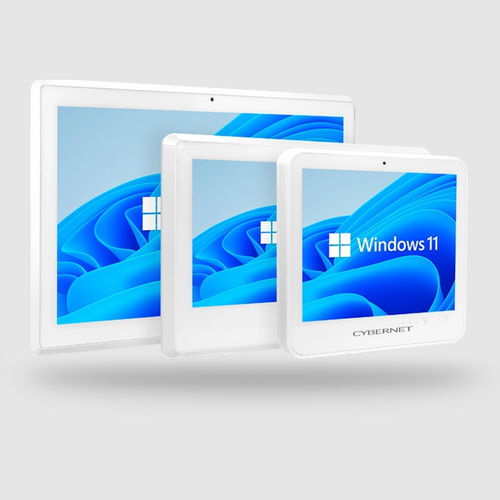
Are you interested in learning about digital transformation in healthcare and how it'll impact your medical group? Contact an expert here at Cybernet for more info. We'll be happy to review how our medical-grade computers and tablets can be integrated with those technologies and how they can benefit your medical groups and facilities.