#Industry News
A GUIDE TO AR IN HEALTHCARE
Deliver both the real and virtual worlds in medical care
The digital transformation of healthcare has introduced new tools and methods for treating patients, bringing numerous advantages that were not initially considered. Augmented reality's ability to bring 3D imagery to medicine has found applications ranging from more precise surgeries to greater patient relief and mass medical student training.
Augmented Reality: A Definition
Real-World Applications of AR in Medical Settings
Why AR Matters: Key Benefits for Healthcare Providers
Choosing the Right AR System: A Checklist for Healthcare Organizations
Augmented Reality: A Definition
Augmented reality (AR) is technology that overlays digital imagery onto the user's real-world surroundings, blending physical and virtual realms.
There’s also mixed or merged reality (MR) and augmented virtuality (AV), which delve deeper into mixing the world around the user and virtual ones generated by computers.
Real-World Applications of AR in Medical Settings
AR devices and their three-dimensional simulations have numerous applications across various sectors and industries. For the healthcare sector, these include:
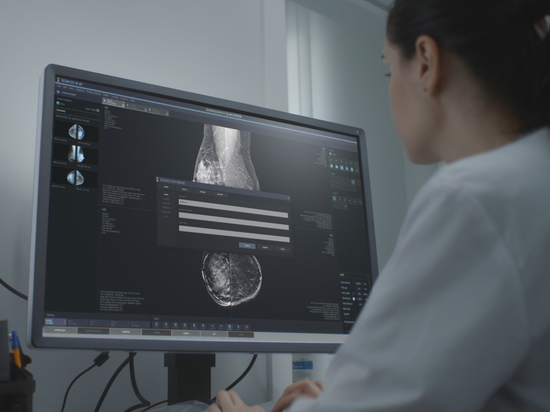
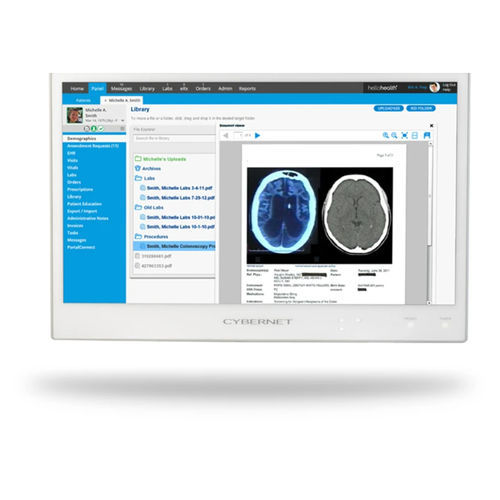
Diagnostic Improvement: AR takes the latest medical scans, such as CT and MRI, from medical computers and overlays them onto a patient's body, providing the provider with a more accurate analysis and understanding of their condition.
Greater Surgical Success: In this use case, 3D models of organs, critical structures, and patient data are displayed in the surgeon's field of view, aiding in complex surgeries, such as those involving the spine and organ transplantation.
Easier Vein Location: Needle injections and IV placements can be complicated, especially with elderly and obese patients. AR devices make such procedures easier for nurses and medical staff by displaying veins on the patient's body.
Mass Education: 3D images provide medical students with a clearer view of human anatomy than pictures, especially when they lack access to cadavers. Providers can also better educate their patients by allowing them to view and interact with displayed images of their anatomy and conditions.
Virtual Physical Therapy and Rehabilitation: For this use case, AR guides and provides real-time feedback to patients as they perform the required exercises. Example: the AR flashes red when a patient bends their recently operated knee incorrectly.
Telemedicine: Multiple providers can view and treat the same patient remotely for complex medical procedures.
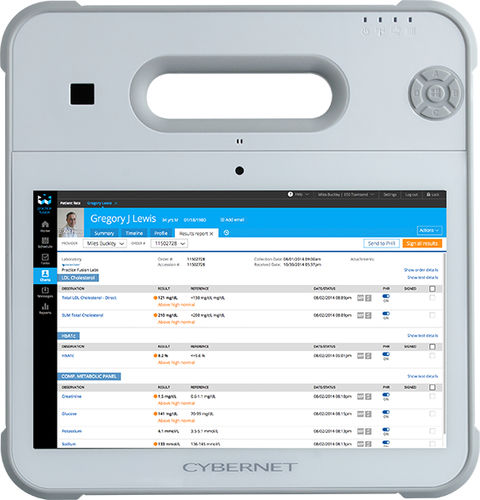
High-Quality Emergency Response: Using AR headsets, smartphones, and medical-grade tablets, providers can share their computer screens and critical information with first responders on the scene of an emergency and vice versa.
Why AR Matters: Key Benefits for Healthcare Providers
The integration of AR in healthcare looks to revolutionize patient care and medical training. Here are some of the ways it may do so.
Improved Accuracy and Precision: Providers can identify patient issues more quickly and perform procedures more safely thanks to AR, which in turn leads to fewer complications and a reduced risk of error.
Quality Medical Education: Medical students can view and interact with most AR images, enabling them to practice procedures with more hands-on training and experience.
Treatment from a Distance: Providers can treat patients in rural areas or those with mobility issues, ensuring that no one suffers from a lack of quality care due to these limitations.
Self-Directed Care: AR devices can help patients follow discharge treatments, such as physical therapy (see above), allowing for a faster recovery without the hassle (and cost) of visiting another healthcare specialist.
Practice Opportunities: Providers, such as surgeons, can prepare for upcoming surgeries by first using AR on digital twins, which can increase the likelihood of success during the real surgery.
Choosing the Right AR System: A Checklist for Healthcare Organizations
Healthcare organizations looking to adopt this technology should consider key questions, such as how AR can improve surgical precision by providing real-time data or how it can create immersive training experiences for medical students. By addressing these considerations, medical groups can effectively integrate AR into their operations, leading to better patient outcomes and increased efficiency.
What AR devices will you be using? Example: AR goggles require different hardware and software from AR headsets. You'll need to ensure they're compatible with your group's current medical systems, like electronic medical records.
Does the device perform as intended for its specific application? The 3D images displayed in a surgical AR headset should be precise and exhibit minimal lag when projected.
How easy are the devices to use? Are the controls easy to understand and use? Or will they require extensive training by the vendor? The latter can be very disruptive in healthcare, where changes to staff schedules can affect other scheduled events, such as patient appointments.
Is the AR device comfortable? Surgeons can spend hours in the operating theatre. Their AR wearables, such as headsets, should be lightweight and form-fitting to prevent headaches or other strains.
What level of support does the vendor provide? Unlike a reseller, an original equipment manufacturer has complete control over their product, allowing for customization of nearly everything, from pricing to custom designs and builds for their AR devices.
Let Cybernet Computers Back Your AR Devices In Healthcare
Augmented reality overlays 3D images onto real-world objects and places. The exciting technology has found numerous applications across various industries, such as healthcare. Surgeons operate on virtual patients in preparation for the real ones, while patients learn about their medical conditions by interacting with virtual images of their bodies.
Contact Cybernet Manufacturing today if you're looking for the computer technology to back your AR devices. Our medical computers are built from the inside out to withstand the rigors of the medical field, with certifications such as IEC 60601 ensuring safe operation around patients. Additionally, they feature a fanless design for easy cleaning and increased reliability.
And if our pre-built models don't meet your expectations, no problem! We're an OEM, controlling the entire design and bill of materials for our lineup. We're confident in our ability to custom-build all-in-one medical PCs, monitors, and tablets tailored to your AR devices and systems.