#Industry News
Medical Transcription Technology: Benefits, Challenges, and Future Trends
Ensure provider's words are always in all important formats
Accurate documentation is the backbone of quality healthcare. In the past, providers’ verbal notes and comments were jotted down into paper files by medical transcriptionists. Thanks to the digital transformation of healthcare, today’s providers either transcribe directly into electronic health records (EHRs) or have medical AI systems perform these essential tasks.
What is Medical Transcription Technology?
Medical transcription technology are digital tools and software that transcribe healthcare providers’ spoken words into a written format. In the past, providers would record their diagnoses on tape recorders and similar media. Flesh-and-blood medical transcriptionists would then transcribe those recordings, first on manual typewriters, then later on all-in-one medical PCs (AIOs). The resulting files were stored in paper files and EHRs.
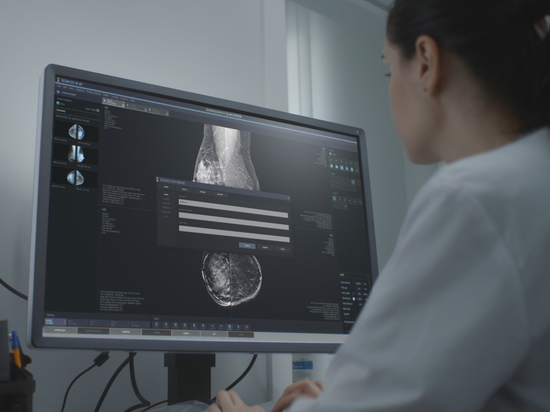
Today, most providers use dictation software to directly transcribe their diagnoses into EHRs. Soon to join them is a new form of medical transcription called AI scribing. With it, artificial intelligence and natural language processing summarize providers’ diagnoses, extract key points, and even suggest treatments, all while recording everything verbatim.
Applications in Healthcare Settings
Unsurprisingly, medical transcription technology is used almost exclusively in healthcare settings.
Hospitals and Clinics – Providers dictate their patients' diagnoses and treatment plans in real time, then review their EMR afterward to add further notes or sign off.
Telemedicine: A transcription is generated while the provider speaks with the patient remotely. The conversation is then entered into an EMR during the appointment or created by an AI scribe for later review.
Specialty Practices – Medical specialists, such as radiologists, pathologists, and surgeons, dictate their findings directly into the EMR for patients’ primary providers to review.
EHR Systems Integration – As part of EHR workflow optimization, providers directly enter transcribed notes into the EHR, keeping patient records up to date and easily accessible to all authorized medical personnel, including other providers, nurses, medical coders, and billers.
Key Benefits of Medical Transcription Technology
Medical transcription emerged to meet the need for accurate, standardized patient records, thereby freeing providers from time-consuming tasks. While medical transcriptionists remain in use, most of medicine has shifted to technologies such as dictation software and, increasingly, AI medical scribing.
The benefits are numerous.
Greater Attention to Patients - Providers can spend less time jotting down notes during and after patient visits. This enables them to focus on patients and their issues, leading to better diagnoses and improved outcomes.
Reduce Provider Burnout: Many argue that excessive administrative tasks are a major source of provider burnout. Medical transcription software with predictive text and summarization capabilities, developed by AI scribes, helps relieve providers of such burdens.
Reduce Costs - Dictation software and the medical computers that run it can be less expensive than human medical transcription services.
Faster Turnaround Time for Documentation- Provider-generated dictations are directly entered into EMR systems either in real-time or shortly afterwards. This ensures that patient records are up to date when needed by other authorized personnel.
Compliance and Security - Computers handling patient information have been right-sized using HIPAA-compliant technologies, including data encryption and Imprivata Single Sign-On.
Challenges and Considerations
Data plays a central role in today’s healthcare, driving medical groups to gather and organize all sources, like provider notes and patient transcripts, as efficiently as possible. Despite medical transcription’s long history, modern transcription services are not always straightforward to set up. Medical groups should consider the following issues as they plan their service:
Data Privacy Risks – Patient information is highly sensitive and protected by law. Any digital systems that store such information, from medical computers to medical tablets, should have robust data security measures.
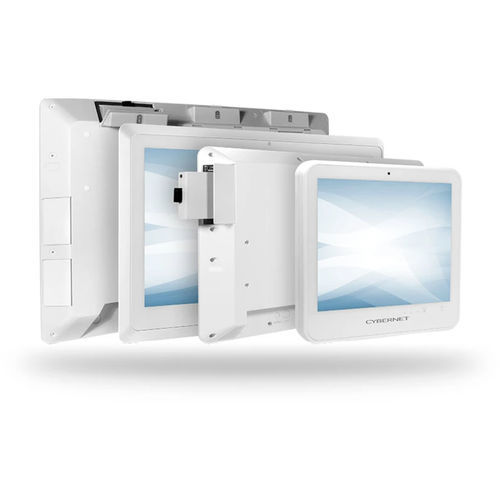
Hardware and Software Requirements - Choosing the right medical PC that can meet the demands of medical transcription can be daunting, particularly when AI-driven. An original equipment manufacturer experienced in healthcare can smooth out any difficulties.
Accuracy Limitations – Providers should be aware that advanced medical transcription technologies can struggle with accents, background noise, and complex medical terminology. Providers and other medical staff should review regular transcripts as part of the workflow.
EHR Integration - Unsurprisingly, medical records are central to many healthcare groups’ databases. Thus, any medical transcription system must be compatible with the EHR system during implementation.
Future Trends in Medical Transcription Technology
AI scribes listen during patient-provider consultations, generating both verbatim records and summaries. While still cutting edge, AI scribes are just one of many medical transcription technologies shaping healthcare’s future.
Emotion Detection - As part of technology for behavioral health, this feature identifies a patient’s underlying behavioral issues (e.g., nervousness, fear) based on their tone during consultations.
Voice Biometrics: The patient’s own voice can indicate underlying physical ailments, such as cardiac issues, which the AI scribe can detect and alert the provider during interviews.
Greater AI-Powered Speech Recognition – These systems understand accents, dialects, and medical jargon.
Predictive Documentation - The AI inserts information in advance of what a provider is about to say during the consultation, based on the visit context and the patient’s medical history.
Enhanced Quality Assurance - Potential errors and inconsistencies in a document are flagged for human review.
Cloud Storage and Security – Thanks to cloud computing in healthcare, medical groups and providers can store important patient transcriptions safely and securely off-site.
Mobile Transcription Apps – Healthcare providers can access the latest medical transcription applications on handheld devices, such as medical tablets.
Transcribe Your EMR With Cybernet Computers
Medical transcription technology converts healthcare providers’ words into documentation. While human medical transcriptionists still create such notes, medical transcription technologies such as dictation software and AI scribes enable providers to handle the task themselves.
Like any other industry, healthcare is continually seeking ways to increase its productivity. Technology, from PCs to software, can significantly enhance productivity in health fields such as medical transcription. Contact Cybernet Manufacturing to learn more about how these technologies can impact your medical record-keeping.