

#Product Trends
Air Ambulances and Their Mission-Critical Equipment
Air ambulances are critical for saving lives in high-stakes situations. With the right crew and the right tools, they handle tasks that no other solution can.
An accident or medical emergency can occur anywhere, at any time. In most cases, the fastest way to get to a hospital is via ambulance. But what if the patient is located somewhere that conventional motor vehicles can’t reach, such as on a mountainside or deep in a forest? What if they need transportation from one hospital to another across a distance too vast for a car to cover?
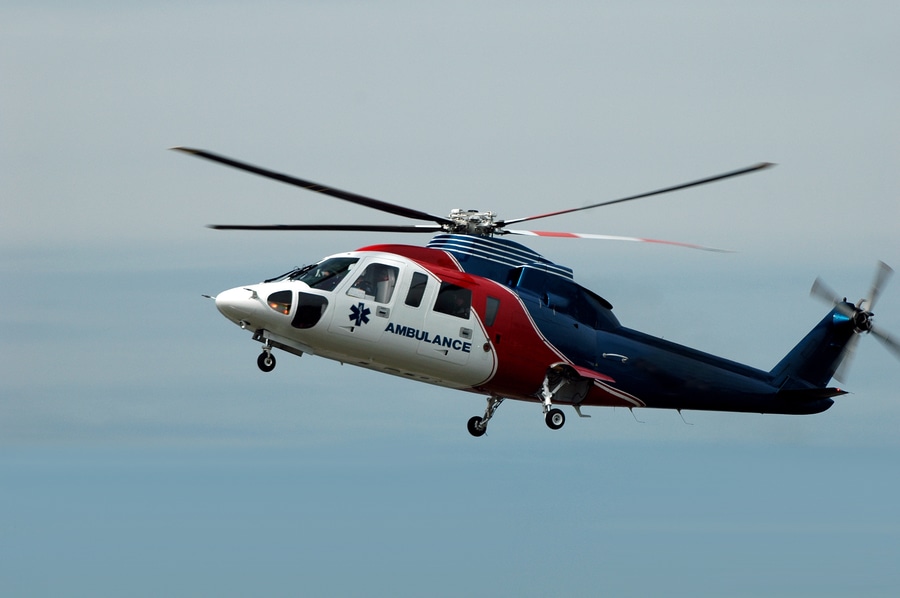
In these situations, the answer is an air ambulance. Whether fixed-wing or rotary, these vehicles deliver specialized equipment and highly skilled crewmembers wherever they’re needed most, and they're often the difference between life and death.
The Role of Air Ambulances
Air ambulances have existed for almost as long as there have been powered aircraft. The first medical evacuations occurred during World War One, which saw injured troops moved from the front lines to hospitals to receive proper treatment. The Korean War saw the next major innovation, when helicopters were used to evacuate soldiers without needing a full runway to take off and land.
These innovations have since become widespread in civilian applications as well, with most major metropolitan areas and private companies around the world offering air ambulance services that save lives every day. The most common roles that these aircraft perform include:
- Trauma Response/Search and Rescue: Because they can hover in place, as well as take off and land vertically, rotary-wing aircraft can reach locations conventional ground vehicles can't. This makes helicopters perfect for rescuing injured people in remote areas or disaster zones where roads are out of commission.
- Long-Distance Transportation: When patients must be transported from one location to another, air ambulances are often the preferred solution because they are faster than conventional ground vehicles and equipped with the necessary medical equipment.
Organ Transplant Transportation: Once removed from the donor’s body, most organs have a viable lifespan measured in hours. As the fastest transportation available, air ambulances are the best method for getting them to the recipient as quickly as possible.
Fixed-Wing and Rotary-Wing Air Ambulances: Advantages and Disadvantages
As two radically different forms of transportation, fixed-wing and rotary-wing aircraft both have a role to play as air ambulances.
- Fixed-wing: Conventional aircraft are the fastest option available for transporting patients, doctors, and equipment, and have the longest range for doing so. They also have the most room onboard for life-sustaining equipment like ventilators, IV pumps, and ECMO machines. However, fixed-wing aircraft require a full runway to take off from and land on, which limits their flexibility. For these reasons, fixed-wing craft are primarily used to transport patients who are in stable condition but still need specialized care.
- Rotary-wing: The greatest strength helicopters have is their VTOL (Vertical Take-Off and Landing) and hovering capabilities, which allow them to operate from much smaller airfields and landing pads, as well as access areas other forms of transportation cannot. This makes them ideal for trauma response and disaster relief, but they are slower than fixed-wing aircraft and more expensive than conventional ambulance vans, limiting them to high-stakes deployments that require these capabilities.
What Equipment Do Air Ambulance Crews Use?
Like their ground-based counterparts, air ambulances carry the full range of mission-critical medical equipment, modified by their mission and operating environment. A helicopter team that specializes in desert search-and-rescue, for example, will focus on tools for treating conditions like sunburns, heatstroke, and snakebites. Other common fixtures include:
Helicopters focus on trauma response and life-preserving measures, such as:
- CPR equipment
- Breathing apparatuses and monitoring systems
- Blood transfusion equipment
- Defibrillators
- Drugs such as heparin, adrenaline, propofol, and painkillers
- Oxygen equipment
- Hook systems for retrieving patients from hard-to-reach areas
Fixed-wing aircraft have more room and can thus carry more equipment, including:
- Patient-loading systems for safer embarking/disembarking
- Regulators, ventilators, and defibrillators
- Heart monitors and IV pumps
- Any required medications
- Monitoring equipment
- Medical computers for managing other devices
The top priority for these devices is that they can survive the rigors of air transportation, with all the bumping and jostling that comes with it, without compromising on medical-grade safety and reliability. This means protecting patients, the ambulance team, and not interfering with the aircraft’s controls or instruments by following certification standards like IEC 60601-1.
Medical box PCs are ideal for this role, as they are compact and easier to fit inside a cramped cabin and rugged enough to handle the shocks and vibrations that come with flight.
By equipping their air ambulances correctly, public emergency services and private companies alike can save lives in even the most difficult circumstances.





 鄂公网安备42018502009510号