
#Product Trends
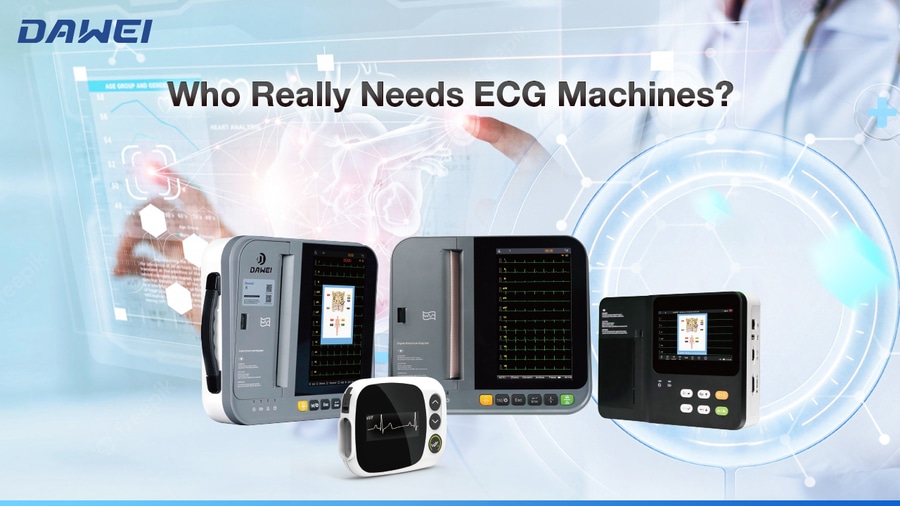
Who Really Needs ECG machine?
Not only for ICU patients
Many still assume ECG machine is only for ICU patients. In reality, it plays a critical role across multiple patient groups, offering early warning signs and guiding interventions. What truly matters is not just who needs monitoring, but also what parameters should be closely watched.
1. Cardiac Patients
Who: Patients with arrhythmia, myocardial infarction, angina, or heart failure.
Key ECG Indicators:
Heart rhythm (atrial fibrillation, ventricular tachycardia, bradycardia)
ST-segment changes (myocardial ischemia or infarction)
QT interval (risk of arrhythmia from drugs or electrolyte imbalance)
Why: Continuous ECG reveals subtle changes that precede life-threatening events, enabling rapid therapy adjustment.
2. Post-Surgical Patients
Who: Patients recovering from major surgery, especially cardiac, thoracic, or abdominal operations.
Key ECG Indicators:
Heart rate variability (autonomic recovery after anesthesia)
Ectopic beats (possible electrolyte disturbance or stress response)
ST/T wave abnormalities (perioperative ischemia risk)
Why: Anesthesia and fluid shifts increase cardiac strain; ECG machine ensures complications are caught early.
3. Elderly Patients
Who: Older adults, especially with hypertension, diabetes, or prior cardiac history.
Key ECG Indicators:
Silent ischemia (ST depression without symptoms)
Atrial fibrillation/flutter (common in elderly, high stroke risk)
Conduction abnormalities (bundle branch block, AV block)
Why: Many elderly patients have asymptomatic but dangerous cardiac changes; ECG offers a reliable early-warning system.
4. Emergency and Trauma Cases
Who: ER patients, accident victims, and those in ambulances.
Key ECG Indicators:
Heart rhythm and rate (shock, hypoxia, or cardiac arrest)
P-wave/QRS changes (electrolyte disturbance, trauma-related arrhythmia)
ST elevation (acute MI in emergency settings)
Why: Seconds matter in trauma; ECG alarms guide immediate defibrillation, oxygen therapy, or resuscitation.
5. High-Risk Groups
Who: Patients with hypertension, diabetes, obesity, or family history of cardiovascular disease.
Key ECG Indicators:
ST/T changes (early coronary artery disease)
LV hypertrophy patterns (chronic hypertension effects)
Heart rate trends (resting tachycardia as early risk marker)
Why: Preventive ECG machine allows early detection of silent disease, lowering long-term morbidity.
Conclusion
ECG machine is not only about recording heartbeats—it is about tracking critical indicators tailored to each patient group. From rhythm disturbances in cardiac patients to perioperative ischemia in surgical recovery, each case requires focused ECG parameters to be watched in real time.
What Makes a Good ECG Machine?
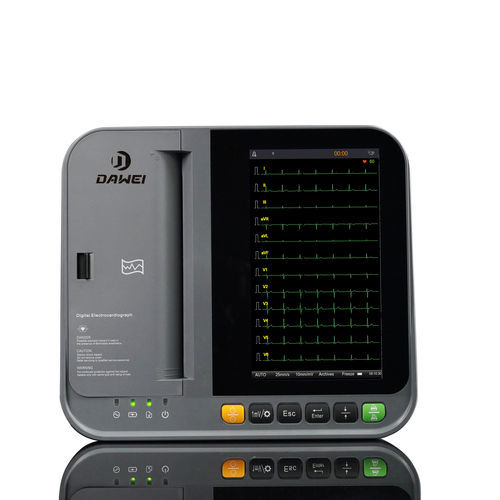
A reliable ECG machine should go beyond just drawing waveforms. It should provide:
High accuracy & strong anti-interference algorithms, ensuring clean, diagnostic-quality signals.
User-friendly design, with intuitive touchscreens and simplified workflows for nurses and doctors.
Connectivity & storage, supporting electronic medical records and remote monitoring.
Value for money, balancing performance, durability, and long-term ROI.
A good ECG machine is not just equipment — it’s a lifesaving partner, supporting clinicians across emergency, critical care, and daily practice.