
#Industry News
CE MDR 2017/745 Compliance Guide for Medical Lighting Procurement
A practical verification guide for hospital and clinic procurement teams sourcing surgical lights in the EU
The shift from the old Medical Device Directive (MDD 93/42/EEC) to the EU Medical Device Regulation (MDR 2017/745) changed what CE marking actually means for surgical lights — and for the procurement professionals who buy them. The documentation requirements are more demanding, the oversight is tighter, and the old habit of accepting a CE mark at face value without reviewing the underlying file is no longer adequate.
This guide explains what MDR 2017/745 requires specifically for surgical lights and examination lights, how to verify genuine compliance, and what to look for — and watch out for — in supplier documentation.
Why MDR 2017/745 Matters for Surgical Light Procurement
The Medical Device Directive it replaced — MDD 93/42/EEC — was in force for over 25 years. By the time MDR 2017/745 came into full effect in May 2021, a significant number of CE-marked surgical lights on the market carried certificates issued under the old framework, sometimes by self-declaration with minimal independent oversight.
MDR 2017/745 closes several of the gaps that MDD allowed. For surgical lights — classified as Class IIa medical devices under MDR — the changes that matter most for procurement are: mandatory Notified Body involvement (self-declaration is no longer permitted for Class IIa), stricter clinical evidence requirements even for non-invasive devices, and post-market surveillance obligations that manufacturers must actively fulfil.
What this means practically is that a CE mark issued under MDR 2017/745 carries more documentary weight than one issued under MDD. It also means that the documentation chain a compliant manufacturer can produce is longer and more detailed than it used to be.
Classification: Where Surgical Lights Sit Under MDR
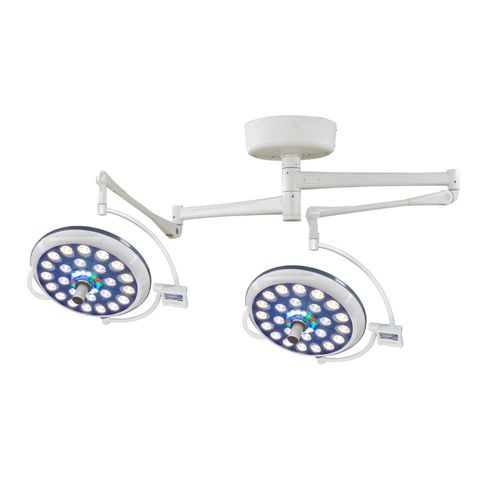
Under MDR 2017/745, medical devices are classified according to intended use and risk profile. Surgical luminaires — ceiling-mounted operating theatre lights — fall under Class IIa, applying Rule 9 of Annex VIII, which covers active therapeutic devices intended to exchange energy with the patient's body.
Examination lights, when supplied for clinical diagnostic use, are also Class IIa under the same rule. This is an important point for procurement: a floor-standing LED examination light marketed for medical use is a regulated Class IIa device, not a general luminaire. It requires the same Notified Body oversight and documentation as a ceiling-mounted surgical light.
Suppliers who describe examination lights as falling outside MDR scope — because they are not "therapeutic" in the traditional sense — are applying the regulation incorrectly. If the intended use includes clinical examination of patients in a medical setting, the device is within MDR scope.
What a Compliant MDR Technical File Contains
For surgical lights, the Technical Documentation required under MDR 2017/745 Annex II covers a specific set of elements. When requesting documentation from a supplier, these are the files that should exist and that you can legitimately ask to review in summary or non-confidential form.
The General Safety and Performance Requirements (GSPR) checklist maps every applicable requirement from MDR Annex I to evidence that the device meets it. For surgical lights, the relevant requirements cover electrical safety (referencing IEC 60601-1), electromagnetic compatibility (IEC 60601-1-2), specific performance (IEC 60601-2-41 for illuminance, colour rendering, shadow dilution, and heat output), and biocompatibility of any materials in patient contact.
The Clinical Evaluation Report (CER) is required even for non-invasive devices like surgical lights. Under MDR, clinical evidence must be generated and evaluated systematically. For a mature product category like LED surgical luminaires, this typically involves a review of published clinical literature on surgical illumination, performance equivalence assessment against predicate devices, and post-market clinical follow-up data. Suppliers who cannot describe their CER methodology have likely not completed one to MDR standard.
The Instructions for Use (IFU) must comply with Annex I, Section 23 of MDR, including specific labelling requirements for the intended use, contraindications, operating parameters, cleaning and disinfection instructions, and electromagnetic environment specifications. Verify that the IFU you receive with the product is MDR-compliant, not a legacy MDD document that has not been updated.
Post-market surveillance documentation — the plan and the most recent periodic safety update report (PSUR) — is not typically shared externally, but its existence is a reasonable question to ask. Under MDR, Class IIa manufacturers are required to produce PSURs at minimum every two years. A supplier who cannot confirm that their post-market surveillance system is operating is not in full MDR compliance.
The Notified Body Requirement
Under MDR 2017/745, Class IIa devices require conformity assessment by a Notified Body — an independent body designated by an EU member state to audit manufacturers and review technical documentation. Self-declaration against MDR is not permitted for Class IIa.
The Notified Body designation under MDR is separate from MDD designations. Not all organisations that were Notified Bodies under MDD have been re-designated under MDR, and the ones that have been designated are operating under more demanding audit requirements. The current list of MDR-designated Notified Bodies is maintained in the NANDO database at the European Commission.
When a supplier provides a CE Declaration of Conformity for a Class IIa surgical light, it must name the Notified Body and include their four-digit identification number. Verify the named Notified Body appears in NANDO and is currently designated for the relevant device category covering surgical luminaires.
A Declaration of Conformity that names no Notified Body, or names an organisation that does not appear in NANDO, is not valid MDR CE marking for a Class IIa device.
Transitional Products: What to Watch For
MDR 2017/745 included transitional provisions that allowed legacy MDD-certified devices to remain on the market under specific conditions. Those transitional periods have either expired or are in the final stages of expiry. For surgical lights, the practical implication is that any supplier still presenting MDD-based CE documentation for a product entering new procurement in 2026 should be asked to clarify the current status of their MDR transition.
Legitimate questions to ask: Has the product been re-certified under MDR 2017/745? Who is the Notified Body for the MDR certificate? What is the certificate issue date and expiry?
A supplier who cannot answer these questions clearly — or who responds by pointing to a legacy MDD certificate without explaining the transition status — should be treated as unverified until documentation is produced.
Practical Checklist for EU Procurement Officers
Before approving a surgical light or examination light for procurement in the EU, work through the following verification steps.
Request the CE Declaration of Conformity and check that it explicitly references Regulation (EU) 2017/745 — not the old Directive 93/42/EEC. Confirm the issue date is within the certificate's validity period. Verify the named Notified Body in the NANDO database at the European Commission website. Confirm the Notified Body identification number on the Declaration matches their NANDO listing.
Ask the supplier to confirm the product's EMDN code and its MDR classification. For a surgical luminaire, the classification should be Class IIa. If a supplier is claiming Class I for a ceiling-mounted surgical light, that is incorrect and should be challenged.
Ask for the IFU and check that it is MDR-compliant in its labelling requirements — specifically that it includes the intended use, contraindications, and cleaning protocol required under Annex I, Section 23.
If your procurement involves a significant volume or multi-year contract, it is reasonable to ask for a summary of the GSPR checklist and a brief description of the clinical evaluation methodology. You do not need the full Technical Documentation, but the supplier should be able to describe how clinical evidence was generated and what post-market surveillance is in place.
Finally, verify EUDAMED registration. MDR requires manufacturers and devices to be registered in the EU database for medical devices (EUDAMED). UDI (Unique Device Identification) registration for Class IIa devices is mandatory. A supplier should be able to provide their EUDAMED actor registration number and confirm that the specific product model is registered with its UDI.
What Micare Provides for EU Procurement
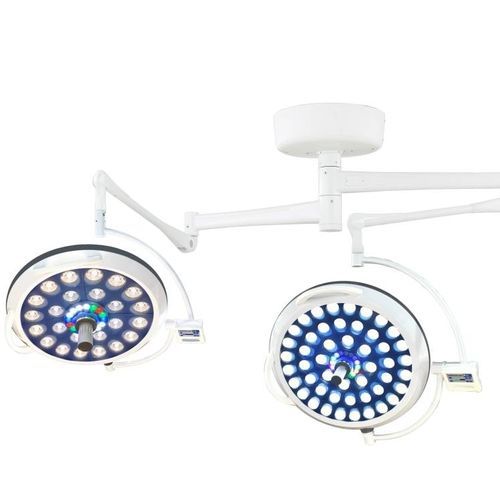
Micare Medical's Galaxy-LED E700 series carries CE marking under EU MDR 2017/745, Class IIa. The conformity assessment was conducted with Notified Body involvement as required for Class IIa devices. The manufacturing facility in Nanchang holds ISO 13485:2016 certification, which underpins the quality management system requirements of MDR Annex IX.
For procurement documentation, Micare can provide the CE Declaration of Conformity referencing MDR 2017/745, the Notified Body identification details, the EUDAMED actor registration number, and a non-confidential summary of the Technical Documentation for tender purposes. IEC 60601-2-41 type test reports from TÜV Rheinland are available on request.
All documentation is provided in English. French, German, and Spanish translations of the Instructions for Use are available for member states where the regulatory authority requires the local language IFU.
Contact: [email protected] | Subject: MDR 2017/745 Compliance Documentation Request
Micare Medical Co., Ltd. | Nanchang, China | ISO 13485:2016 | CE MDR 2017/745 | FDA Registered Facility No. 3023808059
References:
EU MDR 2017/745 full text — European Commission
NANDO Notified Body database — ec.europa.eu/growth/tools-databases/nando
IEC 60601-2-41:2022 — iec.ch
Author: Micare Medical Engineering Team | Published: August 31, 2026