#Product Trends
Common Problems With Animal Anesthesia Machines
— And How To Avoid Them
It’s a scenario familiar to many veterinary professionals: you’re in the middle of a critical procedure, and suddenly, the animal anesthesia machine alarms. Perhaps it’s unstable flow rates, a suspected leak, or an unexpected reading. In these moments, it’s not just animals safety that’s compromised; it’s the clinic’s workflow, reputation, and bottom line. Downtime isn’t just an inconvenience—it’s often the biggest hidden cost associated with anesthesia equipment.
This guide is designed as a practical troubleshooting manual for veterinarians and technicians. We will delve into the top 5 most common problems encountered with animal anesthesia machines, outline practical steps for identification, and most importantly, discuss how proper daily maintenance and selecting well-engineered equipment can prevent these costly headaches from occurring in the first place.
Top 5 Culprits: Common Anesthesia Machine Problems & Their Causes
Understanding the root cause of common issues is the first step towards prevention.
1. Gas Leaks
Symptoms: Rapid oxygen consumption, insufficient anesthetic depth despite vaporizer settings, abnormal pressure gauge readings.
Common Causes: Worn or cracked tubing, punctured breathing bag, improper seal on the CO2 absorber canister, loose connections.
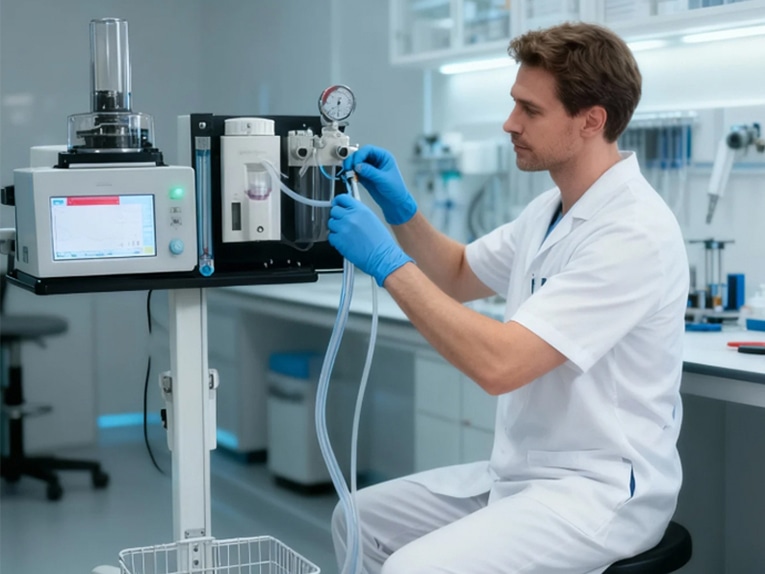
Troubleshooting: Regularly perform a standard leak test before the first procedure of the day. Systematically check all connection points, hoses, and the breathing bag for damage.
2. Flowmeter Inaccuracy or Blockage
Symptoms: Unstable gas flow, inability to adjust flow to the desired rate, float behaving erratically.
Common Causes: Internal debris or buildup, damaged float, faulty needle valve.
Troubleshooting: Gentle cleaning according to manufacturer guidelines may resolve minor issues. Persistent inaccuracy often requires professional servicing or replacement of the flowmeter assembly. Choosing an animal anesthesia machine with high-quality, precision flowmeters can minimize this risk.
3. Vaporizer Issues
Symptoms: Unstable anesthetic concentration, zero output, leaks around the filling port or dials.
Common Causes: Worn seals or O-rings, internal blockage, lack of regular calibration.
Troubleshooting: Visual inspection for leaks is crucial. However, accuracy issues almost always necessitate professional cleaning and calibration at recommended intervals. A well-maintained, calibrated vaporizer is non-negotiable for animals safety.
4. Breathing Circuit Obstruction or Misconnection
Symptoms: Difficulty bagging the animals, high pressure alarms, signs of CO2 rebreathing (hypercapnia).
Common Causes: Kinked tubing, malfunctioning unidirectional valves, exhausted soda lime, incorrect circuit assembly (especially switching between rebreathing and non-rebreathing).
Troubleshooting: Always trace the circuit path before use. Ensure valves are functioning correctly and soda lime is fresh. Proper training on circuit assembly is vital.
5. Scavenging System Failure
Symptoms: Detectable anesthetic gas odor in the operating room.
Common Causes: Leaks in the scavenging interface, malfunctioning vacuum pump (active systems), saturated activated charcoal canister (passive systems).
Troubleshooting: Regularly check all connections. Replace charcoal canisters according to manufacturer recommendations or weight limits. Ensure active systems provide adequate negative pressure.
Prevention is Key: Your Daily Maintenance & Calibration Checklist
Most common problems can be avoided with diligent routine maintenance. Think of it as essential preventative care for your most critical equipment.
Daily Checks: Perform leak tests, verify oxygen supply pressure, check soda lime color indicator.
Weekly/Monthly Checks: Clean and disinfect breathing circuits, clean flowmeter exteriors.
Annual Maintenance: Schedule professional servicing, including vaporizer calibration and internal tubing inspection. This is crucial for long-term reliability.
(Pro Tip: Download our free, printable “Daily Anesthesia Machine Checklist” to streamline your routine.)
Aging Equipment vs. Hidden Risk: Signs You Need an Upgrade
Even with meticulous maintenance, every machine has a lifespan. Continuing to use an aging animal anesthesia machine can introduce unacceptable risks and escalating costs. Watch for these warning signs:
Frequent, unexplained malfunctions or alarms.
Obsolete parts becoming difficult or impossible to source.
Inability to meet modern safety standards (e.g., lacking precision vaporizers, no integrated scavenging interface, inadequate low-flow capabilities).
Rising maintenance and repair costs that approach the price of a new unit.
Minimizing Downtime: Why Industrial-Grade Components Matter
When selecting a new animal anesthesia machine, looking beyond the basic features is crucial. The quality of the internal components directly impacts reliability and longevity, ultimately minimizing costly downtime.
Choosing a machine built with higher-spec, more durable, industrial-grade materials and designs for critical parts—like flow control valves, vaporizer fittings, and tubing connectors—makes a significant difference. These robust components inherently reduce the frequency of common failures. For instance, precision-engineered valves are less prone to sticking or leaking, and high-quality connectors ensure secure seals year after year. This focus on component quality extends the operational lifespan of the animal anesthesia machine and maximizes your clinic’s uptime—which is your revenue-generating time.
Conclusion: Safety & Reliability are the Best Investments You Can Afford
A dependable, well-maintained animal anesthesia machine is the cornerstone of safe anesthetic procedures, efficient surgical workflow, and a protected healthcare team. While problems can occur, proactive maintenance and investing in quality equipment designed for reliability are the most effective strategies to prevent them. Don’t let equipment failures become a hidden drain on your clinic’s resources and reputation.
Tired of frequent equipment issues and costly downtime?
Learn more about our high-reliability veterinary anesthesia machines, specifically engineered with premium components to minimize failures.
Contact our technical support team for expert advice on maintaining your current equipment or troubleshooting specific problems.