#Product Trends
What Is All-Inside ACL Reconstruction and How Is the Graft Fixed? | Orthosyn
Learn how all-inside ACL reconstruction works, how femoral and tibial sockets are prepared, and how adjustable-loop cortical buttons support graft fixation in minimally invasive knee ligament surgery.
All-inside anterior cruciate ligament (ACL) reconstruction is an arthroscopic surgical technique that uses bone sockets rather than conventional full-length tunnels in selected procedures.
The technique commonly involves a soft-tissue graft secured using cortical suspensory fixation devices on the femoral and tibial sides.
Orthosyn Medikal offers ACL fixation solutions, including adjustable-loop cortical buttons, designed to support graft fixation during arthroscopic ligament reconstruction.
What Is All-Inside ACL Reconstruction?
All-inside ACL reconstruction is a technique used to replace a torn anterior cruciate ligament with a tendon graft.
Unlike conventional ACL reconstruction, which commonly involves drilling complete bone tunnels, the all-inside technique typically uses shorter bone sockets within the femur and tibia.
These sockets provide space for the graft ends while preserving portions of the surrounding bone.
The procedure is performed arthroscopically using specialized drilling instruments, graft preparation tools, and fixation devices.
All-inside ACL reconstruction is often associated with suspensory fixation systems that secure the graft using cortical buttons.
How Is All-Inside ACL Reconstruction Performed?
The surgical procedure generally includes five main stages.
1. Graft preparation
A tendon graft is prepared to replace the damaged ACL. Depending on the surgical technique, the graft may be constructed using hamstring tendons or other suitable graft sources.
2. Femoral socket preparation
A socket is created in the femur at the planned ACL attachment site.
The socket is designed to accommodate one end of the graft without necessarily extending as a full-length tunnel through the bone.
3. Tibial socket preparation
A corresponding socket is prepared in the tibia using specialized drilling instruments.
The position and dimensions of both sockets are selected according to the planned graft placement.
4. Graft insertion
The prepared graft is introduced into the knee and positioned within the femoral and tibial sockets.
5. Graft fixation and tensioning
Suspensory fixation devices are used to secure the graft, and the surgeon adjusts graft tension and position before completing the reconstruction.
The objective is to restore functional ACL stability while maintaining appropriate graft alignment.
How Is the Graft Fixed in All-Inside ACL Reconstruction?
Graft fixation is one of the most important mechanical aspects of all-inside ACL reconstruction.
A commonly used approach involves adjustable-loop cortical button fixation.
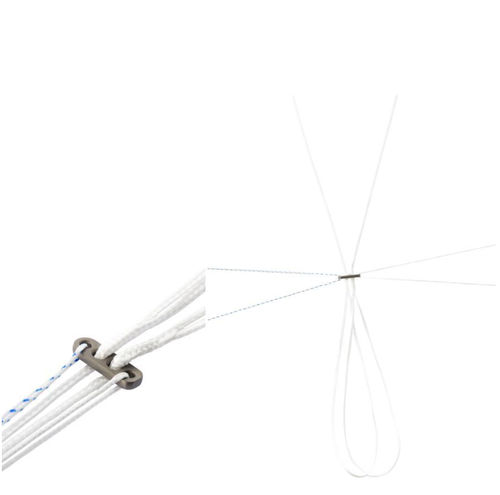
These devices typically consist of a cortical button connected to a high-strength suture loop.
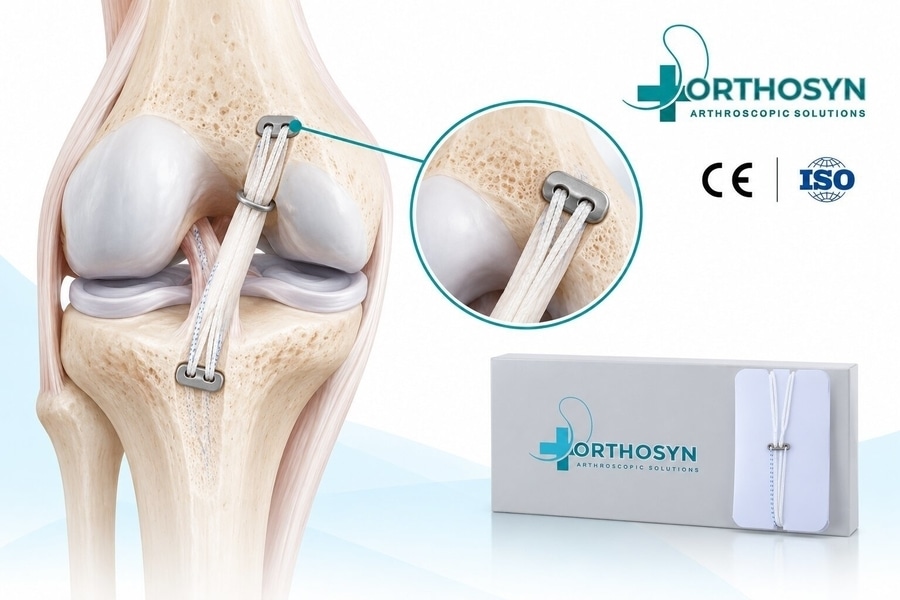
The button is passed through a bone channel and positioned against the outer cortical surface.
Once deployed, the button provides an external anchoring point for the graft.
The adjustable loop allows the surgeon to draw the graft into the prepared socket and adjust its position.
In a dual-suspensory all-inside reconstruction, fixation devices are used on both the femoral and tibial sides.
What Is an Adjustable-Loop Cortical Button?
An adjustable-loop cortical button is a suspensory fixation device used in ligament reconstruction.
Its primary components generally include:
- A cortical button that rests against the outer bone surface
- A high-strength adjustable suture loop
- A mechanism that permits controlled loop shortening and graft positioning
During ACL reconstruction, the graft is connected to the loop, while the cortical button provides fixation against the bone cortex.
Adjustable-loop systems allow the surgeon to control graft advancement into the socket and adjust its position during fixation.
However, fixation stability depends on device design, correct deployment, graft preparation, bone quality, and surgical technique.
All-Inside vs. Conventional ACL Reconstruction
Both techniques aim to restore knee stability by replacing the damaged anterior cruciate ligament.
Feature All-Inside ACL Reconstruction Conventional ACL Reconstruction
Bone preparation Femoral and tibial sockets Commonly full-length bone tunnels
Graft fixation Frequently cortical suspensory fixation on both sides Cortical buttons, interference screws, or other fixation systems
Graft configuration Often uses a shorter, folded graft Varies according to graft and technique
Surgical instruments Specialized socket preparation instruments Conventional tunnel drilling instruments
Main consideration Socket positioning and suspensory fixation Tunnel positioning and selected fixation method
All-inside reconstruction is not necessarily superior for every patient.
The appropriate approach depends on graft selection, anatomy, surgical objectives, and the surgeon's assessment.
What Are the Potential Advantages of All-Inside ACL Reconstruction?
All-inside reconstruction offers several technical characteristics that may be advantageous in selected procedures.
Bone preservation: Shorter sockets can reduce the amount of bone removed compared with conventional full-length tunnels.
Graft positioning: Adjustable-loop fixation can facilitate controlled advancement of the graft into the prepared sockets.
Flexible graft preparation: Certain all-inside techniques allow the use of shorter graft constructs, depending on the selected tendon and surgical approach.
Arthroscopic application: The procedure can be performed using minimally invasive arthroscopic techniques.
However, these technical characteristics do not automatically translate into superior clinical outcomes. Comparative results depend on patient factors, fixation methods, rehabilitation, and surgical execution.
How Do Orthosyn ACL Fixation Devices Support All-Inside Reconstruction?
Orthosyn Medikal provides fixation solutions for arthroscopic ACL reconstruction, including femoral and tibial adjustable-loop cortical button systems.
These devices are intended to support graft fixation during ligament reconstruction procedures, according to their specific design and approved indications.
The Orthosyn ACL fixation portfolio includes:
- Adjustable-loop femoral fixation buttons
- Adjustable-loop tibial fixation buttons
- Cortical suspensory fixation solutions
- Additional ACL reconstruction implants and surgical instruments
In suitable configurations, adjustable-loop fixation devices can support graft positioning and tension adjustment during reconstruction.
The compatibility of individual devices with a particular all-inside technique must be confirmed using their specifications and instructions for use.
What Factors Influence Graft Fixation Stability?
Successful graft fixation depends on several mechanical and biological factors.
Socket positioning: Accurate placement of the femoral and tibial sockets is essential for appropriate graft alignment.
Cortical button deployment: The button must be correctly positioned against the cortical bone surface.
Graft quality: Graft diameter, length, preparation, and tissue quality influence the reconstruction.
Loop tensioning: Proper tension adjustment helps achieve the intended graft position and initial fixation.
Bone quality: The characteristics of the cortical bone can affect the mechanical performance of suspensory fixation.
Biological integration: Over time, tendon-to-bone healing contributes to the long-term stability of the reconstruction.
Initial mechanical fixation and biological graft integration are separate processes, and both are important for successful ligament reconstruction.
Conclusion
All-inside ACL reconstruction is an arthroscopic technique that uses femoral and tibial bone sockets combined with specialized graft fixation systems.
Adjustable-loop cortical buttons play an important role in many all-inside procedures by providing suspensory fixation and allowing controlled graft positioning within the sockets.
Orthosyn Medikal offers adjustable-loop femoral and tibial cortical button systems as part of its arthroscopic ACL reconstruction portfolio.
Understanding socket preparation, cortical button fixation, graft tensioning, and biological integration helps explain the mechanical principles behind all-inside ACL reconstruction and the role of modern ligament fixation devices.