#Product Trends
What Is Linear Hyaluronic Acid? | Orthosyn
Understand the molecular structure, viscosity, viscoelastic properties, and applications of linear hyaluronic acid in intra-articular injections, including AlkaFlex formulations.
Linear hyaluronic acid (HA) is a non-cross-linked form of hyaluronic acid composed of long polymer chains. It is used in various medical applications, including intra-articular injections for viscosupplementation.
Unlike cross-linked hyaluronic acid, linear HA does not contain an intentionally introduced chemical network connecting its polymer chains. Its physical properties depend on factors such as molecular weight, concentration, and molecular interactions.
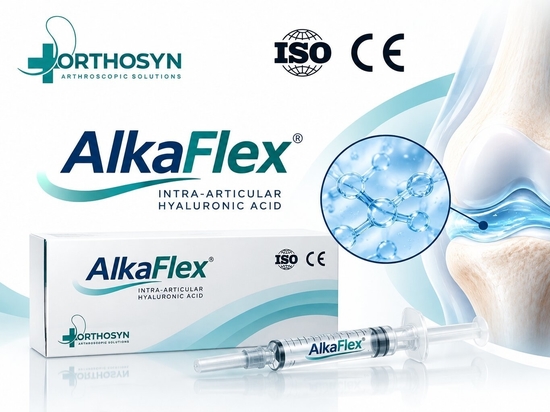
AlkaFlex linear hyaluronic acid injections, part of the Orthosyn Medikal product portfolio, include formulations with different HA concentrations and a reported molecular weight of approximately 2.4 MDa.
What Is Linear Hyaluronic Acid?
Linear hyaluronic acid is a naturally occurring type of glycosaminoglycan consisting of repeating disaccharide units.
Its molecular structure consists of long, unbranched polymer chains that can interact with water molecules and neighboring HA chains.
Hyaluronic acid is naturally present in several human tissues, including:
- Synovial fluid
- Articular cartilage
- Connective tissues
- Skin and extracellular matrix
Within synovial fluid, HA contributes to lubrication and viscoelastic behavior, helping the fluid respond to different mechanical conditions during joint movement.
Linear HA formulations are designed to provide specific physical characteristics based on their molecular weight, concentration, and manufacturing process.
How Does Linear Hyaluronic Acid Work?
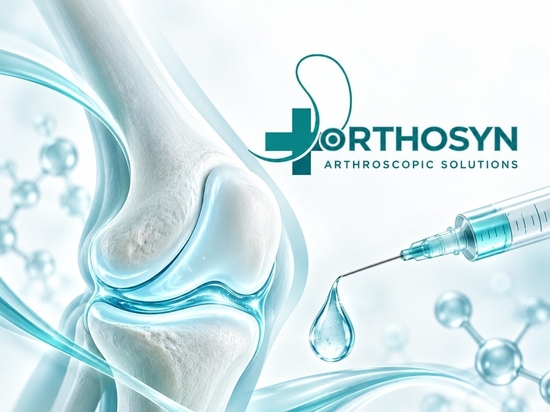
Linear hyaluronic acid interacts with water and forms a hydrated polymer system.
Its long molecular chains can move, overlap, and interact with one another, influencing the formulation's viscosity and elasticity.
In intra-articular viscosupplementation, linear HA is administered into the joint space to supplement the viscoelastic properties of synovial fluid.
Its mechanical behavior depends on several factors:
- Molecular weight: Influences polymer chain length and molecular interactions.
- Concentration: Affects the number of HA chains within a given volume.
- Viscosity: Determines resistance to flow under shear.
- Elasticity: Describes the ability to store mechanical energy during deformation.
These characteristics contribute to the rheological profile of a linear HA formulation.
However, rheological properties alone do not establish clinical effectiveness.
What Is the Difference Between Linear and Cross-Linked Hyaluronic Acid?
The primary difference between linear and cross-linked hyaluronic acid is their molecular structure.
Linear HA consists of non-cross-linked polymer chains, while cross-linked HA contains chemical connections between polymer chains.
Characteristic Linear Hyaluronic Acid Cross-Linked Hyaluronic Acid
Molecular structure Long, non-cross-linked polymer chains Chemically connected polymer chains
Chemical cross-linking Not intentionally introduced Present
Rheological behavior Depends on molecular weight and concentration Depends on molecular characteristics and cross-linking
Viscosity Varies with formulation Varies with formulation and network structure
Intra-articular application Used in viscosupplementation Used in viscosupplementation
Cross-linking can modify structural cohesion and resistance to deformation.
However, cross-linked HA is not automatically clinically superior to linear HA. Clinical performance depends on the individual formulation, approved indication, and supporting evidence.
How Does Molecular Weight Affect Linear Hyaluronic Acid?
Molecular weight is one of the main factors influencing the physical behavior of linear hyaluronic acid.
Higher molecular weight generally corresponds to longer polymer chains, which can increase molecular interactions and chain entanglement.
Under comparable conditions, higher molecular weight linear HA may exhibit greater viscosity and more pronounced viscoelastic behavior.
For example, AlkaFlex linear hyaluronic acid has a reported molecular weight of approximately 2.4 MDa (million Daltons).
This molecular characteristic helps describe the polymer chains used in the formulation.
However, molecular weight should not be confused with HA concentration.
A formulation containing a higher concentration of HA does not necessarily have a higher molecular weight.
What Are the Rheological Properties of Linear Hyaluronic Acid?
Linear hyaluronic acid exhibits viscoelastic properties, meaning it combines viscous and elastic responses to mechanical forces.
Its rheological behavior can be evaluated using several parameters:
Viscosity: Measures resistance to flow and may change depending on shear rate.
Storage modulus (G′): Represents the elastic component of the material's response.
Loss modulus (G″): Represents the viscous component of the material's response.
Shear-thinning behavior: Describes the reduction in apparent viscosity as shear rate increases, a characteristic observed in many HA formulations.
These measurements help explain how linear HA behaves under different mechanical conditions.
The exact values depend on the formulation and testing conditions.
What Are AlkaFlex Linear Hyaluronic Acid Injections?
AlkaFlex, included in the Orthosyn Medikal portfolio, offers linear hyaluronic acid formulations intended for intra-articular administration.
The AlkaFlex linear HA range includes:
Product HA Concentration HA Content
AlkaFlex Linear HA 32 mg / 2 mL 1.6% 32 mg
AlkaFlex Linear HA 48 mg / 2 mL 2.4% 48 mg
Both formulations have a reported HA molecular weight of approximately 2.4 MDa.
The differences in HA concentration influence the amount of polymer present in each injection and may affect rheological behavior.
However, differences in concentration alone do not establish differences in clinical efficacy or duration of action.
Is Linear Hyaluronic Acid Used for Viscosupplementation?
Yes. Linear hyaluronic acid is used in intra-articular viscosupplementation products.
Viscosupplementation involves administering an HA formulation into the joint space to supplement the mechanical properties of synovial fluid.
The intended therapeutic applications depend on the product's approved indications and applicable clinical guidance.
Although HA injections are used in the management of certain joint conditions, clinical outcomes vary, and recommendations regarding their use differ between professional guidelines.
The selection of a linear or cross-linked HA formulation should therefore be based on product-specific information, clinical evidence, and professional medical judgment.
Conclusion
Linear hyaluronic acid is a non-cross-linked polymer composed of long molecular chains that contribute to viscosity, elasticity, and viscoelastic behavior.
Its physical characteristics are influenced by molecular weight, concentration, polymer interactions, and formulation conditions.
AlkaFlex linear hyaluronic acid injections, including 32 mg / 2 mL and 48 mg / 2 mL formulations, provide different HA concentrations with a reported molecular weight of approximately 2.4 MDa.
Understanding the structure and rheological behavior of linear HA helps explain its role in intra-articular viscosupplementation, while product-specific clinical evidence remains essential for evaluating its therapeutic use.