#Product Trends
Who is suitable for TAVR? Who is not suitable?
Who is suitable for TAVR? Who is not suitable?
The aortic root and access anatomy must meet the requirements for TAVR (especially femoral artery TAVR), and the life expectancy must be >1 year.
1. Age 70 years and older, with one of the following conditions:
1) Symptoms caused by severe aortic stenosis (AS): exercise-induced dyspnea, heart failure, angina, syncope, etc.
2) Asymptomatic severe AS patients whose symptoms or blood pressure drop can be induced by exercise testing.
3) Asymptomatic severe AS, LVEF >55%, normal exercise test results, low intervention risk, and meeting one of the following criteria: extremely severe AS (mean pressure gradient ≥60 mmHg or peak flow velocity >5 m/s); severe valvular calcification (assessed by CT) and peak flow velocity progression ≥0.3 m/s; significantly elevated B-type natriuretic peptide (greater than 3 times the normal value adjusted for sex and age) confirmed by severe examination without other precipitating factors. 2. Patients under 70 years of age with severe ankylosing spondylitis (AS) who have contraindications to or are at high risk for surgery, or who have other risk factors such as post-chest radiotherapy, liver failure, diffuse severe aortic calcification, or extreme weakness.
2. Damage to surgical aortic bioprosthetic valves.
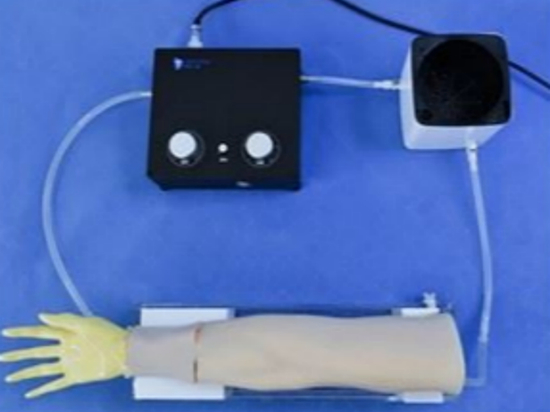
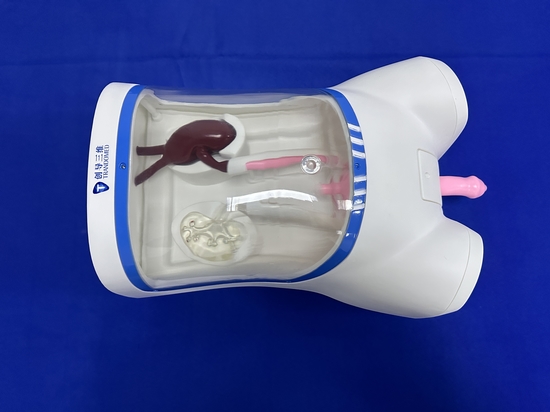
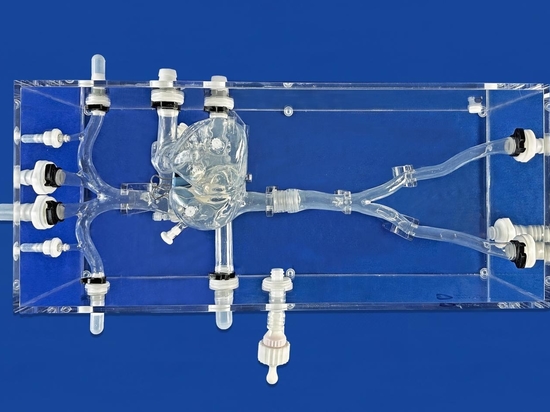
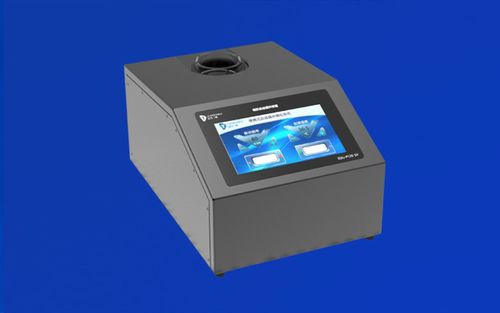
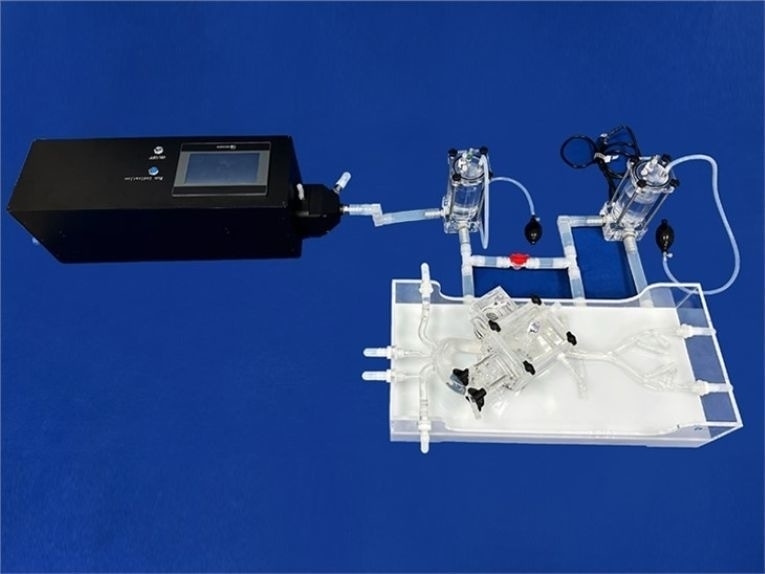
The TAVR aortic model is a surgical training system that simulates aortic valve replacement surgery, providing a highly realistic interactive surgical simulation environment. It provides hands-on training for clinicians and medical professionals, helping to improve clinical skills, reduce costs, and ultimately improve patient safety. This training simulator contains multiple modules, each usable for a corresponding surgical simulation operation, making it a specialized training simulator with professional structure and functionality. The 3D printing material is made of highly transparent, non-toxic silicone, allowing for direct visualization of the interventional device operation. Based on real human CT or MRI data, a 3D model of human arteries is reconstructed using a patented special silicone formula and manufactured using a 3D printing process with completely independent intellectual property rights. It reproduces the spatial structure and internal diameter of blood vessels in a 1:1 scale, achieving a high degree of simulation. The entire system can perform complete and realistic simulations of transcatheter aortic valve replacement (TAVR) procedures, including femoral artery and apical approaches, supporting both methods. It can also be used for catheter and guidewire training, and aortic valve stent implantation practice.