#Product Trends
Comparison of Advantages and Disadvantages of Femoral Artery Intervention and Radial Artery Intervention
Comparison of Advantages and Disadvantages of Femoral Artery Intervention and Radial Artery Intervention
Vascular interventional techniques are procedures performed via blood vessels under the guidance of medical imaging equipment, using instruments such as puncture needles, guidewires, and catheters for diagnosis and treatment. Routine vascular interventions mainly include balloon angioplasty, stent implantation, catheter-directed thrombolysis, plaque excision, and mechanical thrombectomy. Arterial puncture is the first step in interventional surgery; currently, the radial and femoral arteries are commonly chosen for puncture in clinical practice. Rapid and accurate successful puncture is crucial for the success of the procedure.
Coronary artery intervention via the femoral artery is the most classic and widely used route. Compared to radial artery puncture, femoral artery puncture is relatively simpler, and even beginners can quickly master it. Secondly, the femoral artery has a large inner diameter, allowing for the use of any desired catheter, enabling rapid instrument insertion while ensuring the vascular access is not damaged, thus saving surgical time. However, femoral artery puncture also has significant drawbacks. The groin area is rich in blood vessels and nerves, making accidental injury easy. For example, the femoral vein runs within the femoral artery, and the femoral nerve accompanies it externally. 5%–10% of patients experience complications after local puncture, including bleeding, hematoma, pseudoaneurysm, arteriovenous fistula, and nerve damage. There is also a risk of retroperitoneal hemorrhage, which can be fatal in severe cases.
Radial artery intervention is becoming increasingly common, offering several advantages over femoral artery intervention. First, there are no large veins or nerves near the radial artery puncture site, and there is collateral circulation through Allen's circle between the radial and ulnar arteries, minimizing the risk of arteriovenous fistula, nerve damage, or hand ischemia. Second, patients undergoing radial artery puncture can have their sheath removed and bandaged immediately, reducing the risk of deep vein thrombosis and pulmonary embolism due to prolonged bed rest, thus facilitating postoperative recovery. However, the radial artery is relatively small and is one of the most easily spasmable muscular vessels in the body. Therefore, radial artery puncture is highly prone to failure due to inability to puncture the vessel or repeated stimulation causing arterial spasm.
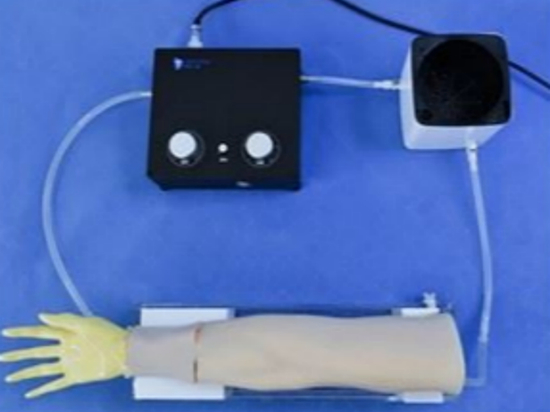
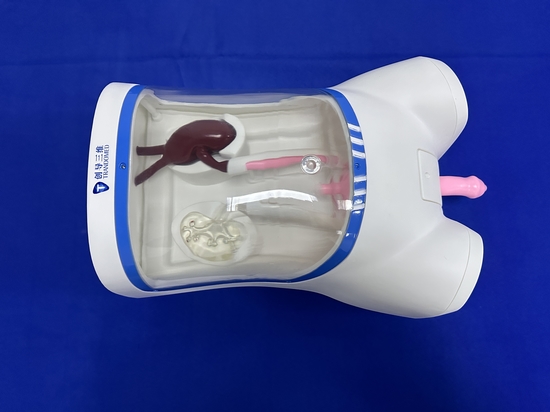
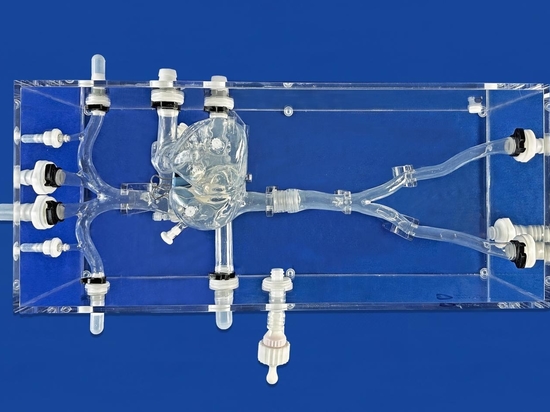
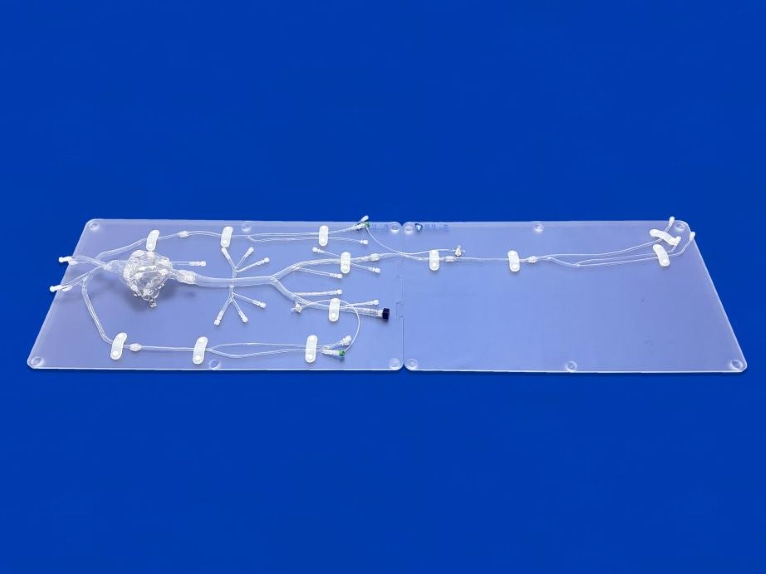
The whole-body arterial vascular model, independently developed and designed by Chuangdao 3D Medical, is manufactured using 3D printing technology. It conforms to real human CT data, offering high fidelity. The vascular material is transparent silicone, closely resembling the elasticity and coefficient of friction of normal human blood vessels. The model includes femoral and radial artery access points to meet the training needs of different surgical procedures and can be used for simulating the operation of real surgical instruments.