#Product Trends
Mitral Regurgitation: Symptoms, Treatment and Interventional Model
Mitral Regurgitation: Symptoms, Treatment and Interventional Model
The common symptoms of mitral regurgitation (MR) include dyspnea, accompanied by edema, effusion, and other manifestations. Treatment modalities consist of medical therapy and surgical intervention. Under normal physiological conditions, cardiac valves open to allow forward blood flow and close to prevent regurgitation, thereby ensuring unidirectional blood circulation within the heart. In patients with mitral regurgitation, blood flows backward from the left ventricle into the left atrium during ventricular systole, a pathological phenomenon known as mitral regurgitation. Dyspnea is a typical symptom, often combined with edema and effusion. Patients with mitral regurgitation may remain asymptomatic for a considerable period; however, once symptoms emerge, the prognosis is poor. The main treatment approaches include medical management of heart failure and surgical treatment.
Medical Therapy:1. In cases of acute severe mitral regurgitation, patients usually present with heart failure symptoms, and even shock may occur. The goal of medical therapy is to reduce regurgitant volume, lower pulmonary venous pressure, and increase cardiac output. Arterial vasodilators can decrease systemic vascular resistance, thereby improving aortic output, while reducing mitral regurgitant volume and left atrial pressure. 2.Mitral regurgitation may be asymptomatic for an extended period, during which no specific treatment is required but regular follow-up is essential. The key focus of follow-up is the prevention of rheumatic fever and infective endocarditis. For symptomatic mitral regurgitation, angiotensin-converting enzyme inhibitors (ACEIs) have been proven effective in reducing left ventricular volume and alleviating symptoms. Vasodilators have limited efficacy in chronic mitral regurgitation; long-term anticoagulant therapy should also be administered if atrial fibrillation is concurrent.
Surgical Treatment: Surgical intervention is the fundamental treatment for mitral regurgitation and should be performed before irreversible left ventricular dysfunction occurs. The commonly used surgical procedures include mitral valve repair and mitral valve replacement. Mitral valve repair is suitable for patients with mild valve damage, non-calcified leaflets, annular dilatation, and no severe thickening of the subvalvular chordae tendineae. Mitral valve replacement is indicated for patients with severe valve damage.
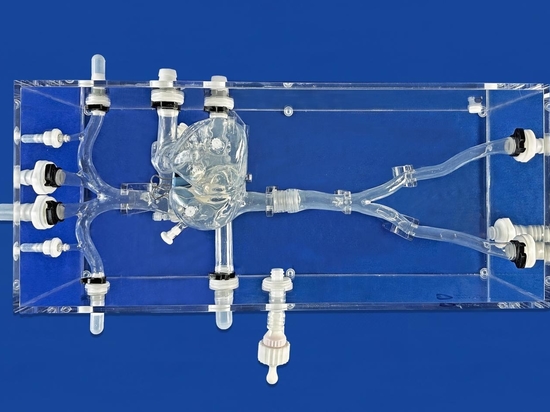
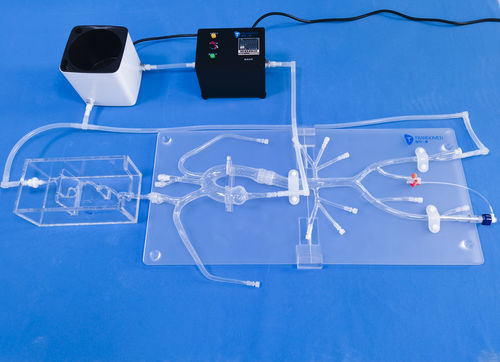
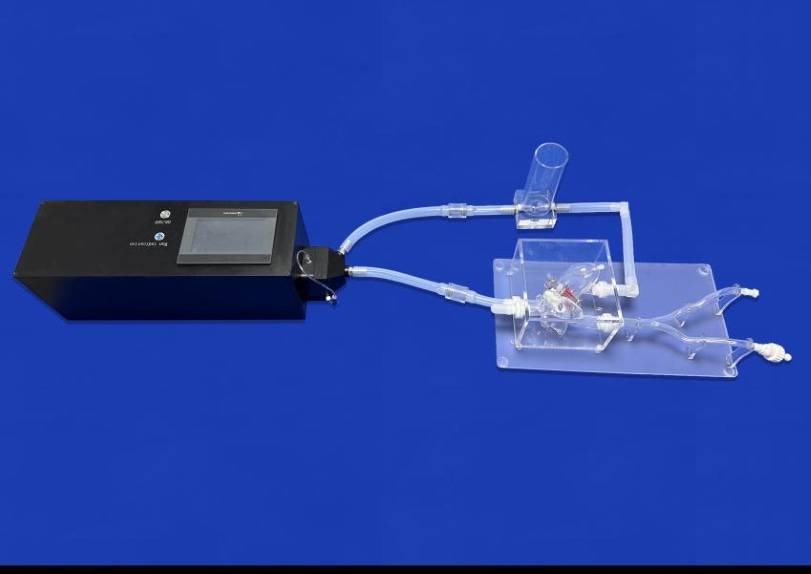
The mitral interventional vascular model is fabricated using 3D technology, reconstructed and optimized based on real human CT data, with silica gel as the printing material. This model includes bilateral femoral veins, superior vena cava, inferior vena cava, right atrium, and the entire left cardiac structure. Its core features lie in the simulation of atrial septal lesions (with replaceable atrial septa of different specifications and sizes) and mitral valve lesions (with replaceable mitral valves of different pathological morphologies). It can be applied to the research, development, and testing of interventional medical devices and occluders for intracardiac interventions.