#Product Trends
A knowledge of Abdominal Artery Model
A knowledge of Abdominal Artery Model
In the field of interventional medicine, abdominal and lower extremity vascular diseases have become key challenges in clinical diagnosis and treatment as well as technological research and development due to their complex anatomical structures and diverse lesion types. A highly simulated abdominal artery model is the key to breaking through this barrier!
Let's first grasp the core medical knowledge: The abdominal artery is an important blood supply hub of the human trunk. Among them, the abdominal aorta, as the thickest arterial trunk in the human body, branches downward into the iliac arteries and further continues into the femoral arteries. At the same time, it supplies blood to important abdominal organs and kidneys through branches such as the celiac trunk, common hepatic artery, proper hepatic artery, and renal artery; the uterine artery is responsible for the blood supply to the female pelvic cavity and uterus. Clinically, lesions such as aneurysms, stenosis, and embolism often occur in these vascular segments. Accurately mastering the anatomical structure and lesion characteristics is the core premise for the success of interventional therapy.
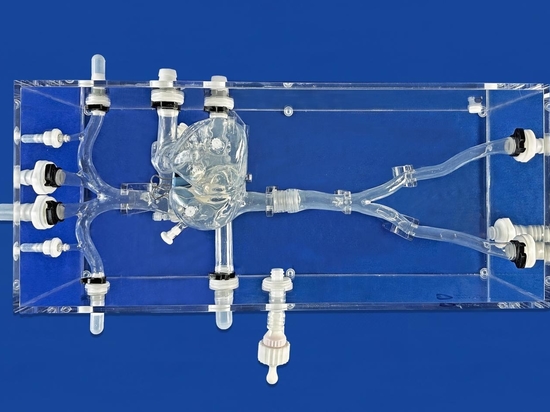
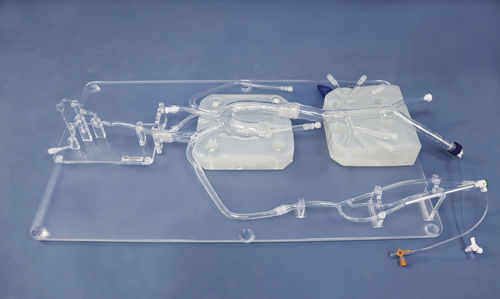
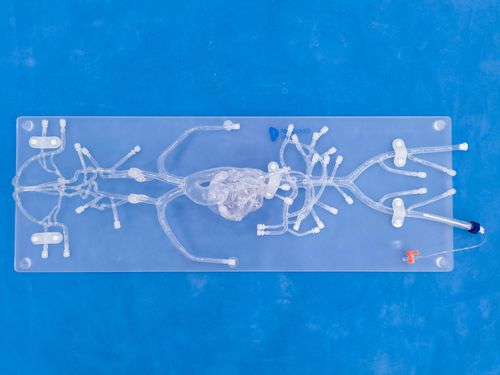
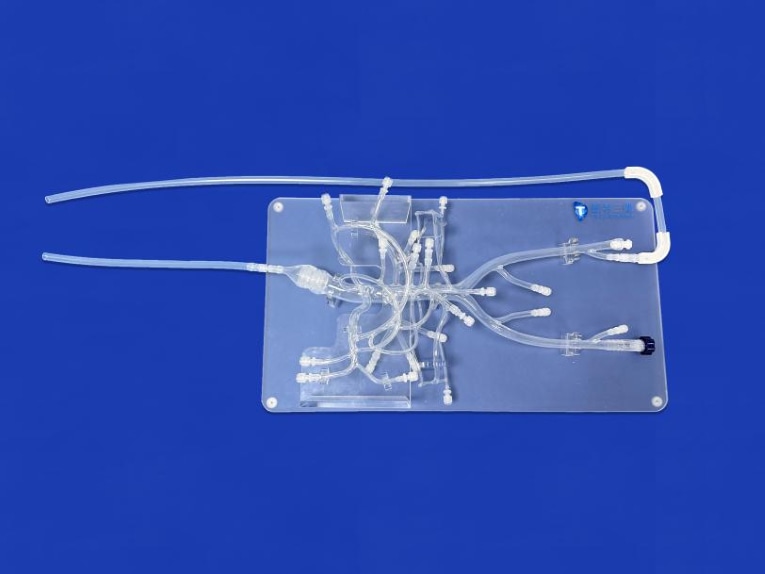
This abdominal artery model accurately replicates the core anatomical structure, covering key blood vessels such as the femoral artery, iliac artery, abdominal aorta, celiac trunk, common hepatic artery, proper hepatic artery, renal artery, and uterine artery. It perfectly restores the vascular course, branch angle, and lumen morphology, providing a real anatomical reference for medical practice and technological research and development!
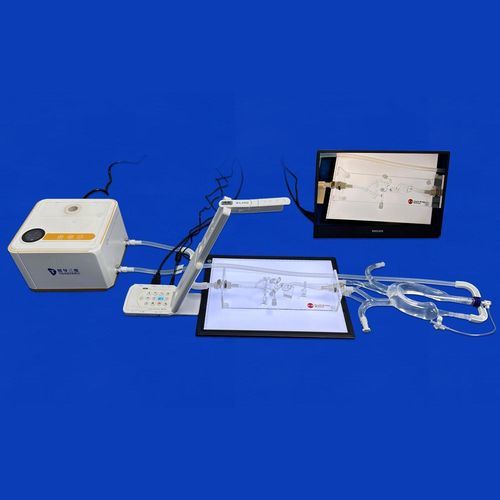
1. More Flexible Modular Design: The model is fixed on an acrylic plate. Through customized transparent connectors, the iliac artery segments and abdominal artery segments on both sides can be directly observed and flexibly replaced. It can also be customized with exclusive vascular segments according to your personalized needs to adapt to different application scenarios.
2. More Realistic Lesion Simulation: Common abdominal vascular lesions such as aneurysms, stenosis, and embolism can be added to the corresponding vascular segments as needed, highly restoring real clinical cases and helping to accurately grasp the key points of lesion diagnosis and treatment.
3. Versatile Adaptation to Multiple Scenarios: Whether it is the research and development, testing, and validation of peripheral interventional devices such as guidewires, catheters, balloons, and stents, or the training and demonstration of peripheral interventional surgeries and lower extremity vascular interventional surgeries (such as transfemoral intervention using crossover technique), this model can accurately match the needs and build a bridge between theory and practice.
For interventional physicians, medical device R&D personnel, and medical educators, a precise, flexible, and realistic abdominal artery model can greatly improve the efficiency of diagnosis and treatment training and accelerate the process of device research and development. Choose it to make medical practice more efficient and technological innovation more targeted!