#Industry News
Why is the iteration of neurointerventional devices inseparable from highly realistic simulation models?
Why is the iteration of neurointerventional devices inseparable from highly realistic simulation models?
The Industry Pain Point: The Disconnect Between Lab Performance and Clinical Reality
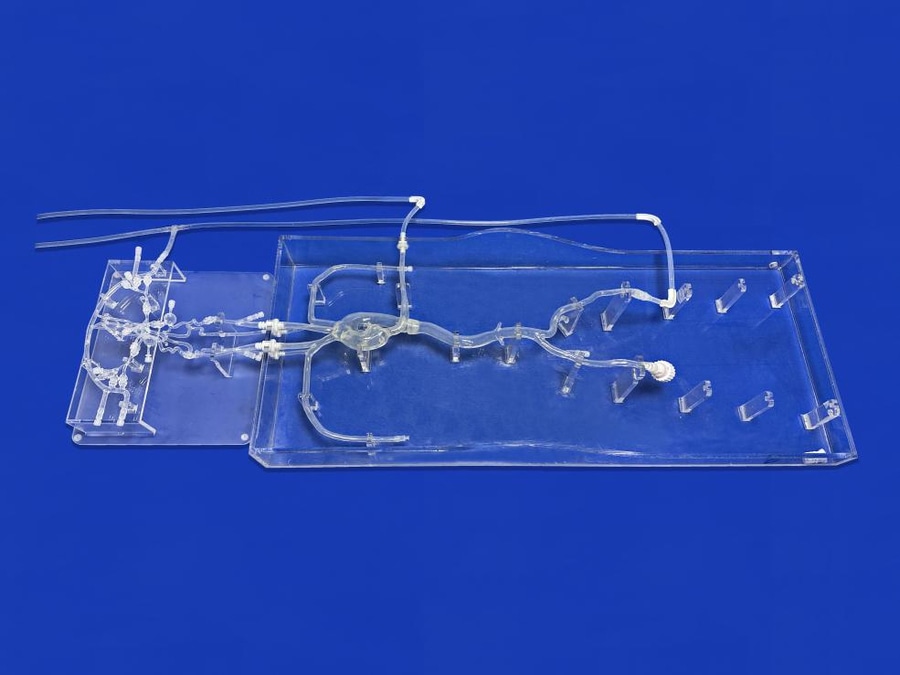
With the rapid development of neurointerventional technology, the research and iteration of neurointerventional devices (guidewires, microcatheters, embolization materials, stents, thrombectomy devices, etc.) has become the core driving force for industry progress. However, behind the seemingly prosperous market lies a pain point that plagues countless R&D teams: many devices perform excellently in laboratory tests, but encounter problems "not adapting" to clinical settings-guidewires cannot pass smoothly through tortuous blood vessels, microcatheters have difficulty in placement, and stents are not accurately deployed, ultimately failing to meet clinical needs and forcing them to be withdrawn or iterated and optimized. This not only wastes a lot of R&D costs and time but may also cause missed market opportunities. The core reason is that the R&D of neurointerventional devices lacks a highly realistic, clinically relevant testing platform. The core requirements for neurointerventional devices are "precision, compliance, and controllability," and the verification of these performance characteristics must be carried out in an environment highly consistent with the actual intracranial blood vessels in the human body. Intracranial blood vessels are delicate, tortuous, and have highly variable branches, with fragile walls. This places extremely high demands on the permeability, tracking ability, support, and flexibility of medical devices. Ordinary in vitro testing environments (such as simple vascular simulation tubes) simply cannot replicate the complex structure and mechanical properties of real intracranial blood vessels, thus failing to accurately verify the clinical suitability of devices; this is where advanced platforms like the Neuro Vascular System II (with silicone base) become essential.
The Solution: High-Fidelity Training Models Based on Real Human Anatomy
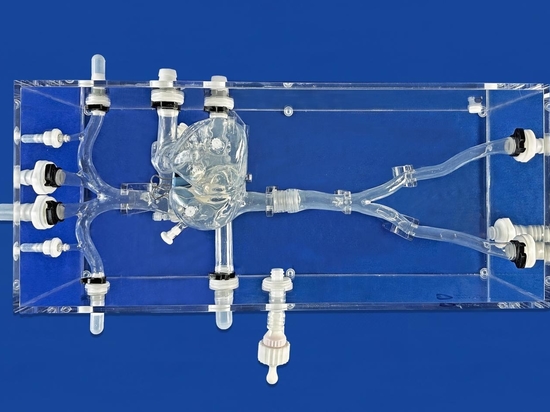
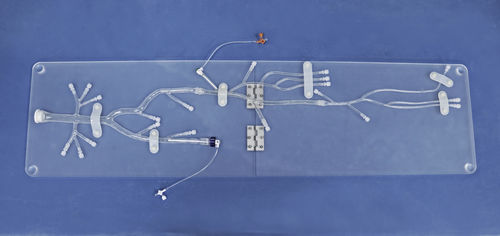
Professional neurovascular interventional training models precisely address these pain points in the field of neurointerventional device development, becoming the "golden testing platform" for device R&D teams. A high-quality neurovascular interventional training model, reconstructed from real human intracranial CT and MRI image data, accurately replicates the anatomical structure of human intracranial blood vessels at a 1:1 scale, including vessel diameter, tortuosity angles, branch distribution, and wall elasticity, realistically reproducing the mechanical properties and complex environment of intracranial blood vessels. Simultaneously, the model supports flexible replacement of lesion modules, simulating various common clinical lesion scenarios such as calcification, stenosis, aneurysm, and vascular malformations, comprehensively covering the testing needs of neurointerventional devices.
R&D Value: Accelerating Verification and Shortening Development Cycles
For R&D teams, the value of neurovascular interventional training models is reflected in several aspects. First, it can accurately verify the core performance of devices: the tracking, flexibility, and passage of guidewires; the positioning accuracy and maneuverability of microcatheters; the release effect and support force of stents; and the diffusion and safety of embolization materials-all can be realistically reflected in the model. R&D teams can quickly identify design flaws through model testing, such as guidewire tangling, inflexible microcatheter steering, and stent release deviations, thereby optimizing product design and improving the device's clinical suitability. Second, utilizing advanced platforms like the Neuro Vascular System II (with silicone base) helps reduce R&D costs and shorten the development cycle: the model is reusable, eliminating the need for frequent animal experiments or clinical trials, significantly reducing R&D costs; simultaneously, the convenient testing process allows for rapid acquisition of accurate test data, helping R&D teams quickly iterate on devices and seize market opportunities.
Clinical Translation: Bridging the Gap Between Engineering and Patient Outcomes
More importantly, the Neuro Vascular System II (with silicone base) enables seamless integration between R&D and clinical practice. Based on real clinical data, the testing environment is highly consistent with clinical surgery. Devices optimized through model testing by R&D teams can better meet clinical needs, reducing the awkward situation of "good in the lab, not good in clinical practice." For clinicians, this means that future neurointerventional devices will be better suited to real surgical scenarios, operate more smoothly and safely, and effectively improve surgical efficiency and reduce surgical risks. For patients, this means they can receive higher-quality and more precise diagnostic and treatment services, and improve treatment outcomes.