#Industry News
Why High-Fidelity Models Are Indispensable for Neurointerventional Device Iteration
Why High-Fidelity Models Are Indispensable for Neurointerventional Device Iteration
1. Booming Neurointervention Market yet Prominent R&D Bottlenecks
Driven by rapid technological advances in neurovascular intervention, the research, development and iteration of neuro vascular interventional devices-including guidewires, microcatheters, embolization materials, stents and thrombectomy devices-have become core engines fueling industry growth. Statistics from Grand View Research show the global neuro vascular intervention market exceeded USD 6.8 billion in 2023 and is projected to surpass USD 12 billion by 2030, interventional devices accounting for over 60% of the total market share. Despite the prosperous market outlook, R&D teams are plagued by a universal pain point: many devices deliver outstanding performance in lab tests yet fail to adapt to real clinical scenarios after launch. Common problems include guidewires failing to navigate tortuous vessels, difficult microcatheter positioning, and inaccurate stent deployment. Such flaws force products off the market or into repeated revisions, wasting substantial R&D funds and time while missing critical market windows.
2. Root Cause: Lack of Clinically Relevant Test Carriers
The disconnect between laboratory data and clinical outcomes stems from the absence of high-fidelity test platforms that replicate real human anatomy. Neurointerventional devices demand exceptional precision, flexibility and controllability, all of which must be vlidated under intracranial vascular conditions identical to human patients.
Human intracranial vessels are thin, highly tortuous, densely branched and fragile, imposing stringent standards on device trackability, crossability, support force and compliance. Simple generic vascular phantoms cannot replicate the intricate anatomical geometry and biomechanical properties of natural intracranial vasculature, making them incapable of accurately evaluating clinical compatibility of new devices.
Traditional evaluation methods carry inherent limitations. Animal models feature thicker vessels, milder tortuosity and inconsistent vascular elasticity compared with humans, generating data with limited reference value. Animal trials also incur high costs, long lead times and cannot replicate pathological conditions such as calcification, stenosis and aneurysms. Clinical trial testing carries significant patient risks, cumbersome approval procedures and variable individual anatomy, delaying rapid, standardized performance verification. High-fidelity neurovascular training models manufactured by Trandomed solve all these drawbacks and serve as an ideal gold-standard testing platform for device developers.
3. Core Advantages of Trandomed's Neurovascular Simulation Models
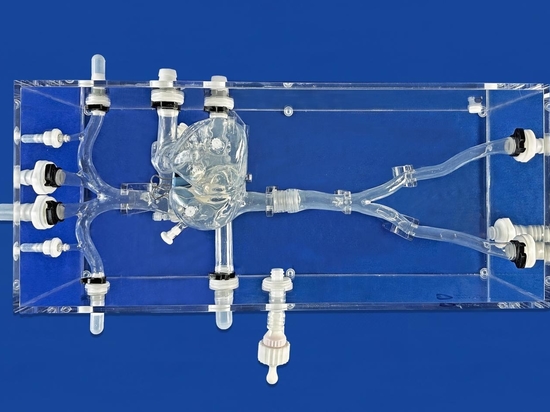
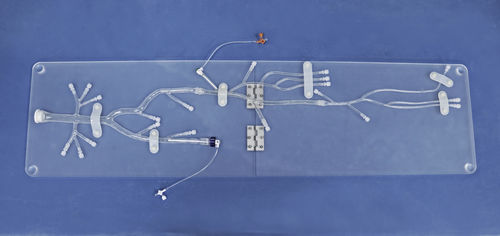
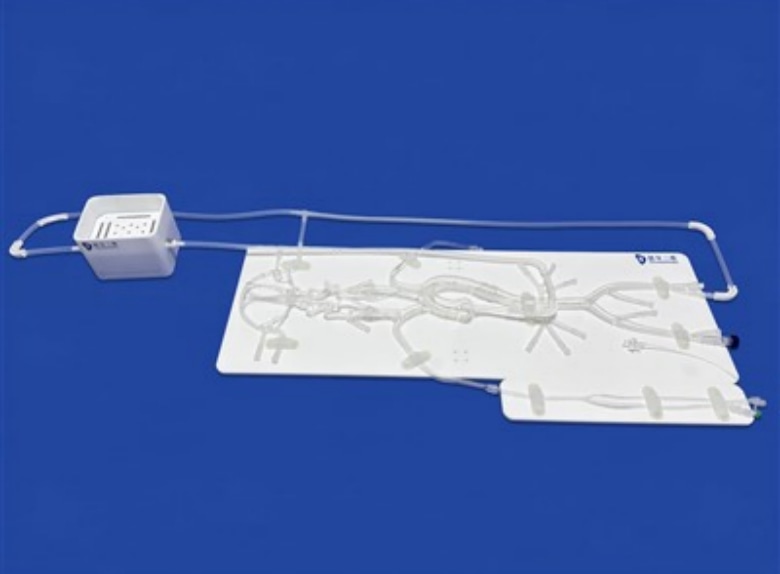
Trandomed's premium neurovascular training models are reconstructed from authentic human intracranial CT and MRI scans, precisely replicating 1:1 anatomical details including vessel diameter, tortuosity angles, branching patterns and vascular wall elasticity to restore native intracranial biomechanical characteristics. Modular pathological inserts are interchangeable to simulate calcification, stenosis, aneurysms and vascular malformations, covering full-spectrum testing requirements for all neurointerventional devices.
For R&D teams, these models deliver three core values. First, they enable authentic performance assessment: engineers can reliably test guidewire trackability and crossability, microcatheter maneuverability, stent deployment accuracy and radial support, as well as embolization material distribution and safety. Design defects such as kinking guidewires, inflexible microcatheter steering and offset stent release can be identified and corrected early to improve clinical compatibility.
Second, reusable simulation models drastically cut R&D expenditure and shorten development timelines. Developers reduce reliance on costly, time-consuming animal experiments and preliminary clinical trials. Fast, repeatable testing generates standardized quantitative data to accelerate product iteration and capture market opportunities ahead of competitors.
Most crucially, the models bridge laboratory development and clinical practice. Built on real patient imaging datasets, their surgical environment mirrors actual endovascular procedures. Devices optimized via phantom testing fit clinical workflows far better and avoid the common issue of lab-effective but clinically impractical products.
4. High-Fidelity Phantoms as the Cornerstone of Industrial Upgrading
For clinicians, devices validated on Trandomed's simulation platforms deliver smoother, safer intraoperative performance and higher surgical efficiency with reduced procedural risks. Ultimately, patients benefit from more precise, high-quality interventional treatments and improved therapeutic outcomes.
Nowadays, leading neurointerventional device manufacturers integrate high-fidelity Neuro Vascular models as standard R&D infrastructure. Every stage from initial design and performance verification to iterative refinement and pre-clinical rehearsal relies heavily on anatomical simulators. In short, high-fidelity neuro vascular training models from Trandomed have become a core driving force behind neurointerventional device upgrading. Superior simulation technology lays the foundation for clinically viable medical devices and sustained high-quality development of the entire neurointervention industry.