#Industry News
When Routine Disinfection Isn't Enough: UV-C Robots Against Persistent Hospital Pathogens
Pathogens survive routine disinfection. Solution: Harness the power of UV-C!
A 2022 study found pathogenic bacteria on high-touch hospital surfaces despite strict cleaning protocols. Autonomous UV-C robots add a validated, chemical-free layer of disinfection after manual cleaning, and Wolf-e Robotics' CoBOT Ultra delivers rapid, documented cycles.
Contaminated surfaces are a recognised route for healthcare-associated (nosocomial) infections, which is why hospitals enforce strict cleaning protocols. Yet a study in the American Journal of Infection Control suggests those protocols may no longer be enough. Researchers at the Central Texas Veterans Healthcare System sampled 400 surfaces in 2022, focusing on high-touch items such as resuscitation mannequins, mobile workstations, break-room tables, bed rails and clinical keyboards. Every surface harboured bacteria. In total, 60 bacterial types were identified, among them 18 recognised human pathogens including Enterococcus, Staphylococcus aureus, Streptococcus, Escherichia coli and Klebsiella aerogenes, some linked to bloodstream infections, meningitis and endocarditis. Roughly half were also present in patient clinical samples from that year. The message for infection-control teams is uncomfortable: even rigorous conventional cleaning can leave a measurable biological burden.
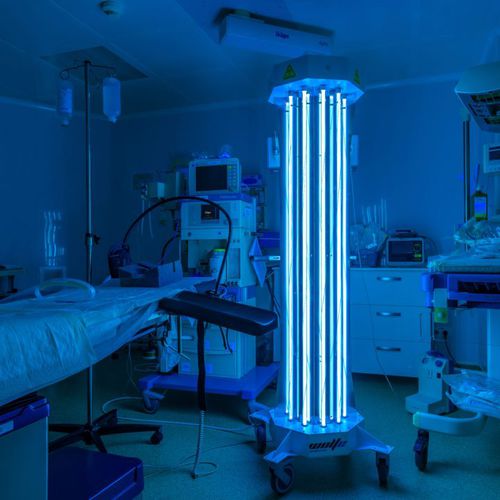
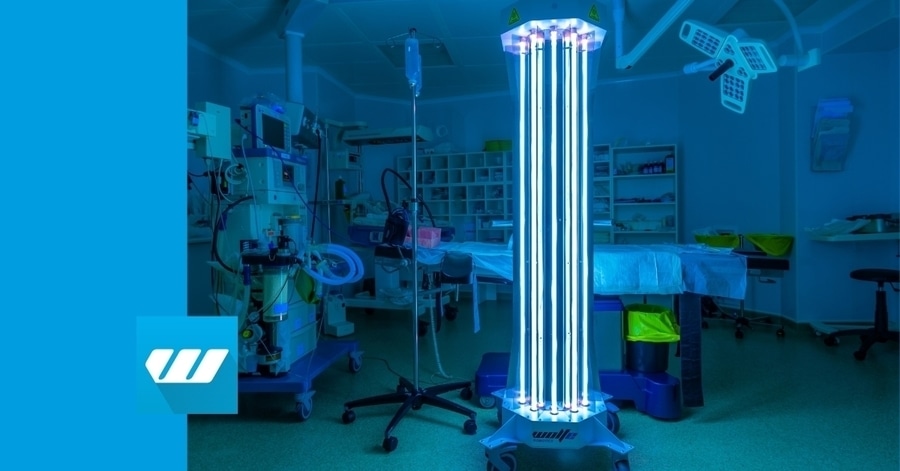
Germicidal UV-C offers a complementary answer. By destroying the DNA and RNA of micro-organisms, it inactivates a broad pathogen range. Autonomous UV-C robots disinfect both surfaces and air, deployed after manual cleaning to raise the overall disinfection rate. They rely on motion sensors that stop emission when people approach, follow a predetermined path through rooms and corridors, and return to their charging station without staff intervention, reducing both residual contamination and labour cost.
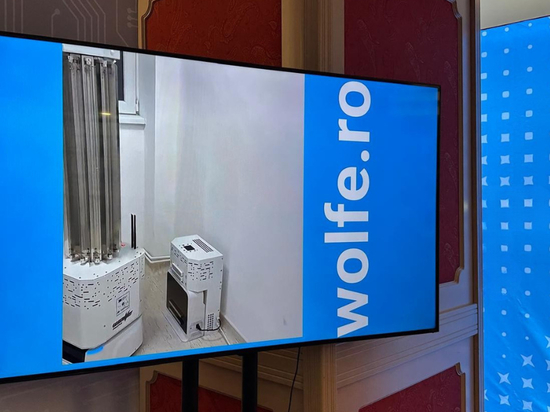
Wolf-e Robotics' CoBOT Ultra, designed and manufactured in Romania, carries the highest installed power in its class, producing cycles 25% more efficient than conventional chemical disinfection. It uses ten 325 W Philips UV-C sources that generate no ozone, at 253.7 nm, for a total of 3250 W and a 12,000-hour lamp life — nearly twice the power of SteriPro and over 2.25 times that of the UVD. Wolf-e Robotics' UV-C systems eliminate 99.9% of micro-organisms.
Discuss evidence-based, verifiable UV-C disinfection for your ICUs and operating rooms with Wolf-e Robotics on MedicalExpo!
***
/infection prevention and control, UV-C Candida auris ICU, disinfection verification, autonomous UVC robot, patient safety/