#Industry News
Controlling Candida auris in Healthcare Facilities with UV-C Disinfection Robots
Candida Auris is a highly resistant fungal pathogen that can survive on surfaces for varying periods of time, depending on the material, temperature, and humidity conditions.
Candida auris is a multidrug-resistant fungal pathogen whose incidence tripled in healthcare settings after the COVID-19 pandemic. Because it survives on clinical surfaces for up to two weeks and resists most antifungals, environmental control is decisive. Autonomous UV-C disinfection robots inactivate it to a 6-log level without chemicals.
Candida auris has become one of the most difficult environmental pathogens in modern hospitals. According to the U.S. Centers for Disease Control and Prevention, its incidence tripled after the pandemic (data published in the Annals of Internal Medicine). The organism survives on wet surfaces for up to 7 days at close to 100% viability, and on non-porous plastic for up to 14 days, growing efficiently between 37 and 40 °C — the everyday conditions of occupied wards and intensive care units. With only three antifungal drug classes available, compared with more than six antibiotic classes for bacterial infections, and with resistance emerging to all three, environmental decontamination has moved from good practice to clinical priority. The pathogen is also frequently misidentified by standard laboratory methods and has driven documented outbreaks across healthcare facilities.
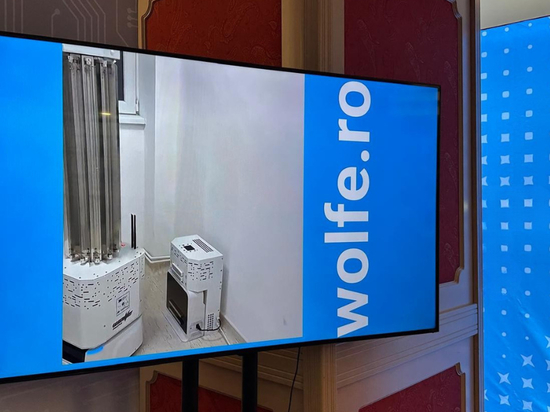
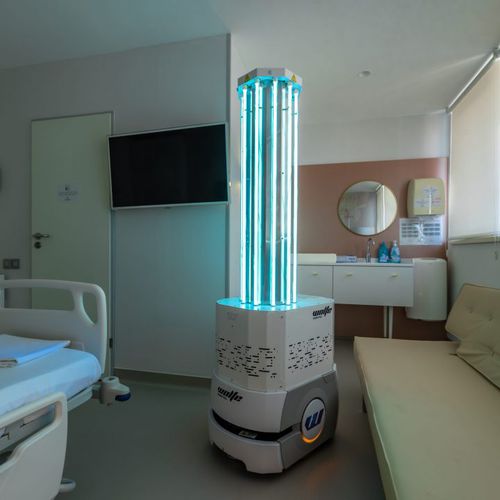
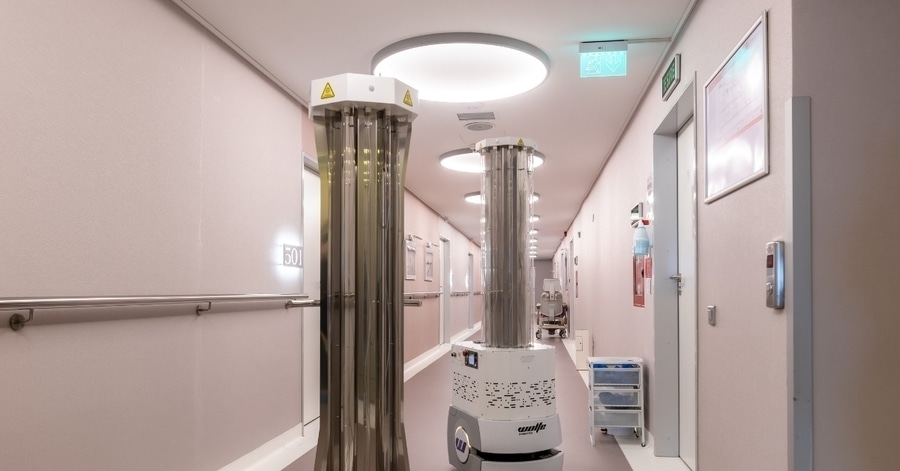
UV-C radiation in the 200–280 nm range disrupts the DNA and RNA of bacteria, viruses and fungi, leaving them unable to reproduce. Wolf-e Robotics' autonomous mobile robots emit at 254 nm, reaching high-touch and hard-to-access surfaces without chemicals or residues, while recording every cycle for full traceability.
The efficacy is measurable. A 2019 study indexed by the U.S. National Library of Medicine confirmed that Candida auris can be eradicated through UV-C surface disinfection. For a 4×4 m room, WolfBOT destroys Candida difficile spores by 99.9999% in 1.4 minutes (2000 W, irradiance 6630 μW/cm² at 1 m), while CoBOT-Ultra achieves the same result in 49 seconds (3250 W, 11320 µW/cm² at 1 m). At 254 nm the robots record a 6-log (99.9999%) reduction of C. auris, verifiable by laboratory analysis and by conventional or electronic dosimeters.
See the WolfBOT and CoBOT-Ultra disinfection robots on the Wolf-e Robotics MedicalExpo profile, or contact the manufacturer for an efficacy assessment tailored to your facility!
***
/UVC disinfection robot, Candida auris control, hospital infection prevention, no-touch disinfection, nosocomial infection/