#Product Trends
Arthroscopic ACL Reconstruction Guide: Step-by-Step Surgical Technique
A comprehensive overview of arthroscopic ACL reconstruction, including surgical steps, graft preparation, fixation methods, and implant selection.
Arthroscopic anterior cruciate ligament (ACL) reconstruction is a minimally invasive surgical procedure used to restore knee stability following ACL injury. It is one of the most commonly performed procedures in orthopedic sports medicine.
This technique enables surgeons to reconstruct the torn ligament using a graft, allowing patients to regain knee function, stability, and return to physical activities.
The ACL is a key ligament that stabilizes the knee joint, preventing excessive forward movement of the tibia relative to the femur. Injuries to the ACL are common in athletes and active individuals, often resulting from sudden pivoting movements, trauma, or high-impact sports.
Common symptoms of ACL injury include knee instability, swelling, pain, and difficulty in performing physical activities.
Indications for ACL reconstruction include complete ligament rupture, symptomatic instability, failure of conservative treatment, and active patients seeking to return to sports or demanding physical activities.
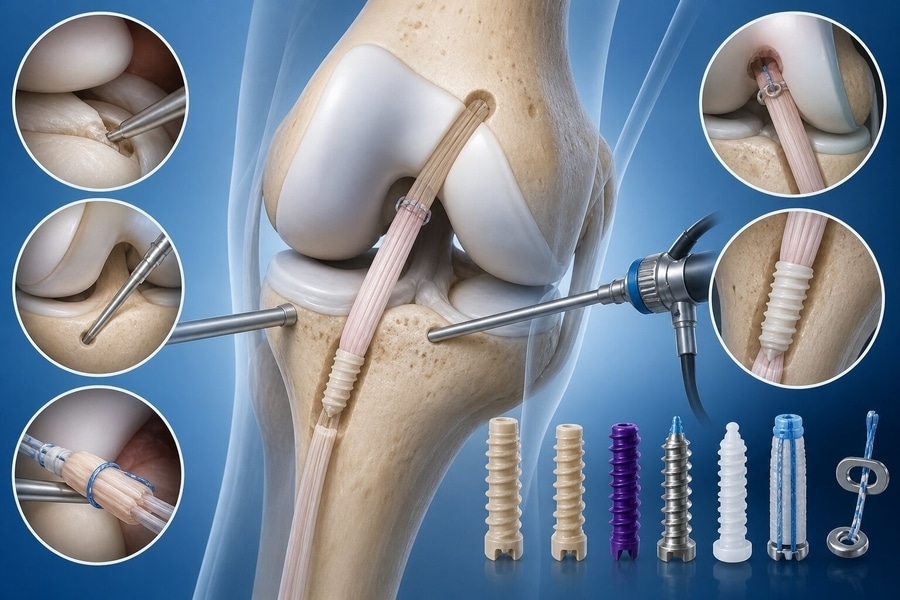
The procedure begins with proper patient positioning and preparation of the surgical field. Standard arthroscopic portals are created to access the knee joint.
Diagnostic arthroscopy is performed to evaluate the extent of ligament injury and identify associated pathologies such as meniscal tears or cartilage damage.
Graft preparation is a critical step in ACL reconstruction. Common graft options include hamstring tendon, patellar tendon, quadriceps tendon, or allografts. The graft is harvested, sized, and prepared for implantation.
Tunnel creation is performed in both the femur and tibia to replicate the anatomical position of the native ACL. Accurate tunnel placement is essential for restoring normal knee biomechanics.
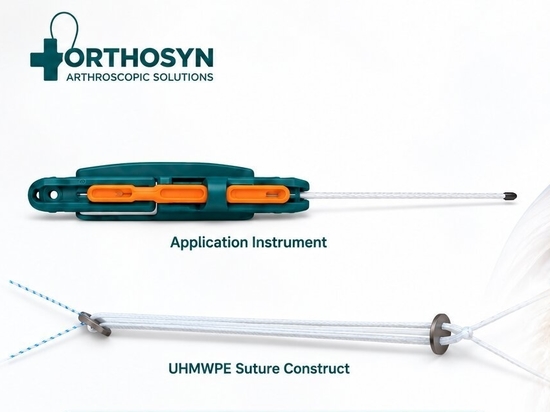
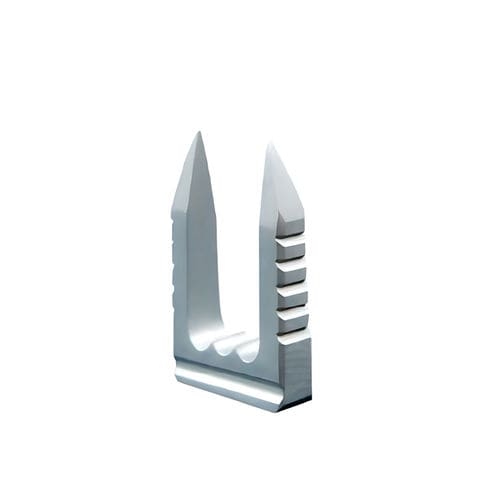
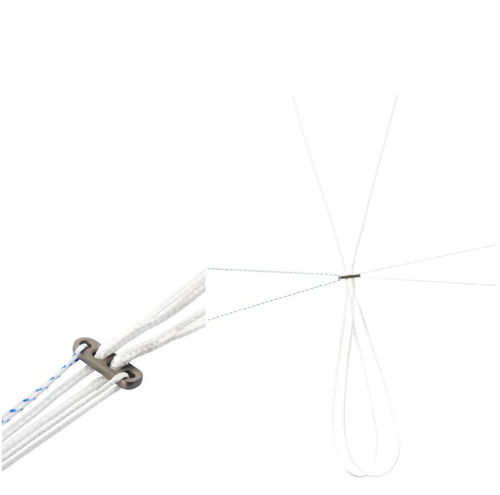
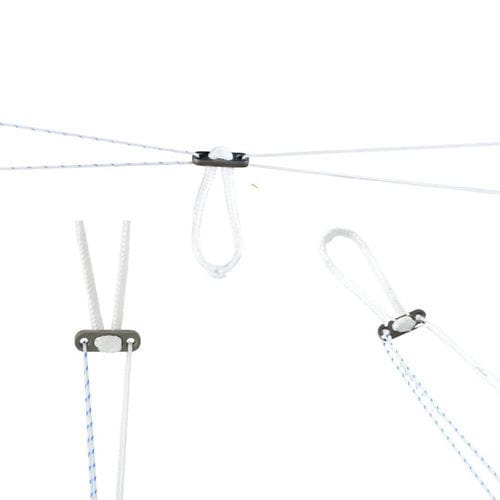
Fixation of the graft is achieved using various implant systems such as interference screws, suspensory fixation devices (endobutton systems), or hybrid techniques combining both methods.
The graft is tensioned and secured within the bone tunnels to ensure stability and proper integration.
Arthroscopic ACL reconstruction offers several advantages, including minimal invasiveness, reduced postoperative pain, faster rehabilitation, and improved surgical precision.
Modern ACL reconstruction relies heavily on advanced implant systems and instrumentation, which play a crucial role in achieving successful outcomes.
Orthosyn Medikal provides a wide range of ACL reconstruction solutions, including interference screws, fixation systems, and arthroscopy instruments designed for reliable and efficient surgical performance.