#Product Trends
Cross-Linked vs Non Cross-Linked Hyaluronic Acid: What Are the Clinical Differences?
A comprehensive comparison of cross-linked and non cross-linked hyaluronic acid, including their molecular structure, clinical performance, indications, and treatment considerations for osteoarthritis.
Hyaluronic acid (HA) injections have become one of the most widely used non-surgical treatment options for osteoarthritis and joint pain. As viscosupplementation continues to evolve, clinicians now have access to different formulations designed to meet various patient needs.
Among the most common distinctions is the difference between cross-linked and non cross-linked hyaluronic acid. Although both products aim to restore joint lubrication and improve patient comfort, their molecular structures, mechanical properties, duration of action, and clinical applications differ significantly.
Understanding these differences helps physicians select the most appropriate treatment for each patient.
Understanding Hyaluronic Acid
Hyaluronic acid is a naturally occurring polysaccharide found in synovial fluid and connective tissues.
Within healthy joints, hyaluronic acid performs several important functions:
Joint lubrication
Shock absorption
Reduction of friction
Protection of articular cartilage
Support of smooth joint movement
In patients with osteoarthritis, both the concentration and molecular weight of natural hyaluronic acid gradually decrease, leading to reduced joint lubrication and increased mechanical stress.
What Is Non Cross-Linked Hyaluronic Acid?
Non cross-linked hyaluronic acid closely resembles the natural hyaluronic acid found in healthy synovial fluid.
Its molecular chains remain independent without chemical bonding between them.
These products generally provide:
Natural viscoelastic properties
Excellent injectability
Uniform distribution within the joint
Because their molecular structure remains similar to endogenous hyaluronic acid, non cross-linked formulations are widely used in viscosupplementation therapy.
What Is Cross-Linked Hyaluronic Acid?
Cross-linked hyaluronic acid undergoes a chemical process that connects individual HA molecules through cross-linking agents.
This creates a more stable three-dimensional molecular network.
The resulting gel demonstrates:
Higher viscosity
Greater elasticity
Improved structural stability
Longer intra-articular residence time
Cross-linking allows the product to remain within the joint longer before natural degradation occurs.
Molecular Structure Differences
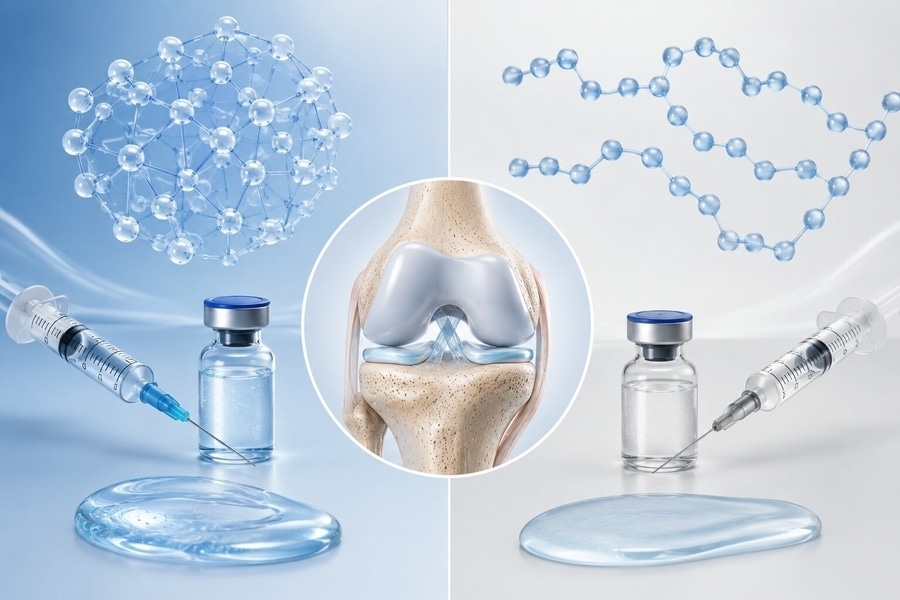
The most significant difference between these formulations lies in their molecular architecture.
Non Cross-Linked HA
Independent HA chains
Natural molecular organization
Lower structural density
Cross-Linked HA
Three-dimensional molecular network
Chemically interconnected chains
Higher structural stability
These structural differences directly influence product behavior inside the joint.
Residence Time Inside the Joint
One of the primary goals of cross-linking is to extend the duration of the product within the joint.
Non Cross-Linked Products
Natural enzymatic degradation occurs relatively faster.
Cross-Linked Products
The interconnected molecular network slows enzymatic breakdown.
This prolonged residence time may allow longer-lasting mechanical support for the joint.
Viscosity and Elasticity
Joint lubrication depends largely on the viscoelastic properties of hyaluronic acid.
Cross-linked formulations generally demonstrate:
Higher viscosity
Greater elasticity
Improved shock absorption
Non cross-linked formulations more closely resemble the natural characteristics of healthy synovial fluid.
Both properties offer clinical value depending on patient needs.
Injection Protocols
Treatment protocols vary depending on product formulation.
Non Cross-Linked Hyaluronic Acid
Often administered as multiple injections over several weeks.
Cross-Linked Hyaluronic Acid
Frequently available as single-injection formulations due to their prolonged intra-articular persistence.
Injection schedules always depend on the specific product and physician preference.
Clinical Indications
Both formulations are commonly used in patients with:
Knee osteoarthritis
Hip osteoarthritis
Shoulder osteoarthritis
Ankle osteoarthritis
Other synovial joint disorders
Patient evaluation remains essential when selecting the appropriate formulation.
Clinical Benefits
Both cross-linked and non cross-linked hyaluronic acid aim to:
Improve joint lubrication
Reduce pain
Enhance mobility
Improve daily function
Support conservative osteoarthritis management
Clinical outcomes depend on disease severity, injection accuracy, rehabilitation, and patient-related factors.
Product Selection Considerations
Several factors influence treatment selection.
These include:
Patient age
Activity level
Severity of osteoarthritis
Joint involved
Physician experience
Treatment expectations
No single formulation is ideal for every patient.
Treatment should always be individualized.
Safety Profile
Hyaluronic acid injections are generally considered safe and well tolerated.
Possible temporary reactions include:
Injection-site discomfort
Transient swelling
Local tenderness
Serious adverse events are uncommon when proper injection techniques are followed.
Future Trends
Advances in viscosupplementation continue to improve product performance.
Current developments focus on:
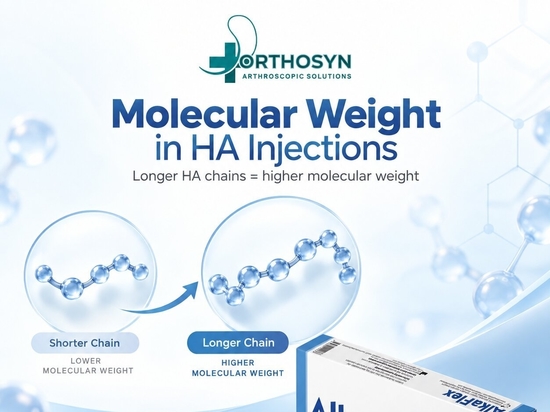
Higher molecular weight formulations
Optimized cross-linking technologies
Improved syringe systems
Enhanced manufacturing purity
Longer-lasting viscosupplementation
These innovations aim to maximize patient comfort and clinical effectiveness.
Conclusion
Both cross-linked and non cross-linked hyaluronic acid play important roles in the non-surgical management of osteoarthritis. While non cross-linked formulations closely mimic natural synovial fluid and offer excellent injectability, cross-linked formulations provide enhanced structural stability and longer intra-articular residence through their three-dimensional molecular network.
The optimal choice depends on patient characteristics, clinical evaluation, physician preference, and treatment objectives. As viscosupplementation technology continues to evolve, both formulations remain valuable options for improving joint function and supporting long-term patient care.
Orthosyn Medikal offers advanced cross-linked and non cross-linked hyaluronic acid solutions developed to support modern orthopedic practice, long-lasting joint lubrication, and patient comfort.