#Product Trends
All-Inside Meniscal Repair: Why Has It Become the Preferred Technique?
A comprehensive overview of all-inside meniscal repair, its advantages, surgical applications, biomechanical principles, and the reasons it has become the preferred technique in modern knee preservation surgery.
Meniscal preservation has become one of the primary goals of modern orthopedic and sports medicine surgery. Over the past two decades, increasing evidence has demonstrated that preserving meniscal tissue provides superior long-term outcomes compared to meniscectomy whenever repair is possible.
As surgical technology has evolved, several meniscal repair techniques have been developed. Among these methods, all-inside meniscal repair has emerged as the preferred approach for many surgeons worldwide.
The technique offers a minimally invasive solution that combines surgical efficiency, reduced tissue trauma, and reliable fixation while maintaining favorable clinical outcomes.
Understanding why all-inside repair has become increasingly popular requires examining both the biological importance of meniscal preservation and the technological advances that support modern repair systems.
The Importance of Meniscal Preservation
The meniscus is a critical structure within the knee joint.
Its primary functions include:
Load distribution
Shock absorption
Joint stability
Lubrication
Cartilage protection
Historically, meniscal tears were frequently treated with meniscectomy. However, long-term studies have shown that removing meniscal tissue can significantly increase joint contact pressures and accelerate degenerative changes.
For this reason, preserving the meniscus whenever possible has become a fundamental principle of contemporary knee surgery.
Evolution of Meniscal Repair Techniques
Several repair techniques have been developed over time:
Inside-Out Repair
Outside-In Repair
All-Inside Repair
Each method has specific advantages and limitations.
While inside-out repair was traditionally considered the gold standard for many tear patterns, advances in implant technology have significantly expanded the indications for all-inside repair.
Today, many surgeons routinely use all-inside systems as their first-line treatment option.
What Is All-Inside Meniscal Repair?
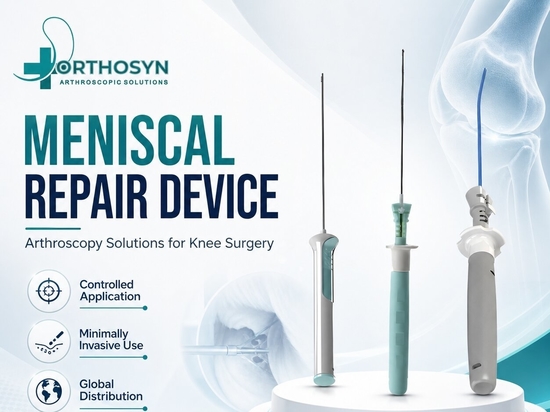
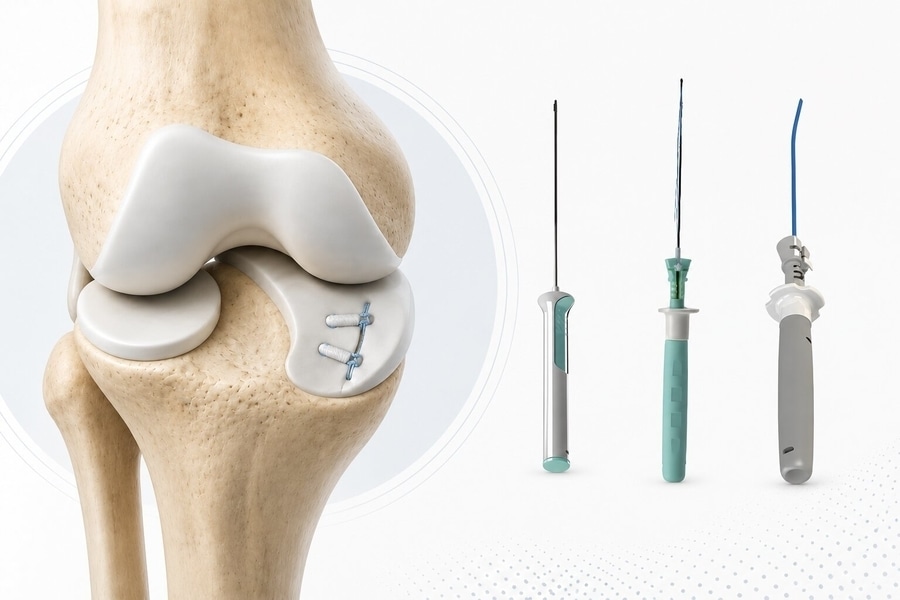
All-inside meniscal repair is an arthroscopic technique that allows meniscal fixation entirely from within the joint without requiring additional posterior incisions.
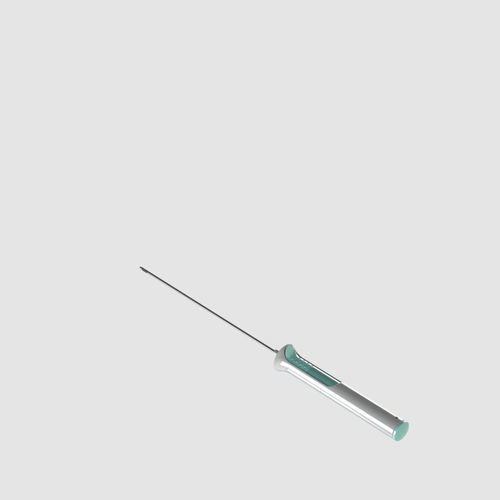
Specialized repair devices are introduced through standard arthroscopic portals.
The implant is deployed under direct visualization, allowing secure fixation of the torn meniscal tissue.
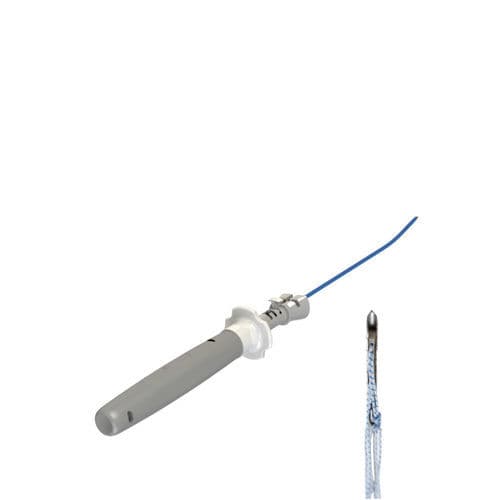
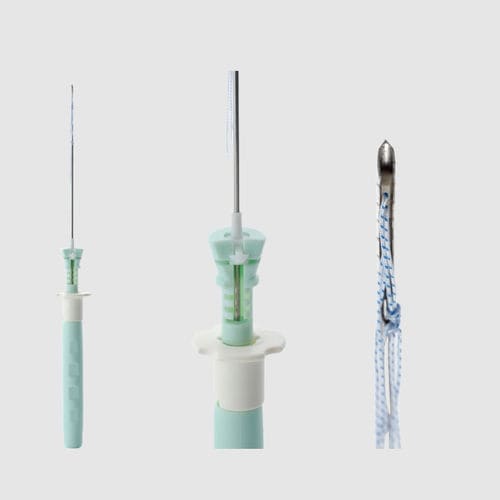
Modern systems typically include:
Pre-loaded suture implants
Self-adjusting fixation mechanisms
Low-profile implant designs
Minimally invasive deployment systems
These innovations have simplified the repair process considerably.
Reduced Surgical Trauma
One of the most significant advantages of all-inside repair is the reduction of surgical trauma.
Traditional inside-out techniques often require additional posterior incisions to retrieve and tie sutures.
These accessory incisions may increase:
Soft tissue dissection
Postoperative discomfort
Surgical complexity
All-inside systems eliminate the need for these secondary incisions.
As a result, the procedure becomes less invasive while maintaining effective fixation.
Lower Risk of Neurovascular Injury
Posterior knee structures contain important neurovascular anatomy.
During inside-out repair, careful protection of these structures is required when sutures exit the capsule.
All-inside repair significantly reduces this concern because the fixation remains within the joint.
Numerous studies have reported lower neurovascular risk compared with traditional repair techniques.
This safety advantage has contributed substantially to the popularity of all-inside systems.
Shorter Operative Time
Efficiency is another important factor.
Several comparative studies have demonstrated that all-inside repair often requires less operative time than inside-out repair.
Contributing factors include:
Simplified instrumentation
Fewer surgical steps
No accessory incisions
Reduced suture management requirements
Shorter procedures may improve operating room efficiency and reduce overall surgical burden.
Advances in Implant Technology
Modern all-inside repair devices have evolved significantly.
Current systems offer:
Improved fixation strength
Enhanced deployment accuracy
Reduced implant profile
Better tissue compression
Improved suture technology
These developments have helped address concerns associated with earlier generations of meniscal repair implants.
As a result, contemporary systems provide predictable and reliable fixation.
Biomechanical Performance
Biomechanical stability is essential for successful meniscal healing.
Modern all-inside devices are designed to provide:
Stable fixation
Controlled compression
Resistance to displacement
Support during biological healing
Numerous laboratory studies have demonstrated favorable fixation strength with many modern all-inside repair systems.
The biomechanical performance of these devices continues to improve as implant technology advances.
Common Indications
All-inside meniscal repair is commonly used for:
Longitudinal tears
Bucket-handle tears
Vertical tears
Posterior horn tears
Selected radial tears
Certain root repair procedures
Patient selection remains critical to achieving successful outcomes.
Not every meniscal tear is suitable for repair.
Healing Potential
Successful meniscal repair depends on biological healing.
Factors influencing healing include:
Blood supply
Tear location
Patient age
Tissue quality
Associated ligament reconstruction
Tears located in the vascular peripheral zone generally demonstrate the highest healing potential.
When appropriate indications are respected, all-inside repair can achieve excellent healing rates.
Clinical Outcomes
Clinical studies have reported favorable outcomes following all-inside meniscal repair.
Potential benefits include:
Pain reduction
Improved knee function
High patient satisfaction
Preservation of meniscal tissue
Protection of long-term joint health
Many patients successfully return to sports and physical activity following rehabilitation.
Rehabilitation Considerations
Postoperative rehabilitation remains essential regardless of repair technique.
Typical protocols may include:
Protected weight-bearing
Range-of-motion progression
Strengthening exercises
Gradual return to sports
Rehabilitation programs are usually tailored to tear type and repair stability.
Comparison with Partial Meniscectomy
While partial meniscectomy may offer faster short-term recovery, meniscal preservation generally provides superior long-term benefits.
Advantages of repair compared with meniscectomy include:
Preservation of biomechanics
Protection against cartilage degeneration
Reduced osteoarthritis risk
Maintenance of shock absorption
This shift toward tissue preservation has fueled the widespread adoption of repair techniques.
Future Directions
The future of meniscal surgery continues to focus on preservation and biological enhancement.
Emerging developments include:
Biologic augmentation
Growth factor therapies
Advanced suture technologies
Regenerative medicine strategies
Next-generation repair implants
These innovations may further improve healing rates and long-term outcomes.
Conclusion
All-inside meniscal repair has become the preferred technique for many orthopedic surgeons because it combines minimally invasive surgery, reduced neurovascular risk, shorter operative times, and reliable fixation. As implant technology continues to advance, all-inside systems are playing an increasingly important role in modern meniscal preservation surgery.
Orthosyn Medikal provides advanced all-inside meniscal repair solutions, arthroscopy instruments, and orthopedic technologies designed to support modern knee preservation procedures.