#Product Trends
Title (English): Meniscal Repair vs Partial Meniscectomy: Which Treatment Option Is Better?
A comprehensive comparison of meniscal repair and partial meniscectomy, including indications, surgical techniques, recovery expectations, and long-term outcomes.
Meniscal injuries are among the most common knee injuries encountered in orthopedic and sports medicine practice. They affect athletes, active individuals, and aging populations alike.
When conservative treatment fails to relieve symptoms, surgical intervention may become necessary. The two most commonly performed surgical procedures for meniscal tears are meniscal repair and partial meniscectomy.
Choosing the most appropriate treatment depends on several factors, including tear pattern, tear location, patient age, activity level, and tissue quality.
Understanding the differences between these procedures is essential for achieving optimal clinical outcomes and preserving long-term knee function.
Understanding the Meniscus
The knee contains two menisci:
Medial Meniscus
Lateral Meniscus
These fibrocartilaginous structures play several important roles:
Load distribution
Shock absorption
Joint stability
Lubrication
Cartilage protection
Damage to the meniscus can alter knee biomechanics and accelerate cartilage degeneration.
Common Causes of Meniscal Tears
Meniscal tears may occur as a result of:
Sports injuries
Twisting movements
Traumatic knee injuries
Degenerative changes
Aging-related wear
The type of tear often influences treatment selection.
Common tear patterns include:
Longitudinal tears
Bucket-handle tears
Radial tears
Horizontal tears
Complex tears
Root tears
Each tear pattern presents unique surgical considerations.
What Is Meniscal Repair?
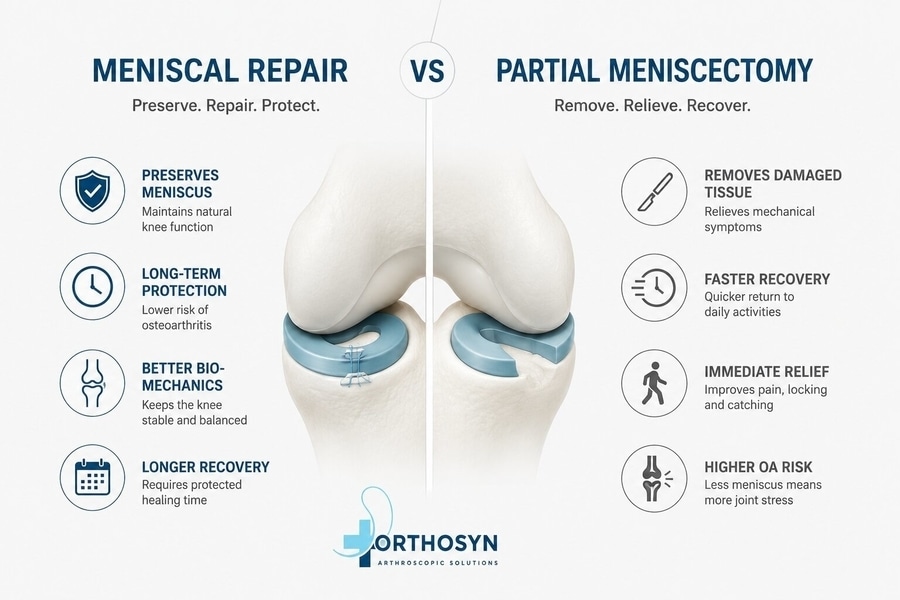
Meniscal repair is a procedure designed to preserve and repair the damaged meniscal tissue rather than remove it.
The goal is to restore the native structure and function of the meniscus.
Repair techniques may include:
All-inside repair
Inside-out repair
Outside-in repair
Root repair techniques
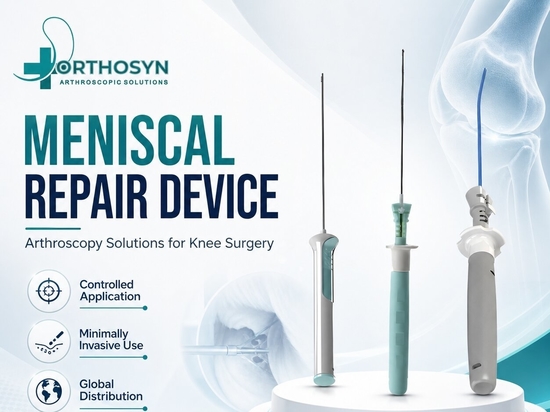
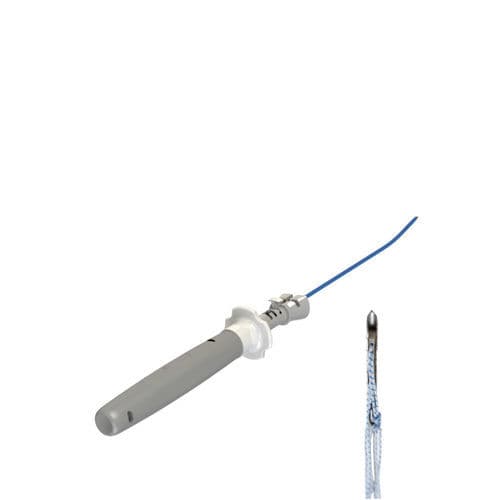
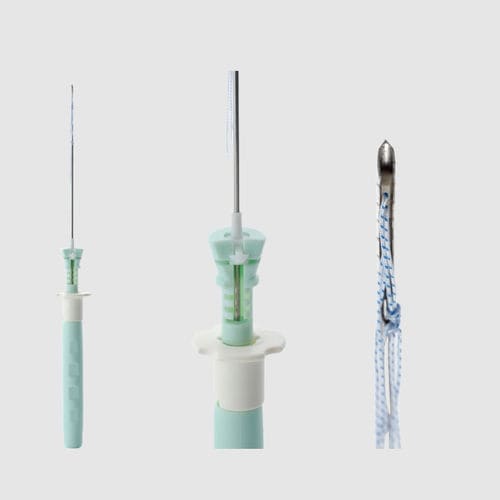
Modern all-inside meniscal repair systems have simplified the procedure and reduced surgical morbidity.
Advantages of Meniscal Repair
Preservation of native meniscal tissue
Better long-term joint protection
Reduced risk of osteoarthritis progression
Maintenance of knee biomechanics
Improved load distribution
Because the meniscus remains functional, many surgeons prefer repair whenever possible.
Limitations of Meniscal Repair
Not all tears are repairable.
Limitations include:
Poor blood supply
Complex degenerative tears
Poor tissue quality
Certain chronic injuries
Healing requires adequate biological conditions.
Ideal Candidates for Meniscal Repair
Meniscal repair is often preferred in:
Young patients
Athletes
Acute traumatic tears
Peripheral tears in vascular zones
Bucket-handle tears
Root tears
Patient selection remains critical.
What Is Partial Meniscectomy?
Partial meniscectomy involves removing the damaged portion of the meniscus while preserving as much healthy tissue as possible.
The objective is to eliminate unstable fragments that cause pain, locking, or mechanical symptoms.
Only the irreparable portion of the meniscus is removed.
Advantages of Partial Meniscectomy
Shorter procedure time
Faster rehabilitation
Immediate symptom relief in many patients
Technically straightforward procedure
Rapid return to daily activities
Partial meniscectomy remains one of the most commonly performed arthroscopic procedures worldwide.
Limitations of Partial Meniscectomy
Removing meniscal tissue may alter knee biomechanics.
Potential concerns include:
Increased contact pressure
Reduced shock absorption
Accelerated cartilage wear
Higher long-term osteoarthritis risk
The amount of meniscus removed directly influences long-term outcomes.
Surgical Techniques
Meniscal Repair
Modern repair procedures frequently use:
All-inside repair devices
Meniscal sutures
Fixation implants
Arthroscopic instrumentation
The goal is to stabilize the tear and promote biological healing.
Partial Meniscectomy
The surgeon removes unstable tissue using:
Arthroscopic shavers
Punches
Basket forceps
Motorized instruments
The remaining meniscus is carefully contoured to preserve function.
Recovery Comparison
Meniscal Repair Recovery
Recovery after repair is generally longer because healing must occur.
Patients may require:
Protected weight-bearing
Brace use
Activity restrictions
Structured rehabilitation
Return to sports may take several months.
Partial Meniscectomy Recovery
Recovery is typically faster.
Patients often experience:
Early weight-bearing
Faster mobility
Quicker return to daily activities
Many individuals resume normal activities within weeks.
Long-Term Outcomes
One of the most important differences between these procedures involves long-term joint preservation.
Meniscal Repair:
Preserves tissue
Protects cartilage
May reduce osteoarthritis risk
Partial Meniscectomy:
Provides symptom relief
Removes damaged tissue
May increase long-term joint degeneration risk
Current orthopedic philosophy increasingly emphasizes meniscal preservation whenever feasible.
Role of Modern Meniscal Repair Devices
Advances in meniscal repair technology have expanded treatment possibilities.
Modern systems offer:
Minimally invasive fixation
Reduced surgical time
Improved implant design
Enhanced procedural efficiency
These innovations have increased the number of tears that can be repaired successfully.
Factors Influencing Treatment Selection
The choice between repair and meniscectomy depends on:
Patient age
Activity level
Tear location
Tear pattern
Tissue quality
Chronicity of injury
Associated ligament injuries
Each case requires individualized evaluation.
Future Trends in Meniscus Preservation
Modern sports medicine increasingly focuses on preserving meniscal tissue.
Emerging developments include:
Advanced repair devices
Biologic augmentation
Growth factor therapies
Regenerative medicine approaches
The objective is to maximize healing while maintaining normal knee biomechanics.
Conclusion
Both meniscal repair and partial meniscectomy remain valuable treatment options for meniscal injuries. Meniscal repair offers superior long-term joint preservation and is preferred whenever the tear pattern and tissue quality allow successful healing. Partial meniscectomy remains an effective solution for irreparable tears and can provide rapid symptom relief.
Careful patient selection, accurate diagnosis, and appropriate surgical technique are essential for achieving the best possible outcomes.
Orthosyn Medikal provides advanced meniscal repair systems, arthroscopy instruments, and orthopedic solutions designed to support modern knee preservation surgery.