#Industry News
Can Hyaluronic Acid Be Combined with PRP?
Understanding the potential benefits, mechanisms, and clinical considerations of combining hyaluronic acid and platelet-rich plasma (PRP) for knee osteoarthritis treatment.
Knee osteoarthritis is one of the most common causes of chronic joint pain and functional limitation worldwide. As cartilage degeneration progresses, patients often seek non-surgical treatment options that can help reduce pain, improve mobility, and support joint health.
Among the most frequently used injectable treatments are:
Hyaluronic Acid (HA) injections
Platelet-Rich Plasma (PRP) injections
In recent years, growing interest has emerged around combining these two therapies to potentially enhance clinical outcomes.
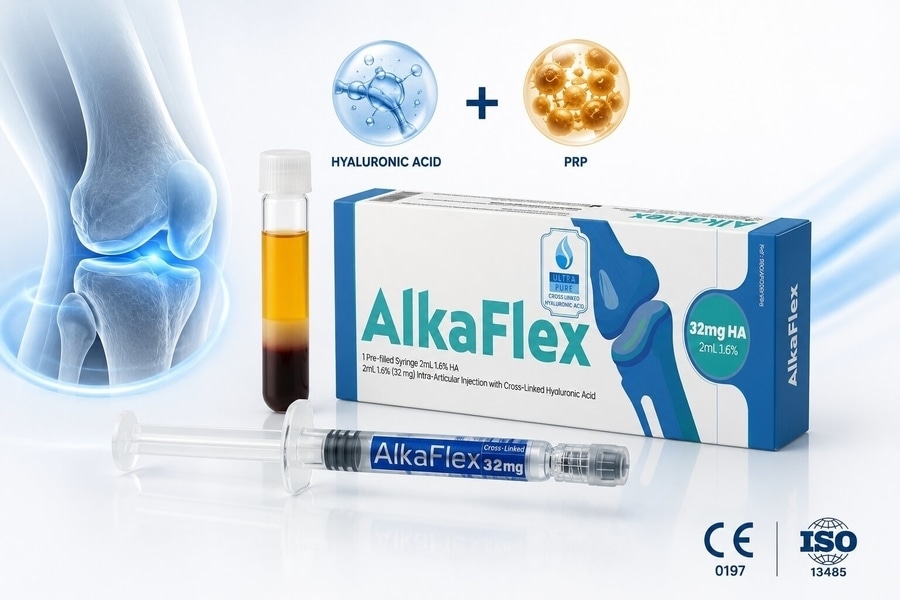
But can hyaluronic acid be combined with PRP, and what are the potential advantages of this approach?
Understanding Hyaluronic Acid
Hyaluronic acid is a naturally occurring component of synovial fluid and articular cartilage.
Its primary functions include:
Joint lubrication
Shock absorption
Reduction of friction
Support of smooth joint movement
In osteoarthritis patients, the concentration and quality of natural hyaluronic acid gradually decrease, contributing to pain and reduced mobility.
Hyaluronic acid injections aim to restore the viscoelastic properties of synovial fluid and improve joint function.
Understanding PRP
Platelet-Rich Plasma (PRP) is an autologous biological treatment prepared from the patient's own blood.
After centrifugation, platelets become concentrated within the plasma.
These platelets contain numerous growth factors and bioactive proteins that may support tissue repair and biological healing processes.
Common growth factors found in PRP include:
Platelet-Derived Growth Factor (PDGF)
Transforming Growth Factor Beta (TGF-β)
Vascular Endothelial Growth Factor (VEGF)
Insulin-Like Growth Factor (IGF)
PRP is widely used in sports medicine, orthopedics, and regenerative medicine applications.
Why Combine Hyaluronic Acid and PRP?
Although both treatments are used independently, they work through different mechanisms.
Hyaluronic Acid primarily provides:
Mechanical lubrication
Shock absorption
Improved joint biomechanics
PRP primarily provides:
Biological stimulation
Growth factor delivery
Potential tissue repair support
Because their mechanisms are different, some clinicians believe that combining HA and PRP may provide complementary benefits.
Potential Benefits of Combination Therapy
Combining hyaluronic acid with PRP may offer several theoretical advantages:
Improved joint lubrication
Enhanced biological activity
Better pain management
Improved functional outcomes
Potentially longer-lasting symptom relief
Some studies suggest that combination therapy may achieve greater improvements in pain and function compared with either treatment alone in selected patients.
Clinical Applications
Combination therapy is most commonly considered in patients with:
Mild knee osteoarthritis
Moderate knee osteoarthritis
Chronic knee pain
Sports-related cartilage degeneration
Patients seeking non-surgical treatment options
The treatment may be particularly attractive for active patients wishing to delay more invasive procedures.
Treatment Approaches
Several approaches may be used depending on physician preference.
Common protocols include:
Sequential injections of PRP and HA
Combined injections during the same treatment session
Staged treatment programs over several weeks
There is currently no universally accepted protocol.
Treatment strategies vary among physicians and clinical centers.
Scientific Evidence
Research evaluating HA and PRP combination therapy continues to evolve.
Several clinical studies have reported:
Improved pain reduction
Better functional scores
Higher patient satisfaction
Potential improvements in quality of life
However, clinical outcomes may vary depending on:
PRP preparation method
HA formulation
Patient characteristics
Severity of osteoarthritis
Injection technique
Further research is still needed to establish standardized treatment protocols.
Safety Considerations
Both hyaluronic acid and PRP are generally considered safe when administered appropriately.
Potential side effects may include:
Temporary injection-site pain
Mild swelling
Transient inflammation
Post-injection discomfort
Serious complications are uncommon when proper sterile techniques are followed.
Which Patients May Benefit Most?
Combination therapy may be considered for patients who:
Have mild to moderate osteoarthritis
Remain physically active
Wish to postpone surgery
Have not achieved adequate results with conservative treatment
Seek a comprehensive non-surgical approach to joint management
Patient selection remains an important factor in treatment success.
Limitations of Combination Therapy
Despite promising results, combination treatment is not considered a cure for osteoarthritis.
Important limitations include:
Variable patient response
Lack of universally accepted protocols
Differences in PRP preparation methods
Potential additional treatment costs
The effectiveness of treatment may vary from patient to patient.
Future Perspectives
Interest in biologic therapies continues to grow within orthopedic medicine.
Future developments may include:
Advanced PRP formulations
Improved HA technologies
Personalized treatment protocols
Combined regenerative medicine strategies
These innovations may further enhance treatment options for patients with knee osteoarthritis.
Conclusion
Hyaluronic acid and PRP can be combined as part of a comprehensive non-surgical strategy for managing knee osteoarthritis. While hyaluronic acid primarily improves joint lubrication and biomechanics, PRP provides biological stimulation through growth factors and regenerative signaling molecules.
Although research continues to evolve, many clinicians view combination therapy as a promising option for selected patients seeking pain relief, improved mobility, and long-term joint support.
Orthosyn Medikal provides advanced hyaluronic acid solutions designed to support modern orthopedic and sports medicine treatment strategies.