#Product Trends
Suture Anchor Types: Titanium vs PEEK vs Bioabsorbable
A comprehensive comparison of titanium, PEEK, and bioabsorbable suture anchors used in modern arthroscopic and orthopedic soft tissue repair procedures.
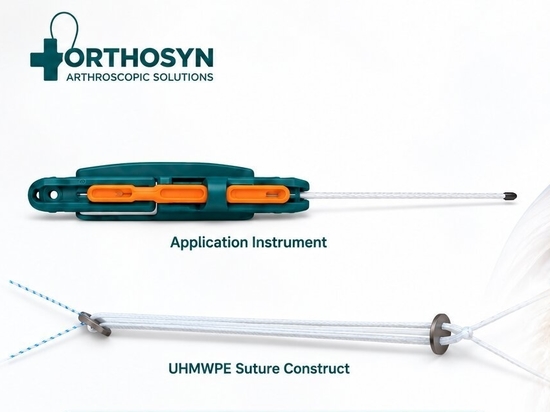
Suture anchors are essential fixation devices widely used in arthroscopic and orthopedic procedures to attach soft tissues such as tendons and ligaments to bone. They play a critical role in surgeries including rotator cuff repair, labral repair, ACL reconstruction, and instability procedures.
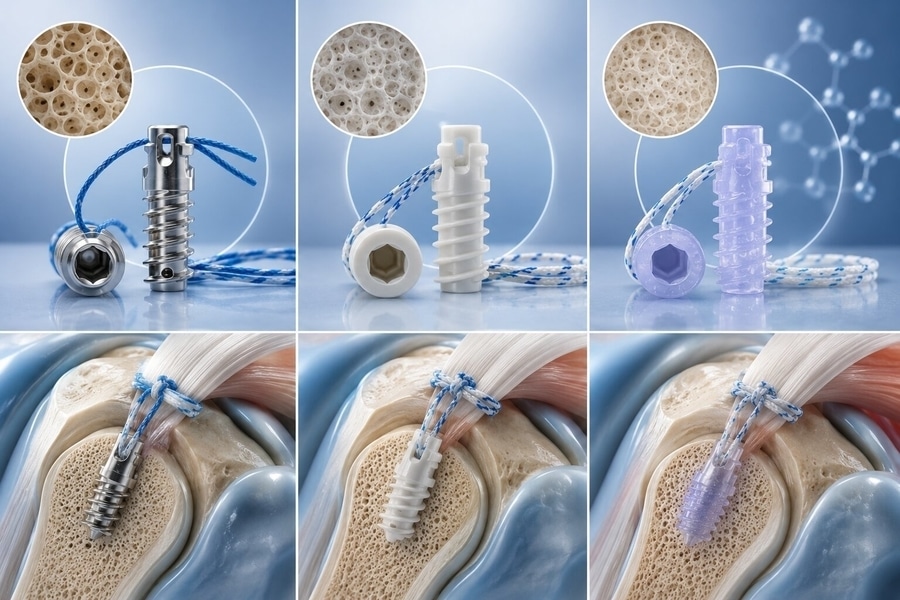
Modern suture anchor systems are manufactured using different biomaterials, each offering specific mechanical, biological, and imaging characteristics.
Among the most commonly used anchor types are:
Titanium suture anchors
PEEK suture anchors
Bioabsorbable suture anchors
Understanding the differences between these anchor types is important for selecting the appropriate implant for each surgical application.
What are Suture Anchors?
Suture anchors are implantable fixation devices inserted into bone to secure sutures during soft tissue repair.
Their primary functions include:
Soft tissue fixation
Tendon-to-bone healing support
Stabilization of repaired structures
Load distribution during healing
Modern arthroscopic surgery relies heavily on advanced anchor systems for minimally invasive repair techniques.
Titanium Suture Anchors
Titanium anchors are among the oldest and most established fixation systems in orthopedic surgery.
Material Characteristics
Titanium offers:
High mechanical strength
Excellent durability
Strong pullout resistance
Long-term structural stability
Advantages of Titanium Anchors
Reliable fixation strength
Proven long-term clinical history
Suitable for high-load repairs
Excellent resistance to deformation
Limitations
Permanent metallic implant
Potential imaging artifacts on MRI
Possible difficulty during revision surgery
Higher stiffness compared to bone tissue
Titanium anchors are commonly preferred in cases requiring maximum fixation strength.
PEEK Suture Anchors
PEEK (Polyether Ether Ketone) is a high-performance polymer increasingly used in modern orthopedic implants.
Material Characteristics
PEEK provides:
Radiolucency
Elastic modulus closer to cortical bone
High chemical resistance
Excellent structural stability
Advantages of PEEK Anchors
Reduced MRI artifact
Better postoperative imaging evaluation
Non-metallic structure
Strong mechanical performance
No risk of material degradation
Limitations
Permanent implant
Limited biological integration compared to some bioactive materials
Potential higher cost in certain systems
PEEK anchors are widely used in arthroscopic shoulder and knee procedures due to their balance between strength and imaging compatibility.
Bioabsorbable Suture Anchors
Bioabsorbable anchors are designed to gradually degrade inside the body over time.
Common materials include:
PLLA
PLDLA
PGA
Biocomposite materials
Advantages of Bioabsorbable Anchors
Gradual material absorption
Reduced long-term implant presence
Potentially easier revision surgery
Less permanent foreign material inside the joint
Limitations
Variable degradation profiles
Potential inflammatory reactions
Possible cyst formation in some cases
Mechanical strength may decrease during degradation process
Bioabsorbable systems continue to evolve with newer biocomposite technologies designed to improve healing and implant performance.
Biomechanical Considerations
Anchor selection depends on several biomechanical factors, including:
Bone quality
Tear pattern
Tissue type
Fixation load requirements
Surgical technique
The mechanical performance of a suture anchor directly affects repair stability during the healing process.
Imaging and Revision Surgery
Imaging compatibility is another important factor in anchor selection.
Titanium anchors may produce MRI artifacts, while PEEK anchors allow improved postoperative imaging evaluation.
Bioabsorbable anchors may reduce permanent implant burden but require careful monitoring during degradation.
Clinical Applications
Suture anchors are commonly used in:
Rotator cuff repair
Labral repair
Shoulder instability surgery
Biceps tenodesis
ACL reconstruction
Meniscus root repair
Different anchor materials may be selected depending on the surgical indication and surgeon preference.
Conclusion
Titanium, PEEK, and bioabsorbable suture anchors each offer unique advantages and limitations in orthopedic and arthroscopic surgery. Proper implant selection depends on surgical goals, biomechanical requirements, imaging considerations, and patient-specific factors.
Orthosyn Medikal provides advanced suture anchor solutions designed to support modern minimally invasive orthopedic procedures.