#Product Trends
Meniscal Repair Device Guide: Understanding Modern Meniscus Repair Systems
A comprehensive overview of modern meniscal repair devices, including all-inside systems, fixation principles, surgical applications, and clinical advantages in minimally invasive knee surgery.
Meniscal repair devices are essential tools in modern arthroscopic knee surgery. They are designed to repair meniscus tears while preserving meniscal tissue and supporting long-term joint function.
The meniscus plays a critical role in knee biomechanics by distributing load, absorbing shock, improving joint stability, and protecting articular cartilage. When possible, repairing the meniscus is preferred over removing it, as meniscal preservation may help reduce the risk of long-term cartilage degeneration and osteoarthritis.
Modern meniscal repair systems allow surgeons to perform precise and minimally invasive repairs using specialized implants, sutures, and delivery devices.
What is a Meniscal Repair Device?
A meniscal repair device is a surgical system used to approximate and stabilize torn meniscal tissue.
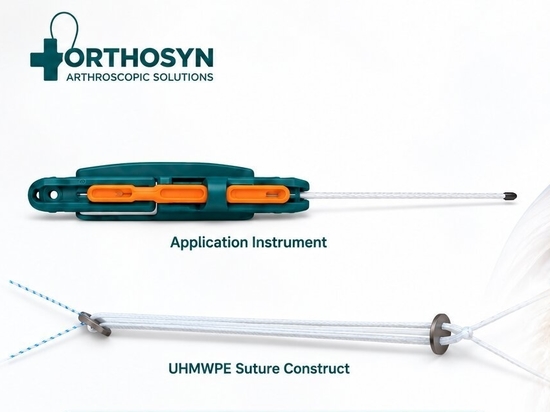
These systems typically include:
Implants or anchors
High-strength sutures
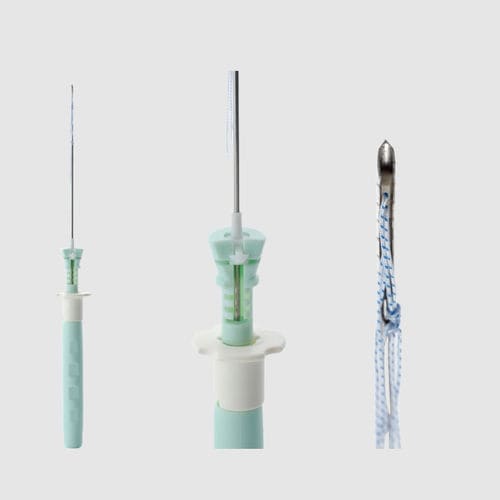
Delivery needles
Insertion handles
Depth control mechanisms
The goal is to secure the torn meniscus and allow biological healing over time.
Why Meniscus Repair is Important
The meniscus is not simply a passive cushion inside the knee. It contributes to:
Load distribution
Shock absorption
Joint stability
Cartilage protection
Knee biomechanics
Loss of meniscal tissue can increase contact pressure inside the knee joint and accelerate degenerative changes.
For this reason, meniscus repair is often preferred when the tear pattern, tissue quality, and vascular zone are suitable.
Types of Meniscal Repair Techniques
Meniscus repair can be performed using different surgical techniques.
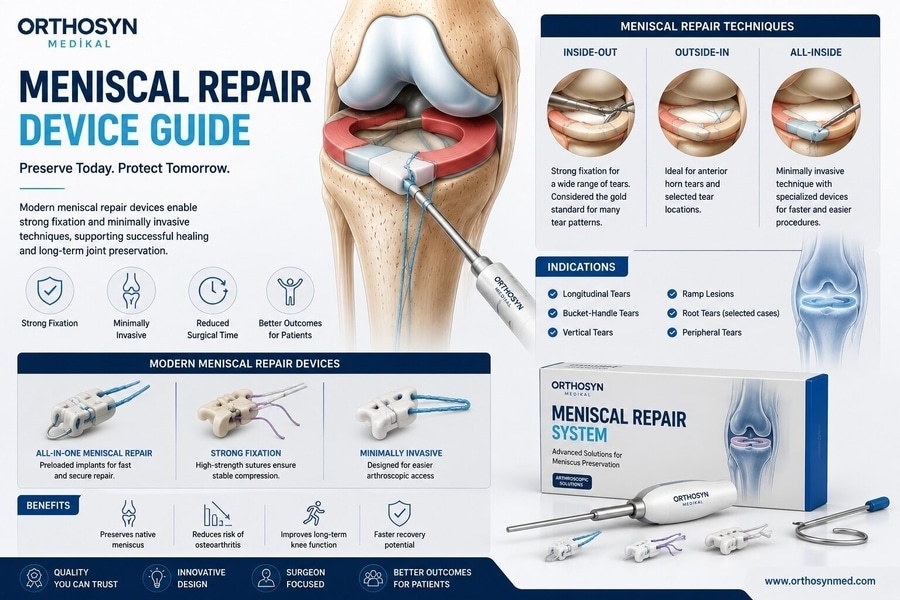
Common techniques include:
Inside-out repair
Outside-in repair
All-inside repair
Each technique has specific indications depending on tear location, tear pattern, and surgeon preference.
All-Inside Meniscus Repair Systems
All-inside meniscal repair devices are widely used in modern arthroscopic surgery because they allow repair without additional posterior incisions.
These systems are designed to:
Reduce tissue trauma
Shorten operative time
Improve surgical workflow
Minimize neurovascular risk
Allow precise implant placement
All-inside systems are especially useful for posterior horn and body tears of the meniscus.
Device Design and Components
Modern meniscal repair systems may include preloaded implants and sutures designed for efficient deployment.
Important design features include:
Low-profile implants
Adjustable tensioning
Strong suture material
Controlled deployment
Depth-limiting technology
These features help improve safety, consistency, and fixation quality during repair.
Tear Patterns Treated with Meniscal Repair Devices
Meniscal repair devices may be used in different tear types, including:
Longitudinal tears
Vertical tears
Bucket-handle tears
Peripheral tears
Certain radial tears
Meniscus root tears with appropriate technique
The success of repair depends on tear location, vascular supply, tissue quality, and patient factors.
Biomechanical Considerations
A successful meniscal repair must provide enough fixation strength to stabilize the tear during healing.
Key biomechanical factors include:
Suture configuration
Implant fixation strength
Load-to-failure performance
Tissue holding capacity
Resistance to displacement
Device selection should be matched to the tear type and surgical objective.
Advantages of Modern Meniscal Repair Devices
Modern repair systems offer several advantages:
Minimally invasive technique
Reduced need for additional incisions
Improved access to difficult tear locations
Shorter operative time
Reduced neurovascular risk
Preservation of meniscal tissue
Support for long-term joint health
These advantages make meniscal repair devices important tools in sports medicine and orthopedic knee surgery.
Clinical Applications
Meniscal repair devices are commonly used in:
Sports medicine procedures
ACL reconstruction combined with meniscus repair
Traumatic meniscus tears
Arthroscopic knee surgery
Joint preservation procedures
They are particularly valuable in young and active patients where preserving meniscal tissue is a priority.
Limitations and Surgical Considerations
Not every meniscus tear is suitable for repair.
Important considerations include:
Chronicity of the tear
Tissue quality
Vascular zone
Tear complexity
Patient age and activity level
Rehabilitation compliance
Careful patient selection and surgical technique are essential for successful outcomes.
Rehabilitation After Meniscus Repair
Postoperative rehabilitation depends on the tear type, repair technique, and associated procedures.
Recovery may include:
Protected weight bearing
Controlled range of motion
Progressive strengthening
Gradual return to sports
Return to full activity may take several months depending on the complexity of the repair.
Conclusion
Modern meniscal repair devices play a major role in minimally invasive knee surgery by enabling tissue-preserving repair, reducing surgical trauma, and supporting reliable functional outcomes.
With proper indication, device selection, and surgical technique, meniscus repair can help preserve knee biomechanics and protect long-term joint health.
Orthosyn Medikal provides advanced meniscal repair and arthroscopy solutions designed to support modern minimally invasive orthopedic procedures.