#Product Trends
Hyaluronic Acid Injection vs Corticosteroid Injection: Which Treatment Is Better for Knee Osteoarthritis?
A comprehensive comparison of hyaluronic acid and corticosteroid injections for managing knee osteoarthritis, including mechanisms of action, benefits, limitations, and clinical considerations.
Knee osteoarthritis is one of the most common causes of chronic joint pain and reduced mobility worldwide. As cartilage gradually deteriorates, patients often experience pain, stiffness, swelling, and difficulty performing daily activities.
Among the most frequently used non-surgical treatment options are:
Hyaluronic acid injections
Corticosteroid injections
Both treatments aim to reduce symptoms and improve function, but they work in different ways and provide different clinical benefits.
Understanding the differences between these treatment options can help patients and healthcare professionals make informed decisions.
Understanding Knee Osteoarthritis
Osteoarthritis is a degenerative joint disease characterized by progressive cartilage loss and changes within the joint environment.
As osteoarthritis progresses:
Cartilage becomes thinner
Joint friction increases
Inflammation may develop
Mobility decreases
Pain becomes more frequent
Treatment aims to reduce symptoms, improve joint function, and delay more invasive procedures.
What Are Hyaluronic Acid Injections?
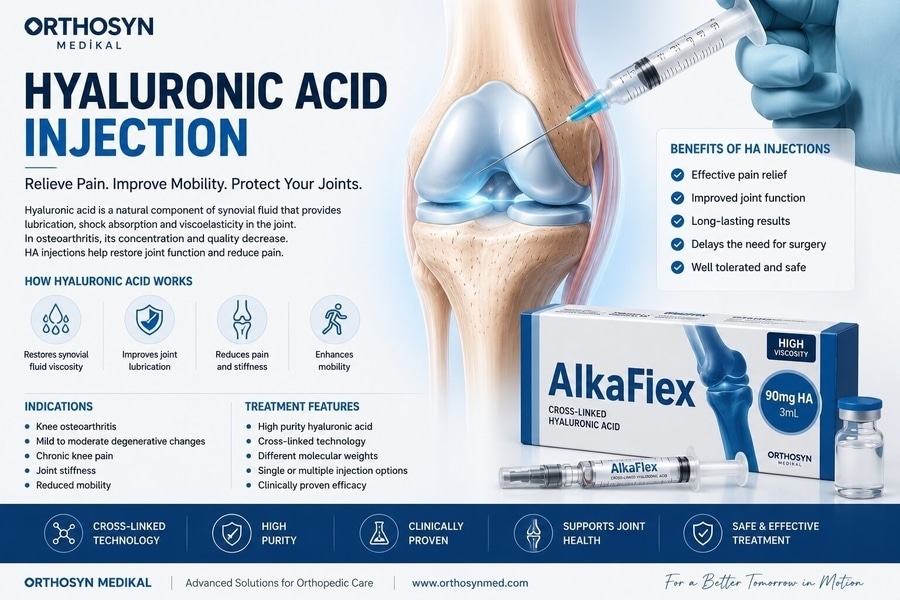
Hyaluronic acid (HA) is a naturally occurring substance found in synovial fluid, which lubricates and cushions joints.
In patients with osteoarthritis, the quality and concentration of natural hyaluronic acid decrease over time.
HA injections aim to restore:
Joint lubrication
Shock absorption
Smooth joint movement
Joint comfort during activity
This treatment is commonly referred to as viscosupplementation.
How Hyaluronic Acid Works
When injected into the knee joint, hyaluronic acid may:
Improve synovial fluid viscosity
Reduce friction between cartilage surfaces
Enhance shock absorption
Support smoother movement
Improve overall joint mechanics
Some formulations may also contribute to a healthier joint environment.
Advantages of Hyaluronic Acid Injections
Non-surgical treatment
Minimal recovery time
Long-lasting symptom relief in many patients
Improved joint lubrication
May delay the need for surgery
Suitable for repeated treatment cycles
Limitations of Hyaluronic Acid
Results may take several weeks to appear
Response varies between patients
May be less effective in advanced osteoarthritis
Typically more expensive than corticosteroids
What Are Corticosteroid Injections?
Corticosteroid injections are anti-inflammatory treatments used to reduce joint inflammation and pain.
These injections contain corticosteroid medications that suppress inflammatory activity within the joint.
How Corticosteroids Work
After injection, corticosteroids help:
Reduce inflammation
Decrease swelling
Reduce pain
Improve short-term mobility
Pain relief may occur relatively quickly compared with hyaluronic acid treatments.
Advantages of Corticosteroid Injections
Rapid pain relief
Reduction of inflammation
Short procedure time
Useful during acute symptom flare-ups
Widely available treatment option
Limitations of Corticosteroids
Temporary effect
Repeated use may negatively affect cartilage health
Benefits often diminish over time
Potential systemic side effects with frequent use
Duration of Effect
One of the biggest differences between the two treatments is treatment duration.
Corticosteroid Injections
Often provide rapid symptom relief within days.
However, the effect may be relatively short-term and commonly lasts from several weeks to a few months.
Hyaluronic Acid Injections
May require more time before improvement is noticed.
However, symptom relief may last considerably longer in appropriate patients, often for several months and sometimes longer depending on formulation and patient factors.
Which Patients May Benefit Most from Hyaluronic Acid?
Patients with:
Mild to moderate osteoarthritis
Chronic knee pain
Reduced mobility
Desire to avoid surgery
Need for longer-lasting symptom management
may be suitable candidates for viscosupplementation.
Which Patients May Benefit Most from Corticosteroids?
Patients with:
Acute inflammation
Significant joint swelling
Sudden symptom exacerbation
Need for rapid pain reduction
may benefit from corticosteroid injections.
Can Both Treatments Be Used in a Treatment Plan?
In some cases, physicians may incorporate both treatment approaches at different stages of osteoarthritis management.
Treatment selection depends on:
Patient age
Activity level
Severity of osteoarthritis
Clinical findings
Treatment goals
The choice should always be based on professional medical evaluation.
Safety Considerations
Both treatment options are generally considered safe when administered appropriately.
Potential side effects may include:
Temporary injection site discomfort
Mild swelling
Transient pain flare
Serious complications are uncommon when proper injection techniques are used.
Conclusion
Both hyaluronic acid injections and corticosteroid injections can play important roles in the management of knee osteoarthritis. Corticosteroids often provide faster short-term symptom relief, while hyaluronic acid injections may offer longer-lasting improvements in joint function and comfort.
The most appropriate treatment depends on patient-specific factors, disease severity, and therapeutic goals.
Orthosyn Medikal provides advanced hyaluronic acid injection solutions designed to support long-term joint health, mobility, and patient comfort.