#Product Trends
Soft Anchors vs Traditional Suture Anchors: Understanding the Differences
A comprehensive comparison of soft anchors and traditional suture anchors, including implant design, biomechanical performance, clinical indications, and factors influencing implant selection in modern shoulder arthroscopy.
Suture anchors are among the most important implants used in modern arthroscopic shoulder surgery. They provide secure soft tissue fixation for procedures such as rotator cuff repair, Bankart repair, SLAP repair, and other capsulolabral reconstructions.
As implant technology has evolved, surgeons can now choose between traditional rigid suture anchors and newer soft anchor systems. Although both are designed to achieve stable tissue fixation, they differ significantly in their design, implantation technique, bone preservation characteristics, and clinical applications.
Understanding these differences helps surgeons select the most appropriate implant for each individual patient.
What Are Traditional Suture Anchors?
Traditional suture anchors are rigid implants inserted into bone to secure soft tissues such as tendons, ligaments, or the labrum.
They are commonly manufactured from:
PEEK (Polyether Ether Ketone)
Titanium
Bioabsorbable polymers
Biocomposite materials
After insertion, sutures attached to the anchor are passed through the tissue and secured to complete the repair.
Traditional anchors have been successfully used in orthopedic surgery for many years and continue to be considered a reliable fixation option.
What Are Soft Anchors?
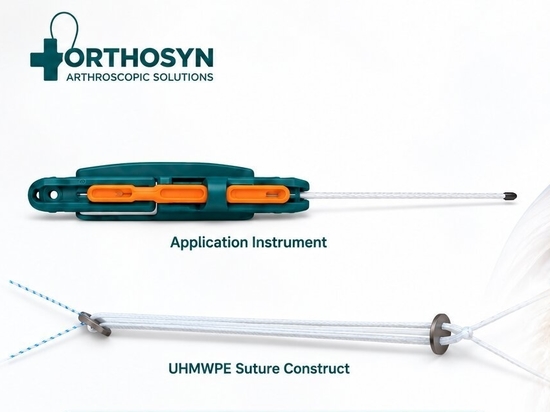
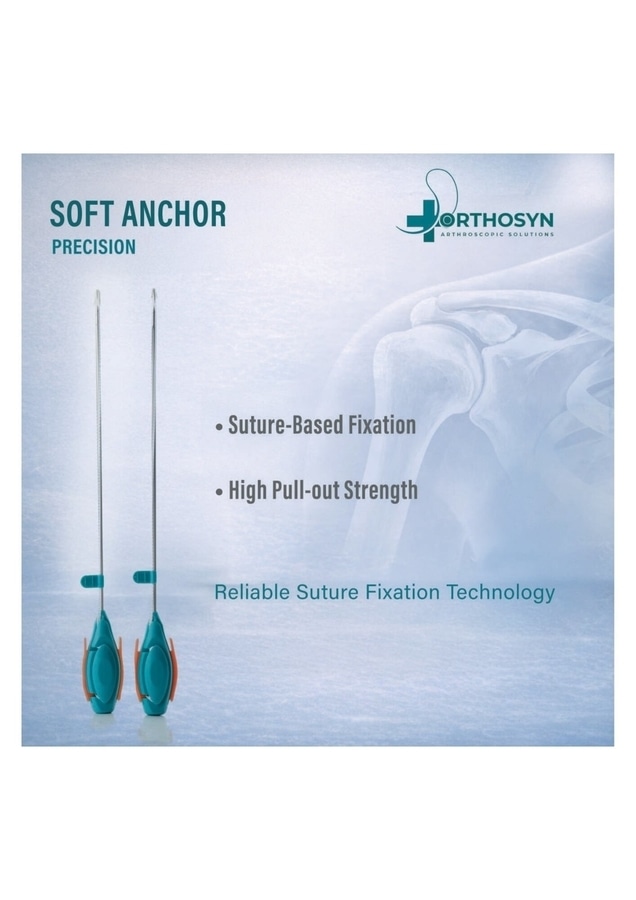
Soft anchors are all-suture fixation devices composed primarily of high-strength surgical sutures rather than rigid implant bodies.
Instead of relying on a solid implant, the anchor expands beneath the cortical bone after insertion, creating secure fixation within the bone.
Because they contain minimal rigid material, soft anchors require significantly smaller drill holes while preserving more native bone.
This minimally invasive fixation concept has gained widespread popularity in shoulder arthroscopy.
Implant Design Differences
The primary difference between these systems lies in their structural design.
Traditional Suture Anchors:
Rigid implant body
Mechanical fixation within bone
Available in multiple materials
Soft Anchors:
All-suture construction
Minimal implant volume
Expansion-based fixation
Small drill diameter
These design differences influence surgical technique and implant selection.
Bone Preservation
Bone preservation has become increasingly important, particularly in young and active patients.
Soft anchors require substantially smaller bone tunnels compared with many traditional anchors.
Potential advantages include:
Less bone removal
Preservation of native bone stock
Improved options for revision surgery
Reduced implant footprint
Maintaining bone stock may be particularly beneficial when multiple anchors are required.
Biomechanical Performance
Both implant types are designed to provide secure fixation.
Modern biomechanical studies demonstrate that many contemporary soft anchors achieve fixation strength comparable to traditional rigid anchors when properly inserted.
Key biomechanical considerations include:
Pullout strength
Cyclic loading resistance
Load-to-failure performance
Suture integrity
Performance depends on implant design, bone quality, insertion technique, and clinical indication.
Surgical Technique
Traditional anchors are inserted into pre-drilled bone tunnels using dedicated insertion instruments.
Soft anchors follow a different fixation mechanism.
After insertion:
The anchor expands beneath the cortex
The fixation is tensioned
The implant locks securely within bone
Although implantation differs, both systems integrate smoothly into standard arthroscopic procedures.
Common Clinical Applications
Both implant types are widely used in shoulder arthroscopy.
Typical indications include:
Rotator cuff repair
Bankart repair
SLAP lesion repair
Capsulolabral reconstruction
Biceps tendon procedures
The choice often depends on surgeon preference and individual patient characteristics.
Advantages of Soft Anchors
Soft anchor technology offers several potential benefits.
These include:
Minimal bone removal
Smaller drill holes
Lower implant profile
Excellent bone preservation
Simplified revision options
Reduced implant volume
These characteristics have contributed to the increasing popularity of all-suture fixation systems.
Advantages of Traditional Suture Anchors
Traditional anchors also provide several well-established advantages.
These include:
Long clinical history
Wide range of implant sizes
Multiple material options
Excellent fixation reliability
Extensive clinical evidence
Rigid anchors remain an important component of modern arthroscopic surgery.
Revision Surgery Considerations
Revision procedures present unique surgical challenges.
Because soft anchors preserve more native bone, they may facilitate future revision procedures by maintaining available bone stock.
However, revision strategy depends on numerous factors including:
Bone quality
Previous implants
Tear pattern
Remaining anatomy
Proper preoperative planning remains essential.
Material Selection
Traditional anchors are available in various implant materials.
PEEK:
Radiolucent
Excellent mechanical properties
Biologically inert
Titanium:
High mechanical strength
Long clinical history
Bioabsorbable and Biocomposite Materials:
Gradual degradation over time
Potential bone remodeling
Soft anchors rely primarily on ultra-high-strength suture materials instead of rigid implant bodies.
Factors Influencing Implant Selection
Choosing between soft anchors and traditional suture anchors depends on several considerations:
Patient age
Bone quality
Tear size
Tissue quality
Revision requirements
Surgeon experience
Preferred surgical technique
No single implant is ideal for every clinical situation.
The optimal choice should be individualized according to the patient's anatomy and surgical objectives.
Clinical Outcomes
Both soft anchors and traditional suture anchors have demonstrated excellent clinical outcomes in appropriately selected patients.
Successful treatment depends on:
Accurate diagnosis
Proper implant selection
Precise surgical technique
Appropriate rehabilitation
When these principles are followed, both systems can provide reliable fixation and favorable long-term results.
Future Developments
Implant technology continues to evolve rapidly.
Current innovations focus on:
Smaller implant designs
Improved fixation mechanisms
Advanced biomaterials
Enhanced suture technology
Bone-preserving solutions
These developments aim to improve surgical efficiency while optimizing biological healing.
Conclusion
Soft anchors and traditional suture anchors both play essential roles in modern shoulder arthroscopy. While traditional anchors offer a long history of reliable fixation and multiple material options, soft anchors provide minimally invasive fixation with excellent bone preservation and smaller implant footprints.
The choice between these systems should be based on patient-specific factors, surgical goals, and the surgeon's experience. As implant technology continues to advance, both anchor types will remain valuable tools in modern orthopedic and sports medicine procedures.
Orthosyn Medikal provides advanced soft anchor systems, traditional suture anchors, and arthroscopy solutions designed to support modern shoulder reconstruction and minimally invasive orthopedic surgery.