#Product Trends
The Role of Suture Tape in Modern Rotator Cuff Repair
A comprehensive overview of suture tape technology, its biomechanical advantages, clinical applications, and its contribution to improving rotator cuff repair in modern shoulder arthroscopy.
Rotator cuff tears are among the most common shoulder injuries treated by orthopedic surgeons. Advances in arthroscopic techniques, implant technology, and fixation methods have significantly improved surgical outcomes over the past two decades.
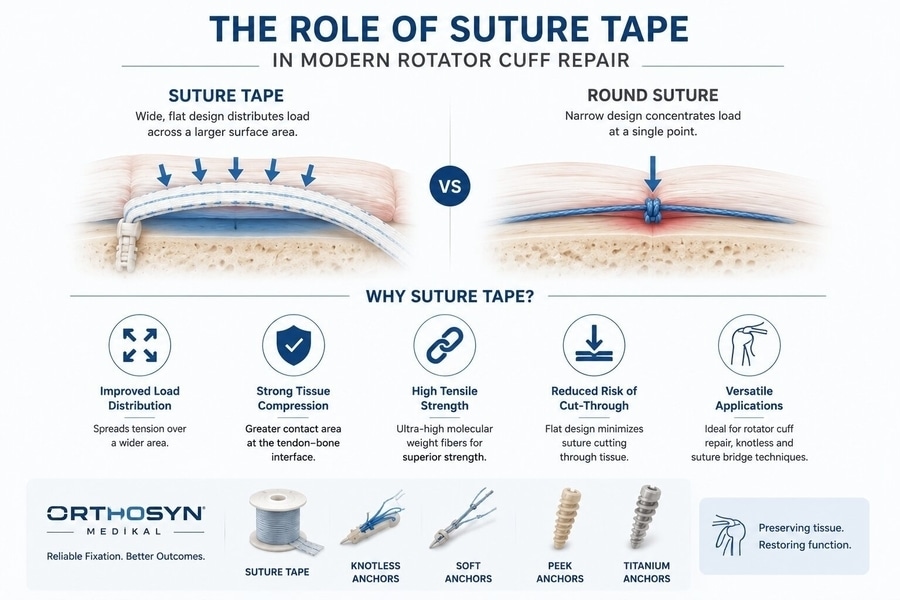
One of the most important innovations has been the introduction of suture tape. Compared with conventional round sutures, suture tape provides a broader contact surface, improved load distribution, and enhanced tissue compression, making it an increasingly popular option in modern rotator cuff repair.
Today, suture tape is widely incorporated into single-row, double-row, and suture bridge repair techniques, helping surgeons achieve stronger fixation while promoting biological healing.
Understanding Suture Tape
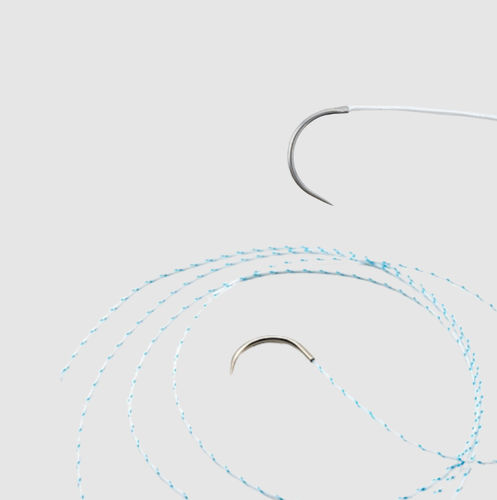
Suture tape is a high-strength, flat braided fixation material designed specifically for orthopedic soft tissue repair.
Unlike conventional round sutures, suture tape has a wider and flatter profile that distributes forces over a larger surface area.
Modern suture tapes are commonly manufactured from ultra-high molecular weight polyethylene (UHMWPE) combined with high-strength polyester fibers, providing excellent tensile strength and durability.
Evolution of Rotator Cuff Repair
Rotator cuff repair has evolved from open surgery to advanced arthroscopic procedures.
Current repair techniques focus not only on tendon fixation but also on optimizing the biological environment for tendon healing.
The introduction of suture tape has supported this evolution by improving tendon compression while reducing localized stress concentrations.
Biomechanical Advantages
One of the major advantages of suture tape is its favorable biomechanical performance.
Laboratory studies have demonstrated several potential benefits:
Higher contact pressure across the tendon footprint
More uniform load distribution
Reduced tissue cut-through
Improved resistance to cyclic loading
Excellent tensile strength
These characteristics contribute to stable fixation during the early healing phase.
Improved Load Distribution
Traditional round sutures concentrate force over a relatively small area.
Suture tape spreads mechanical loads over a broader tissue surface.
Potential benefits include:
Reduced stress concentration
Lower risk of tissue strangulation
More even compression of the repaired tendon
This broader force distribution may help protect tendon tissue during rehabilitation.
Reduced Risk of Tissue Cut-Through
One concern in rotator cuff repair is suture cut-through, particularly in degenerative or poor-quality tendon tissue.
The wider profile of suture tape may reduce localized pressure on the tendon.
By decreasing tissue stress, suture tape can improve fixation security in selected cases.
Enhanced Footprint Compression
Successful tendon healing depends on secure contact between the repaired tendon and its bony footprint.
Suture tape allows:
Broader tendon compression
Improved footprint coverage
More homogeneous fixation
These characteristics are particularly valuable in double-row and suture bridge repair techniques.
Applications in Double-Row Repair
Double-row repair has become a widely accepted technique for many medium and large rotator cuff tears.
Suture tape is frequently used in:
Medial-row fixation
Lateral-row fixation
Suture bridge constructs
Its broad compression characteristics complement modern transosseous-equivalent repair strategies.
Suture Bridge Techniques
Suture bridge repair aims to maximize tendon-to-bone contact.
Suture tape contributes by:
Increasing compression across the repair site
Improving load sharing
Enhancing construct stability
These factors may help optimize the biological environment for tendon healing.
Clinical Indications
Suture tape is commonly used in:
Small rotator cuff tears
Medium-sized tears
Large tears
Massive tears requiring complex fixation
Revision rotator cuff surgery
Implant selection always depends on tissue quality, tear pattern, and surgeon preference.
Compatibility with Modern Anchors
Suture tape is compatible with many contemporary fixation systems, including:
PEEK suture anchors
Titanium anchors
Biocomposite anchors
Knotless anchors
This versatility allows surgeons to integrate suture tape into a wide variety of repair techniques.
Biological Considerations
Mechanical stability is only one component of successful tendon healing.
Biological factors also influence outcomes, including:
Tendon vascularity
Bone quality
Patient age
Rehabilitation protocol
Stable fixation provided by suture tape may support biological healing by minimizing excessive micromotion at the repair site.
Clinical Outcomes
Clinical studies have reported encouraging outcomes with suture tape–based repairs.
Potential benefits include:
Reliable fixation
Reduced re-tear rates in selected patients
Improved tendon healing
Excellent shoulder function
High patient satisfaction
Long-term outcomes continue to be investigated as surgical techniques evolve.
Rehabilitation
Postoperative rehabilitation remains essential regardless of the fixation material used.
Typical rehabilitation includes:
Protected immobilization
Gradual passive motion
Progressive strengthening
Controlled return to daily activities and sports
Rehabilitation protocols should always be individualized according to tear size and repair stability.
Future Developments
Rotator cuff repair technology continues to advance.
Current innovations include:
Next-generation suture tapes
Improved biomaterials
Enhanced anchor designs
Biologic augmentation techniques
Regenerative treatment strategies
These developments aim to further improve tendon healing and long-term clinical outcomes.
Conclusion
Suture tape has become an important component of modern rotator cuff repair by providing broader load distribution, enhanced tendon compression, and excellent biomechanical stability. Its compatibility with advanced arthroscopic techniques and modern anchor systems has made it a valuable tool for treating a wide range of rotator cuff tears.
As shoulder arthroscopy continues to evolve, suture tape is expected to remain a key technology supporting stronger repairs and improved patient outcomes.
Orthosyn Medikal provides advanced suture tapes, arthroscopy implants, suture anchor systems, and shoulder fixation solutions designed to support modern rotator cuff repair and minimally invasive orthopedic surgery.