#Product Trends
How Is Graft Fixation Performed in PCL Reconstruction? | Orthosyn
Learn how graft fixation works during posterior cruciate ligament reconstruction, how femoral and tibial tunnels are used, and how cortical button systems and interference screws can provide fixation while the graft undergoes biological incorporation
Posterior cruciate ligament (PCL) reconstruction is a surgical procedure used in selected cases of PCL insufficiency when reconstruction is considered appropriate. During the procedure, a tendon graft is positioned to reproduce the stabilizing function of the injured PCL.
One of the key stages of PCL reconstruction is graft fixation. After the graft has been prepared and positioned through the femoral and tibial bone tunnels or sockets, it must be securely fixed while biological incorporation occurs.
Different fixation strategies can be used. Depending on the surgical technique, graft type, tunnel configuration, bone quality, and surgeon preference, fixation may involve cortical button systems, interference screws, or combinations of fixation technologies.
The basic concept is:
PCL Injury → Tunnel Preparation → Graft Passage → Femoral Fixation → Graft Tensioning → Tibial Fixation → Biological Incorporation
What Is the Posterior Cruciate Ligament?
The posterior cruciate ligament (PCL) is one of the major stabilizing ligaments of the knee.
Together with the anterior cruciate ligament (ACL), it forms part of the central ligamentous stabilizing system of the knee.
The PCL primarily contributes to controlling posterior translation of the tibia relative to the femur and also participates in rotational and overall knee stability.
A significant PCL injury can therefore alter normal knee biomechanics.
What Is a PCL Injury?
PCL injuries may occur through mechanisms such as:
- Direct trauma to the anterior tibia
- Sports injuries
- Hyperflexion
- Hyperextension
- High-energy trauma
- Multiligament knee injuries
PCL injuries can occur in isolation or together with injuries to other structures.
Associated injuries may involve:
- ACL
- Posterolateral corner
- Medial collateral ligament
- Menisci
- Articular cartilage
- Other capsuloligamentous structures
Not every PCL injury requires surgical reconstruction.
Treatment depends on the severity and chronicity of the injury, symptoms, functional instability, associated ligament injuries, patient activity requirements, alignment, and other clinical factors.
What Is PCL Reconstruction?
PCL reconstruction is intended to restore ligament function using a graft that replaces the insufficient native PCL.
The graft may be obtained from different sources depending on the selected technique and clinical situation.
After graft preparation, bone tunnels or sockets are created in the femur and tibia.
The graft is then positioned to reproduce the course and function of the reconstructed ligament.
A simplified concept is:
Femoral Attachment → Graft → Tibial Attachment
The graft must then be secured on both sides.
This is where graft fixation systems become important.
Why Is Graft Fixation Important in PCL Reconstruction?
Immediately after reconstruction, the graft has not yet biologically incorporated into the surrounding bone.
Mechanical fixation therefore helps maintain the graft in the intended position during the early healing period.
Fixation must work together with:
- Correct tunnel placement
- Appropriate graft preparation
- Controlled graft passage
- Appropriate tensioning
- Suitable implant selection
- Rehabilitation strategy
A fixation implant alone does not determine the success of a PCL reconstruction.
The entire reconstruction functions as a system.
How Is a PCL Graft Fixed?
The graft generally requires fixation at both the femoral and tibial sides.
Different fixation strategies may be used on each side.
Common concepts include:
Cortical Fixation
A cortical button can secure the graft against the outer cortical surface of the bone.
Interference Fixation
An interference screw can secure the graft by compressing it against the wall of the bone tunnel.
Combined Fixation
A reconstruction may use different fixation technologies on the femoral and tibial sides.
For example:
Femoral Cortical Button → PCL Graft → Tibial Interference Screw
This is one possible fixation strategy rather than a universal configuration.
What Is Femoral Fixation in PCL Reconstruction?
The femoral side of the PCL originates from the medial femoral condyle region within the intercondylar notch.
During reconstruction, a femoral tunnel or socket is created according to the selected technique.
The graft is introduced into this tunnel and secured.
Possible femoral fixation strategies can include:
- Cortical button fixation
- Interference screw fixation
- Other graft-specific fixation techniques
The selected method depends on the reconstruction technique and graft configuration.
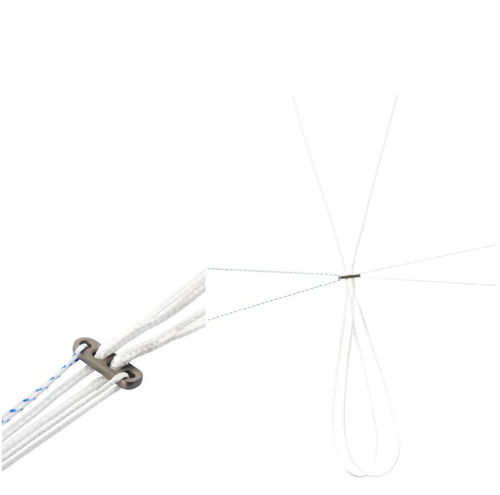
What Is a Cortical Button?
A cortical button is a fixation implant designed to engage the strong cortical surface of bone.
The graft is connected to a loop or fixation construct associated with the button.
After the button passes through the prepared tunnel, it is positioned against the cortical surface.
The basic concept is:
Graft → Loop → Cortical Button → Cortical Bone
The button provides suspensory fixation rather than directly compressing the graft against the entire tunnel wall.
What Is Suspensory Fixation?
Suspensory fixation secures the graft through a loop-and-button construct positioned against cortical bone.
The graft is effectively suspended within the tunnel or socket.
This differs from interference fixation.
Suspensory Fixation:
Graft → Loop → Button → Cortex
Interference Fixation:
Graft + Interference Screw → Compression Against Tunnel Wall
Both are established fixation concepts, but their mechanical principles differ.
Fixed-Loop vs Adjustable-Loop Cortical Fixation
Cortical button systems may use either fixed-loop or adjustable-loop configurations.
Fixed-Loop System
A fixed-loop system has a predetermined loop length.
Tunnel preparation and implant selection therefore need to correspond to the selected loop dimensions.
Potential characteristics include:
- Predetermined loop length
- Defined graft suspension distance
- Straightforward mechanical configuration
Adjustable-Loop System
An adjustable-loop system allows the loop length to be modified during graft positioning and tensioning.
Potential characteristics include:
- Adjustable graft advancement
- Intraoperative tensioning capability
- Adaptation to socket and tunnel configuration
The choice depends on surgical technique, tunnel preparation, graft dimensions, fixation requirements, and surgeon preference.
What Is Tibial Fixation in PCL Reconstruction?
The tibial attachment of the PCL is located on the posterior aspect of the proximal tibia.
During reconstruction, a tibial tunnel is prepared according to the selected surgical technique.
The graft is passed through or positioned within this tunnel and subsequently secured.
One commonly used fixation concept is an interference screw.
The screw is positioned adjacent to the graft inside the tunnel, creating compression between the graft and the tunnel wall.
Conceptually:
Tibial Tunnel Wall → Graft → Interference Screw → Compression
This mechanical fixation helps maintain the graft position while biological incorporation develops.
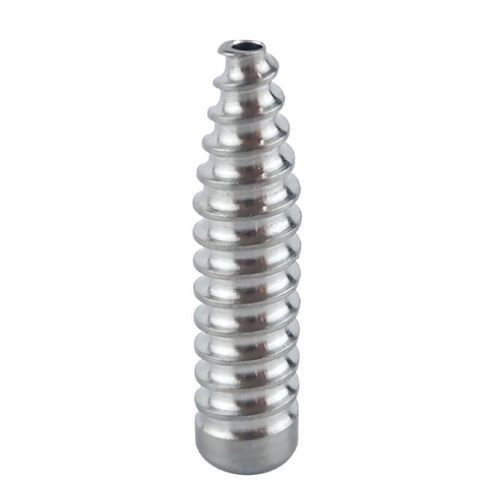
What Is an Interference Screw?
An interference screw is an orthopedic fixation implant positioned within a bone tunnel alongside the graft.
As the screw is inserted, it creates an interference fit between the graft, screw, and tunnel wall.
The fixation mechanism depends on factors including:
- Screw diameter
- Screw length
- Tunnel diameter
- Bone quality
- Graft diameter
- Graft type
- Screw design
- Insertion technique
Appropriate matching of these parameters is important.
What Materials Are Used for Interference Screws?
Interference screws can be manufactured from different materials.
Common categories include:
- Titanium
- PEEK
- Bioabsorbable or biocomposite materials
Each material has different implant characteristics.
Titanium Interference Screws
Titanium has a long history of use in orthopedic fixation.
Potential characteristics include:
- High mechanical strength
- Biocompatibility
- Rigid fixation
- Permanent implant structure
- Established orthopedic use
Titanium interference screws remain one option for graft fixation depending on the selected reconstruction technique.
PEEK Interference Screws
PEEK — polyether ether ketone — is a high-performance polymer used in orthopedic implants.
Potential characteristics include:
- Mechanical strength
- Biocompatibility
- Radiolucency
- Permanent polymer structure
- Resistance to degradation
PEEK interference screws provide a non-metallic solid implant option for graft fixation.
Bioabsorbable Interference Screws
Bioabsorbable interference screws are designed using materials that gradually undergo degradation after implantation.
Depending on the product, materials may include polymer-based or polymer-ceramic composite formulations.
Potential considerations include:
- Temporary implant concept
- Gradual material degradation
- Different imaging characteristics compared with metallic implants
- Material-specific biological behavior
The appropriate screw material depends on the implant specifications, surgical requirements, regulatory indications, and surgeon preference.
How Is the Graft Passed During PCL Reconstruction?
After the femoral and tibial tunnels have been prepared, the graft must be passed into its intended position.
Passing sutures, guidewires, and dedicated graft-passing instruments can assist this process.
A simplified sequence is:
Tunnel Preparation → Passing Suture/Guidewire → Graft Advancement → Femoral Positioning → Tibial Positioning
Controlled graft passage is particularly important in PCL reconstruction because of the anatomy of the tibial tunnel and the direction change the graft may experience around the posterior tibial region.
What Is the “Killer Turn” in PCL Reconstruction?
One technical consideration frequently discussed in transtibial PCL reconstruction is the so-called killer turn.
As the graft exits the tibial tunnel and changes direction toward the femoral attachment, it may bend sharply around the posterior tibial aperture.
This change in direction can influence:
- Graft passage
- Graft abrasion
- Graft tension
- Tunnel positioning
- Overall reconstruction mechanics
Surgical techniques and instrumentation may therefore aim to facilitate controlled graft passage and manage this transition.
Why Is Tunnel Position Important?
Graft fixation cannot compensate for inappropriate tunnel placement.
Femoral and tibial tunnel positions influence the reconstructed graft's orientation and functional behavior.
Tunnel planning should consider:
- Native PCL anatomy
- Femoral attachment
- Tibial attachment
- Tunnel angle
- Tunnel length
- Graft diameter
- Fixation system
- Surrounding anatomical structures
This is particularly important in PCL reconstruction because the tibial attachment is located near important posterior neurovascular structures.
Why Is Tibial Tunnel Preparation Technically Important?
The posterior location of the PCL tibial attachment makes tunnel preparation technically demanding.
Important considerations include:
- Guide positioning
- Drilling trajectory
- Tunnel exit location
- Controlled drilling
- Protection of posterior structures
- Appropriate instrumentation
PCL-specific guides can assist with controlled tunnel preparation according to the selected surgical technique.
How Is Graft Tensioned?
After graft passage, the graft must be tensioned before final fixation.
The purpose is to establish an appropriate relationship between the graft and the reconstructed ligament anatomy.
Tensioning may be influenced by:
- Knee flexion angle
- Graft type
- Reconstruction technique
- Single- or double-bundle strategy
- Fixation system
- Associated ligament procedures
- Surgeon preference
Excessive or insufficient tension may affect reconstructed knee mechanics.
Therefore, graft tensioning and fixation should be considered together rather than as separate steps.
Which Side Is Fixed First?
The sequence of femoral and tibial fixation can vary according to surgical technique.
The surgeon may establish fixation on one side, pass and tension the graft, and then complete fixation on the opposite side.
There is no single universal sequence applicable to every PCL reconstruction.
The sequence depends on factors such as:
- Surgical technique
- Graft type
- Fixation system
- Tunnel configuration
- Tensioning strategy
- Single- or double-bundle reconstruction
What Is Single-Bundle PCL Reconstruction?
The native PCL is commonly described in terms of functional bundles, particularly the anterolateral and posteromedial components.
A single-bundle PCL reconstruction uses one graft construct to reproduce the primary stabilizing function of the PCL.
This generally involves one principal femoral and tibial graft pathway, although exact tunnel and fixation strategies vary.
What Is Double-Bundle PCL Reconstruction?
A double-bundle reconstruction attempts to reproduce more than one functional component of the native PCL.
This may require:
- Additional tunnels or sockets
- Additional graft material
- More complex graft passage
- Multiple fixation points
- More complex tensioning strategies
The choice between single- and double-bundle reconstruction depends on surgical philosophy, anatomy, injury pattern, technical requirements, and surgeon preference.
Cortical Button vs Interference Screw Fixation
The two systems use different mechanical principles.
Feature Cortical Button Interference Screw
Fixation concept Suspensory fixation Aperture/interference fixation
Main interface Cortical bone Graft and tunnel wall
Graft compression Not primary mechanism Primary fixation mechanism
Loop system Common Not required
Fixed/adjustable options Possible Not applicable in same way
Implant location Cortical surface Inside bone tunnel
Common role Femoral or technique-dependent fixation Femoral or tibial tunnel fixation
Neither system is universally preferable for every reconstruction.
The fixation strategy should correspond to the graft, tunnel design, bone quality, implant characteristics, and surgical technique.
Why Does Interference Screw Diameter Matter?
The relationship between screw diameter, graft diameter, and tunnel diameter influences interference fixation.
An appropriately selected screw should provide the required fixation without inappropriate graft compression or bone damage.
Factors include:
- Tunnel diameter
- Graft diameter
- Screw diameter
- Screw length
- Bone density
- Graft characteristics
- Implant material
- Insertion technique
A larger screw does not automatically mean better fixation.
Implant dimensions must be selected according to the complete reconstruction.
Does Bone Quality Affect Graft Fixation?
Yes.
Bone quality can influence how fixation devices interact with the femoral and tibial tunnels.
This may be particularly relevant for interference fixation because the screw relies partly on the mechanical relationship between the graft, screw, and surrounding bone.
Cortical fixation relies on engagement with the cortical bone surface.
The fixation strategy should therefore consider the quality and geometry of the available bone.
When Does Biological Graft Incorporation Occur?
Mechanical fixation provides initial stability, but long-term reconstruction also depends on biological healing.
Over time, the graft undergoes biological processes within the bone tunnels and intra-articular environment.
The overall process involves:
Initial Mechanical Fixation → Biological Healing → Graft Incorporation → Remodeling
The timeline and biological behavior depend on several factors, including graft type, patient biology, tunnel environment, rehabilitation, and surgical technique.
What Instruments Are Used in PCL Reconstruction?
Depending on the selected technique, PCL reconstruction may involve:
- Arthroscope
- PCL tibial guides
- Femoral guides
- Guidewires
- Passing pins
- Drills and reamers
- Graft preparation instruments
- Passing sutures
- Cortical button systems
- Interference screws
- Screwdrivers
- Suture management instruments
- Additional ACL/PCL reconstruction instrumentation
Accurate instrumentation is particularly important for controlled tunnel preparation and graft passage.
What Should Be Considered When Selecting a PCL Fixation System?
Parameter Why It Matters
Graft type Influences fixation strategy
Graft diameter Influences tunnel and implant dimensions
Tunnel diameter Must correspond to graft and fixation
Tunnel length Important for graft positioning
Bone quality Influences fixation requirements
Cortical thickness Relevant for cortical fixation
Screw diameter Influences interference fixation
Screw material Determines implant characteristics
Loop configuration Relevant for cortical button fixation
Graft tension Influences reconstructed ligament mechanics
Surgical technique Determines overall fixation strategy
Fixation should therefore be considered as one part of the complete reconstruction rather than as an isolated implant decision.
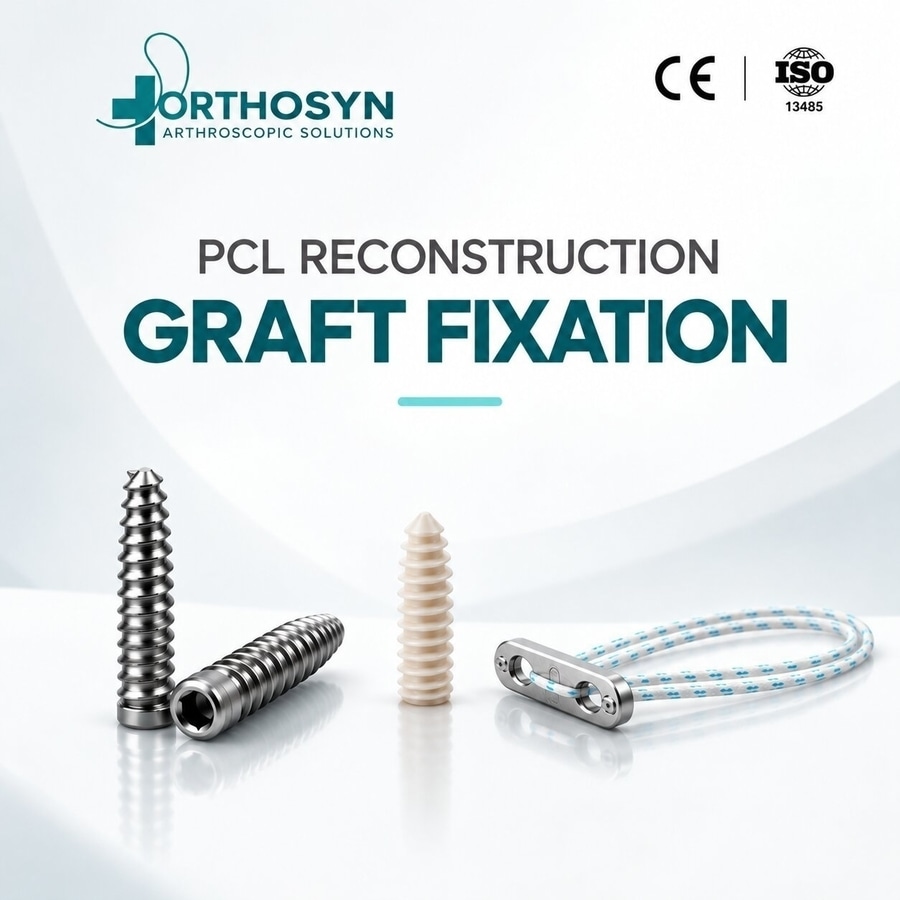
Orthosyn Solutions for ACL/PCL Graft Fixation
Orthosyn Medikal provides arthroscopic fixation and instrumentation solutions that can support different graft fixation strategies used in cruciate ligament reconstruction.
The Orthosyn portfolio includes:
- Adjustable Loop Cortical Fixation Systems
- Fixed Loop Cortical Button Systems
- Titanium Interference Screws
- PEEK Interference Screws
- Bioabsorbable Interference Screw Options
- ACL/PCL Reconstruction Guides and Instrumentation
- Passing Pins and Guidewires
These technologies provide different mechanical fixation concepts that can be selected according to the graft, tunnel configuration, bone quality, surgical technique, and applicable product indications.
PCL vs ACL Graft Fixation: Are They the Same?
ACL and PCL reconstruction share several general fixation principles.
Both procedures may involve:
- Tendon grafts
- Femoral and tibial tunnels
- Cortical fixation
- Interference screws
- Graft tensioning
- Biological incorporation
However, they are not identical procedures.
PCL reconstruction presents different anatomical and technical considerations, particularly because of:
- Posterior tibial attachment anatomy
- Proximity to posterior neurovascular structures
- Tibial tunnel trajectory
- Killer-turn mechanics in transtibial techniques
- Different graft tensioning requirements
- Different functional biomechanics
Therefore, fixation technologies may share similar principles while the overall surgical technique remains specific to PCL reconstruction.
Conclusion
Graft fixation is a fundamental stage of PCL reconstruction because the reconstructed ligament requires mechanical stability while biological incorporation develops.
After the femoral and tibial tunnels or sockets have been prepared, the graft is passed into position and fixed using a strategy selected according to the surgical technique.
A simplified reconstruction sequence is:
PCL Injury → Femoral and Tibial Tunnel Preparation → Graft Passage → Femoral Fixation → Graft Tensioning → Tibial Fixation → Biological Incorporation
Two important fixation concepts are:
Cortical Button Fixation → Suspensory fixation against cortical bone
and
Interference Screw Fixation → Compression of the graft against the bone tunnel
These technologies may be used independently or in combination depending on the reconstruction strategy.
Successful graft fixation requires consideration of tunnel position, graft dimensions, bone quality, implant dimensions, fixation mechanism, graft tension, surgical technique, and biological healing.
PCL reconstruction also presents specific technical considerations, including the posterior tibial anatomy and the graft's change of direction in transtibial techniques.
Orthosyn Medikal provides adjustable-loop and fixed-loop cortical fixation systems, titanium and PEEK interference screws, bioabsorbable interference screw options, and ACL/PCL reconstruction instrumentation designed to support different arthroscopic cruciate ligament fixation strategies where the selected implant, technique, dimensions, and applicable indications are appropriate.