#Product Trends
All-Inside vs Inside-Out Meniscus Repair: What Is the Difference? | Orthosyn
Learn how all-inside and inside-out meniscus repair techniques differ, how sutures are positioned during each procedure, why tear location and tissue quality influence technique selection, and how modern meniscal repair systems support meniscus-prese
Meniscus repair is an important component of modern knee preservation surgery. Rather than removing damaged meniscal tissue whenever possible, surgeons may attempt to repair and preserve the meniscus when the tear pattern, tissue quality, vascularity, location, and patient characteristics are appropriate.
Two commonly discussed arthroscopic repair approaches are all-inside meniscus repair and inside-out meniscus repair.
Both techniques aim to stabilize the torn meniscal tissue and support biological healing, but they differ significantly in how the sutures are delivered and secured.
In an all-inside repair, fixation is performed from within the joint using arthroscopic meniscal repair devices, generally without requiring the long needles and additional posteromedial or posterolateral surgical exposure associated with traditional inside-out techniques.
In an inside-out repair, sutures are passed from inside the knee joint through the meniscus and capsule toward the outside of the joint, where they are retrieved and typically tied over the capsule.
Understanding these differences is important when evaluating modern approaches to meniscus preservation.
What Is the Meniscus?
The knee contains two menisci:
Medial meniscus
Lateral meniscus
Each meniscus is a fibrocartilaginous structure positioned between the femoral condyle and tibial plateau.
The menisci contribute to several important functions within the knee, including:
Load distribution
Shock absorption
Joint stability
Contact stress reduction
Joint lubrication
Proprioception
Because of these functions, preservation of functional meniscal tissue has become an important objective in knee surgery.
What Is a Meniscus Tear?
A meniscus tear is a disruption of the normal meniscal structure.
Tears can differ considerably in morphology, location, size, stability, and tissue quality.
Commonly described tear patterns include:
Longitudinal tears
Vertical tears
Bucket-handle tears
Radial tears
Horizontal tears
Complex tears
Root tears
The type of tear is only one factor in treatment planning.
The surgeon may also evaluate:
Tear location
Tear length
Tissue quality
Meniscal vascularity
Patient age
Activity level
Associated ligament injuries
Knee stability
Chronicity of the tear
Not every meniscus tear requires surgery, and not every surgically treated tear is suitable for repair.
Why Is Meniscus Preservation Important?
Historically, meniscectomy was commonly used to treat symptomatic meniscal tears.
However, removal of meniscal tissue reduces the amount of functional tissue available to distribute loads across the knee.
For this reason, modern arthroscopic strategies increasingly emphasize meniscal preservation whenever clinically appropriate.
The fundamental principle is:
Meniscus Tear → Evaluate Repairability → Stabilize the Tear → Preserve Functional Meniscal Tissue
A successful repair aims to stabilize the torn tissue while allowing biological healing to occur.
What Is All-Inside Meniscus Repair?
An all-inside meniscus repair is an arthroscopic technique in which the primary fixation procedure is performed from within the knee joint.
Modern all-inside systems typically allow the surgeon to deliver fixation elements through an arthroscopic portal using a dedicated device.
The general concept is:
Arthroscopic Portal → Meniscal Repair Device → Torn Meniscus → Fixation
Depending on the device design, fixation elements may be deployed beyond the meniscus or capsule and connected by high-strength suture.
The surgeon then tensions the suture to approximate and stabilize the torn meniscal tissue.
How Is an All-Inside Meniscus Repair Performed?
Although the exact technique depends on the device and tear configuration, a typical procedure may involve:
Arthroscopic evaluation of the knee.
Identification of the meniscal tear.
Assessment of tear stability and tissue quality.
Preparation of the repair site when appropriate.
Introduction of the all-inside repair device.
Positioning of the device at the desired fixation point.
Deployment of the first fixation element.
Repositioning and deployment of the second fixation element.
Controlled tensioning of the connecting suture.
Assessment of the final repair with an arthroscopic probe.
Multiple fixation points may be used depending on the length and configuration of the tear.
What Is Inside-Out Meniscus Repair?
An inside-out meniscus repair uses sutures that are introduced from inside the knee joint and passed outward through the meniscus and joint capsule.
The general concept is:
Inside the Joint → Meniscus → Capsule → Outside the Joint
Long flexible needles carrying sutures are typically passed through an arthroscopic cannula or delivery system.
The needles exit through the capsule and are retrieved through an additional surgical exposure.
The sutures can then be tied externally over the capsule.
How Is an Inside-Out Meniscus Repair Performed?
A general inside-out technique may involve:
Arthroscopic evaluation of the meniscal tear.
Preparation of the repair area.
Creation of an appropriate posteromedial or posterolateral safety exposure depending on tear location.
Introduction of a meniscal repair cannula.
Passage of suture needles from inside the joint.
Penetration of the meniscus and capsule.
Retrieval of the needles outside the joint.
Placement of additional sutures as required.
External knot tying over the capsule.
Arthroscopic assessment of repair stability.
The exact technique varies according to the affected meniscus, tear location, surgeon preference, and required suture configuration.
What Is the Main Difference Between All-Inside and Inside-Out Repair?
The most fundamental difference is how fixation is delivered and secured.
All-Inside Repair
The repair is primarily performed arthroscopically from within the joint using a dedicated repair device.
Inside-Out Repair
Sutures travel from inside the joint through the meniscus and capsule and are retrieved outside the joint.
This difference affects instrumentation, surgical exposure, suture management, workflow, and the types of fixation configurations that may be created.
All-Inside vs Inside-Out Meniscus Repair
Feature All-Inside Repair Inside-Out Repair
Main approach Arthroscopic, primarily within the joint Sutures passed from inside to outside
Dedicated repair device Typically required Cannulas and long suture needles typically used
Additional incision Usually smaller or potentially avoided depending on technique Posteromedial or posterolateral exposure commonly required
Fixation Device-based fixation with suture Sutures retrieved and tied externally
Suture management Primarily arthroscopic Internal passage + external retrieval
Surgical workflow Can be streamlined More steps for needle retrieval and knot tying
Neurovascular awareness Still essential Particularly important during needle passage and retrieval
Repair configuration Depends on device Multiple suture configurations possible
Technique selection Tear- and device-dependent Tear- and anatomy-dependent
Neither technique should be considered universally superior for every meniscal tear.
What Are the Potential Advantages of All-Inside Meniscus Repair?
Modern all-inside systems were developed to allow meniscal fixation through arthroscopic portals while reducing the need for additional surgical exposure.
Potential procedural advantages can include:
Reduced Additional Surgical Exposure
Because fixation is performed primarily from inside the joint, an additional posteromedial or posterolateral incision used for needle retrieval may not be required in many all-inside procedures.
Simplified Suture Delivery
A dedicated device can deliver fixation elements directly to the repair site.
Controlled Arthroscopic Workflow
Deployment and tensioning can be performed under arthroscopic visualization.
Potentially Shorter Procedural Steps
Avoiding external needle retrieval and external knot tying can simplify parts of the workflow.
Access to Selected Posterior Meniscal Tears
Modern delivery systems can facilitate arthroscopic fixation in areas that may otherwise require more extensive suture management.
However, these potential advantages depend on the tear configuration, device design, surgical technique, and surgeon experience.
What Are the Potential Advantages of Inside-Out Meniscus Repair?
Inside-out repair remains an important meniscal repair technique.
Potential characteristics include:
Flexible Suture Placement
The surgeon can create multiple fixation points along an extensive tear.
Versatile Suture Configurations
Different vertical, horizontal, or oblique configurations may be created depending on the surgical technique.
Direct Control of External Knots
The sutures are retrieved and tied outside the capsule, allowing the surgeon to manage each fixation point.
Application to Longer Tears
The technique can be useful when numerous sutures are required across an extended meniscal lesion.
The procedure does, however, require appropriate protection of surrounding structures during needle passage and retrieval.
Why Is Neurovascular Safety Important?
The posterior portion of the knee contains important neurovascular structures.
During meniscal repair, instruments, needles, and fixation elements may pass close to these structures.
This consideration is particularly important with inside-out techniques because long needles pass through the capsule and are retrieved outside the joint.
Protective surgical exposure and careful needle retrieval are therefore important components of the technique.
All-inside repair does not eliminate anatomical risk.
The surgeon must still control:
Device insertion depth
Direction of deployment
Meniscal thickness
Capsule position
Local anatomy
Fixation depth
Modern all-inside devices may incorporate adjustable depth control to help manage penetration beyond the meniscus.
Why Does Tear Location Matter?
The meniscus is not biologically or anatomically identical throughout its entire structure.
The peripheral region receives a greater blood supply than the central region.
The meniscus is commonly discussed in vascular zones:
Red-Red Zone
The peripheral region with relatively greater vascularity.
Red-White Zone
The transition between vascular and less vascular tissue.
White-White Zone
The more central region with limited vascular supply.
Vascularity is one of several factors that can influence healing potential.
Tear location also affects surgical access and may influence whether an all-inside, inside-out, outside-in, or another repair strategy is selected.
Which Tears Can Be Suitable for Repair?
Repairability cannot be determined solely by the name of the tear pattern.
Factors that may influence the decision include:
Tear orientation
Tear length
Location
Stability
Tissue quality
Vascularity
Chronicity
Associated ACL injury
Patient characteristics
Ability to achieve stable fixation
Longitudinal and bucket-handle tears in appropriate tissue are commonly associated with repair strategies, but modern techniques may also be used for selected radial, horizontal, complex, or root-related lesions.
The final decision is based on arthroscopic and clinical assessment.
What Role Does Suture Configuration Play?
The objective of the suture is to bring the torn meniscal surfaces together and maintain stability during healing.
Possible configurations include:
Vertical mattress
Horizontal mattress
Oblique configurations
Combination patterns
The appropriate configuration depends on the tear orientation and repair technique.
For example, vertical mattress sutures may be useful in selected longitudinal tears because the configuration can capture circumferential meniscal fibers on both sides of the tear.
The repair strategy should follow the anatomy of the lesion rather than using the same suture pattern for every tear.
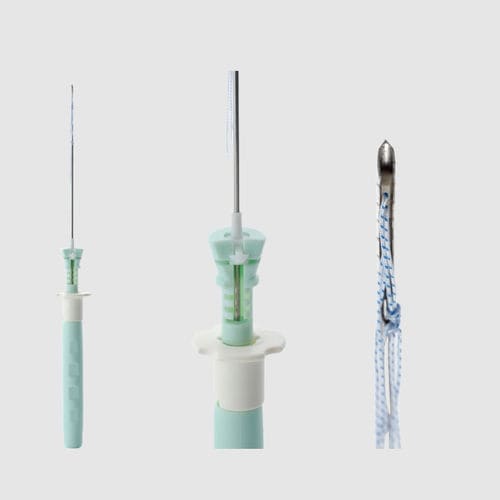
How Does an All-Inside Meniscal Repair Device Work?
A modern all-inside system generally combines several functions into a single delivery instrument.
Depending on the design, the system may include:
Ergonomic handle
Delivery needle
Adjustable penetration depth
Preloaded fixation elements
High-strength suture
Tensioning mechanism
The first fixation element is deployed at one side of the intended repair.
A second fixation element is then positioned.
The connecting suture is tensioned to approximate the torn meniscal tissue.
The concept can be represented as:
First Fixation Point → Suture → Meniscal Tear → Second Fixation Point → Controlled Tensioning
This allows arthroscopic stabilization without conventional external needle retrieval.
Why Is Adjustable Depth Important in All-Inside Repair?
Meniscal thickness and surrounding anatomy vary according to location.
If the device penetrates too far beyond the meniscus and capsule, surrounding structures may be exposed to unnecessary risk.
If penetration is insufficient, the fixation element may not be positioned as intended.
A depth-control mechanism allows the surgeon to adapt the penetration distance according to the anatomical region and repair strategy.
However, depth control does not replace anatomical knowledge or appropriate surgical technique.
What Is the Role of UHMWPE Sutures in Meniscus Repair?
Modern meniscal repair systems may use high-strength sutures manufactured from UHMWPE — Ultra-High-Molecular-Weight Polyethylene.
UHMWPE sutures are widely used in orthopedic soft-tissue fixation because of their mechanical characteristics.
In meniscus repair, the suture forms the connection between fixation points and maintains approximation of the repaired tissue.
Important suture considerations include:
Tensile properties
Suture diameter
Handling characteristics
Knot behavior where knots are used
Interaction with meniscal tissue
Compatibility with the repair device
The suture is therefore an integral part of the overall fixation system rather than an independent component.
Does All-Inside Mean Knotless?
Not necessarily.
The terms all-inside and knotless describe different aspects of a repair system.
“All-inside” primarily describes the surgical approach and the way fixation is delivered without traditional inside-out needle retrieval.
Whether the system uses a knot, self-locking mechanism, sliding construct, or another tensioning method depends on the specific device design.
Therefore, the two terms should not automatically be considered synonymous.
What About the Outside-In Technique?
A third meniscal repair concept is the outside-in technique.
In this approach, needles are introduced from outside the joint and directed through the capsule and meniscus toward the inside of the joint.
The general concept is:
Outside the Joint → Capsule → Meniscus → Inside the Joint
Outside-in techniques can be particularly useful for selected anterior and middle-third meniscal tears.
The three general approaches can therefore be summarized as:
All-Inside → Fixation primarily performed within the joint
Inside-Out → Sutures pass from inside the joint to outside
Outside-In → Sutures pass from outside the joint toward the inside
Technique selection depends on the location and characteristics of the tear.
All-Inside vs Inside-Out: Which Technique Is Used for Posterior Tears?
Posterior horn tears are particularly relevant when comparing these techniques.
Inside-out repair has traditionally been used for many posterior and middle-third tears because it allows multiple sutures to be placed across the lesion.
Modern all-inside systems provide another option for selected posterior meniscal tears by allowing fixation through arthroscopic portals.
However, the choice depends on:
Tear morphology
Tear length
Meniscal tissue quality
Medial or lateral location
Proximity to surrounding structures
Required number of fixation points
Surgeon experience
Available instrumentation
There is no single technique that is appropriate for every posterior meniscal lesion.
How Are Bucket-Handle Meniscus Tears Repaired?
A bucket-handle tear is typically a longitudinal tear in which a portion of the meniscus can displace toward the center of the joint.
When the tissue is considered repairable, the displaced fragment may first be reduced to its anatomical position.
The surgeon then stabilizes the tear using multiple fixation points.
Depending on the lesion, this may involve:
All-inside repair
Inside-out repair
A combination of techniques
The repair strategy depends on tear length, location, tissue quality, stability after reduction, and associated pathology.
How Does ACL Injury Relate to Meniscus Repair?
Meniscal tears frequently occur together with anterior cruciate ligament (ACL) injuries.
During ACL reconstruction, the surgeon evaluates the medial and lateral menisci arthroscopically.
Repairable meniscal lesions may be addressed during the same procedure.
Certain posterior meniscal lesions, including ramp lesions, can be associated with ACL injuries and may require careful arthroscopic evaluation because they are not always easily visualized from standard anterior portals.
Meniscal stability and ACL stability should therefore be considered together when evaluating the knee.
Is All-Inside Repair Less Invasive?
All-inside repair can reduce the need for the additional surgical exposure associated with traditional inside-out needle retrieval.
For this reason, it can reasonably be described as an approach that may reduce additional soft-tissue exposure in selected procedures.
However, “less invasive” should not be interpreted as meaning that the procedure is technically simple or without risk.
All-inside repair still requires:
Accurate arthroscopic assessment
Appropriate device positioning
Controlled penetration depth
Correct suture tension
Understanding of posterior knee anatomy
Appropriate tear selection
The quality of the repair depends on the complete surgical technique.
Is All-Inside Repair Better Than Inside-Out Repair?
There is no universal answer.
The techniques have different procedural characteristics, and the appropriate choice depends on the specific meniscal lesion and surgical situation.
A surgeon may consider:
Consideration Potential Influence
Tear location Determines accessibility
Tear length Influences number of fixation points
Tear orientation Influences suture configuration
Tissue quality Influences repairability
Vascularity Influences healing potential
Posterior anatomy Influences safety strategy
Device availability Influences possible technique
Surgeon experience Influences technique selection
Associated ACL reconstruction May affect overall surgical planning
In some procedures, different repair techniques may even be combined.
What Instruments Are Used in Meniscus Repair?
Depending on the selected technique, arthroscopic meniscus repair may involve:
Arthroscope
Arthroscopic cannulas
Meniscal probes
Graspers
Meniscal rasps
Suture passers
Meniscal repair needles
Inside-out cannulas
All-inside meniscal repair devices
Suture cutters
Additional arthroscopic instrumentation
The required instruments vary according to the repair strategy.
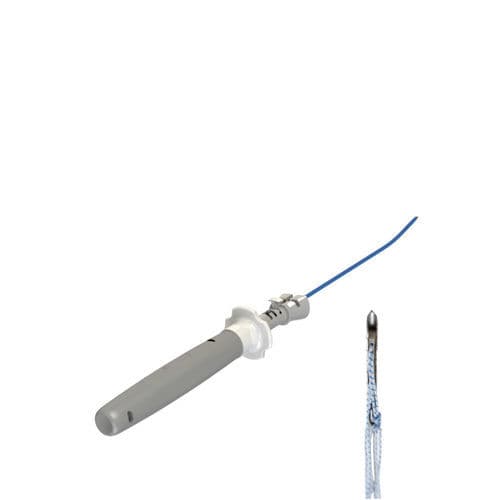
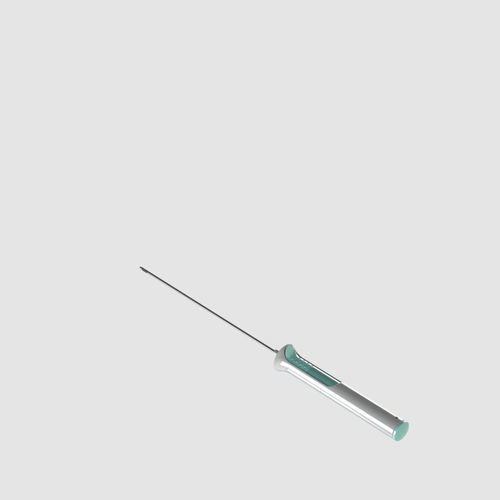
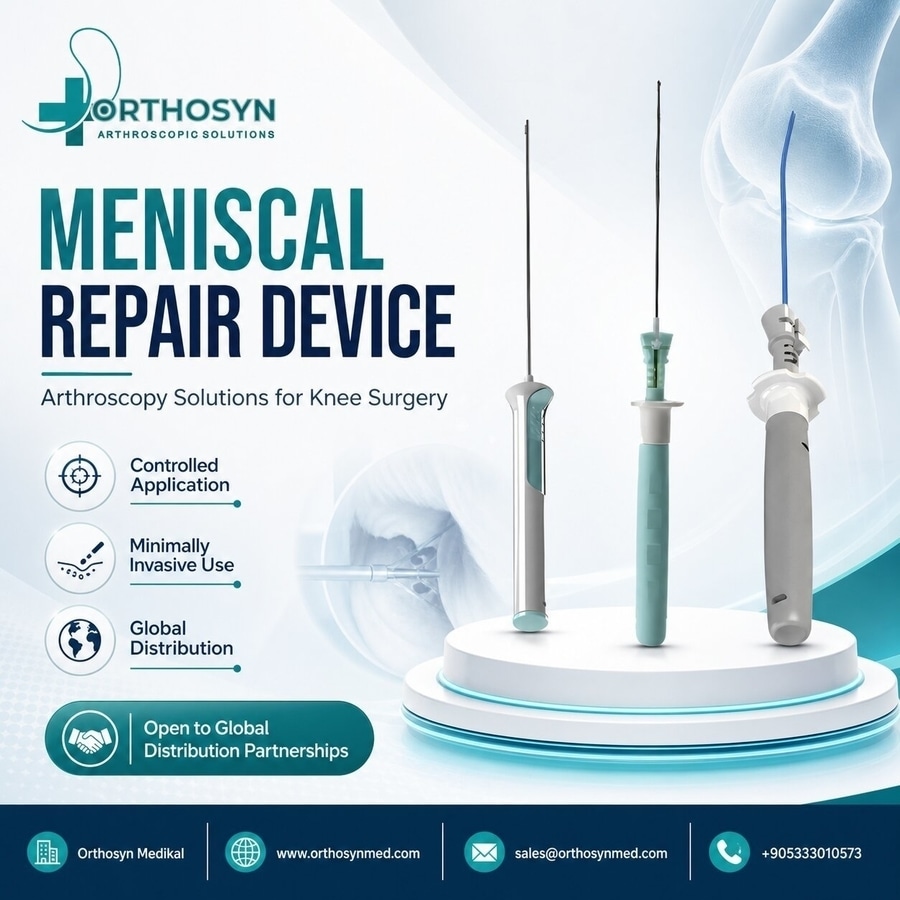
Orthosyn VersaFix All-Inside Meniscal Repair System
The VersaFix All-Inside Meniscal Repair System is part of the Orthosyn Medikal arthroscopy portfolio and is designed to support arthroscopic meniscal fixation using an all-inside approach.
The all-inside concept allows fixation elements and sutures to be delivered arthroscopically without the traditional external needle retrieval required in an inside-out repair.
In the context of meniscal preservation, this type of system is intended to support controlled fixation of repairable meniscal tissue while providing an arthroscopic workflow for suture delivery and tensioning.
The appropriate use of any meniscal repair device depends on factors including tear morphology, location, tissue quality, anatomy, surgical technique, and surgeon assessment.
What Should Be Considered When Selecting a Meniscal Repair System?
The repair device should be considered as one component of the complete surgical strategy.
Important parameters include:
Parameter Why It Matters
Tear location Determines access and repair approach
Tear morphology Influences fixation configuration
Meniscal tissue quality Influences ability to hold sutures
Penetration depth Important for fixation and surrounding anatomy
Suture material Contributes to mechanical fixation
Device ergonomics Influences arthroscopic handling
Number of fixation points Depends on tear length and stability
Tension control Influences tissue approximation
Surgical technique Determines overall repair strategy
A repair system should therefore be selected according to the characteristics of the lesion rather than simply according to whether it is classified as all-inside or inside-out.
Conclusion
All-inside and inside-out meniscus repair are two different techniques used to stabilize repairable meniscal tears while preserving functional meniscal tissue.
The fundamental difference is the direction and method of fixation:
All-Inside Repair → Arthroscopic Device → Internal Fixation → Controlled Suture Tensioning
Inside-Out Repair → Internal Needle Passage → Meniscus and Capsule → External Retrieval → External Knot Fixation
All-inside systems can streamline arthroscopic suture delivery and may reduce the need for additional surgical exposure associated with external needle retrieval. Inside-out repair provides flexible suture placement and remains an important option when multiple fixation points or particular suture configurations are required.
Neither approach is universally appropriate for every tear. Tear morphology, location, vascularity, tissue quality, knee anatomy, associated injuries, required fixation configuration, and surgeon preference all influence technique selection.
Modern meniscus surgery increasingly focuses on a central objective:
Preserve the Meniscus Whenever Repair Is Clinically Appropriate.
Orthosyn Medikal’s VersaFix All-Inside Meniscal Repair System provides an all-inside arthroscopic fixation option designed to support meniscal repair and tissue-preserving surgical strategies.