#Product Trends
How Self-Punching Anchors Improve Efficiency in Shoulder Arthroscopy
A comprehensive overview of self-punching suture anchor technology, its surgical advantages, biomechanical principles, and its contribution to improving efficiency in modern shoulder arthroscopy.
Shoulder arthroscopy has evolved considerably over the past two decades, driven by continuous innovations in surgical techniques, arthroscopic instrumentation, and implant technology. One of the most significant advancements has been the development of self-punching suture anchors, which simplify anchor insertion while reducing the number of surgical steps required during soft tissue repair.
Unlike conventional anchors that require separate drilling before implantation, self-punching anchors combine bone preparation and anchor insertion into a single step. This streamlined approach can improve surgical workflow, reduce operative time, and increase procedural efficiency without compromising fixation strength.
Today, self-punching anchors are widely used in rotator cuff repair, shoulder instability surgery, and other arthroscopic soft tissue fixation procedures.
What Are Self-Punching Anchors?
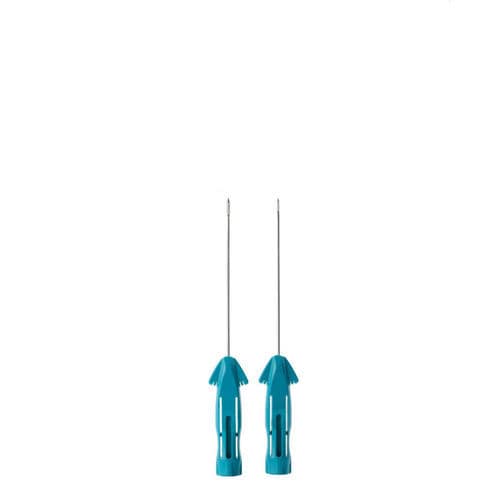
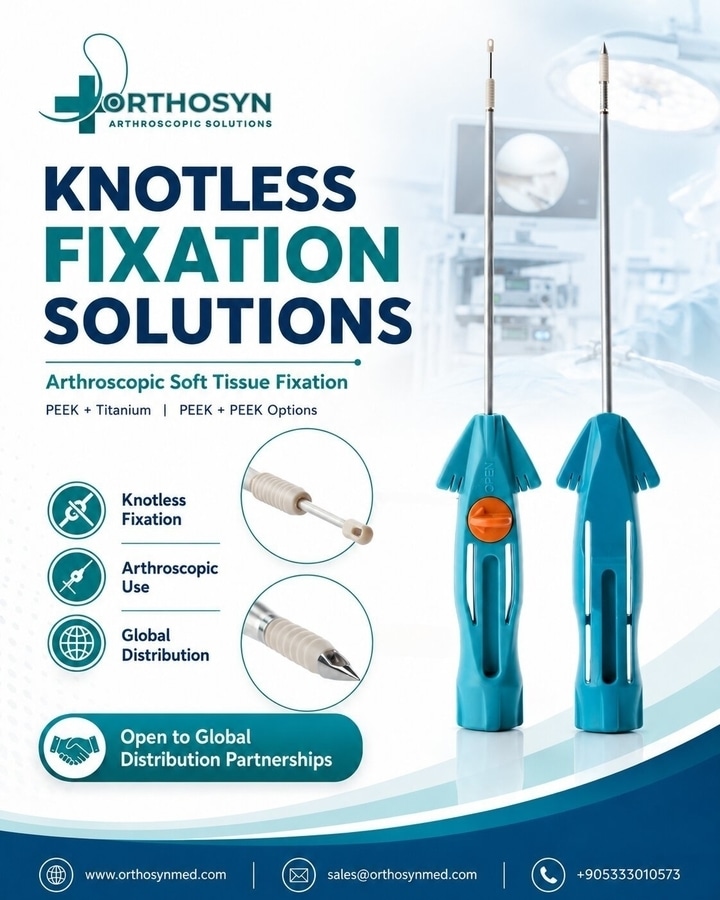
Self-punching anchors are suture anchors designed with a sharp tip that allows direct insertion into bone without the need for a separate drill or punch.
The implant simultaneously prepares the bone and secures itself during insertion.
This design simplifies arthroscopic procedures by eliminating additional instrumentation while maintaining reliable fixation.
Evolution of Suture Anchor Technology
Traditional suture anchor techniques typically involve multiple surgical steps:
Bone drilling
Hole preparation
Anchor insertion
Suture management
Although highly effective, these additional steps increase operative time and require repeated instrument exchanges.
Self-punching technology simplifies this process by integrating bone penetration and anchor placement into a single maneuver.
Improved Surgical Efficiency
One of the greatest advantages of self-punching anchors is increased procedural efficiency.
Potential benefits include:
Fewer surgical steps
Reduced instrument exchanges
Shorter operative time
Simplified workflow
These improvements may contribute to greater consistency during arthroscopic procedures.
Reduced Operating Time
Every additional surgical step requires instrument handling and visualization.
By eliminating separate drilling, self-punching anchors allow surgeons to:
Prepare the fixation site faster
Insert the implant immediately
Continue suture management without interruption
Shorter procedures may improve operating room efficiency while reducing overall surgical complexity.
Simplified Instrumentation
Traditional anchor placement often requires:
Guide instruments
Drills
Punches
Anchor inserters
Many self-punching systems combine these functions into a single device.
The reduced number of instruments may simplify surgical setup and improve procedural organization.
Bone Preservation
Because self-punching anchors create only the required insertion pathway, they may reduce unnecessary bone removal.
Potential advantages include:
Smaller bone defects
Preservation of bone stock
Reduced surgical trauma
Bone preservation is particularly valuable in younger patients and revision surgery.
Biomechanical Performance
Modern self-punching anchors are engineered to provide fixation strength comparable to conventional anchor systems.
Laboratory studies evaluate several important characteristics:
Pullout strength
Load-to-failure performance
Resistance to cyclic loading
Anchor stability
Proper insertion technique and bone quality remain essential for achieving optimal fixation.
Clinical Applications
Self-punching anchors are commonly used in numerous shoulder procedures, including:
Rotator cuff repair
Bankart repair
SLAP repair
Capsulolabral reconstruction
Biceps tenodesis
Their versatility makes them suitable for a wide range of arthroscopic repairs.
Integration with Knotless Technology
Many contemporary self-punching anchors are also available as knotless systems.
Combining these two technologies provides several advantages:
No separate drilling
No arthroscopic knot tying
Simplified suture management
Reduced operative complexity
This combination has become increasingly popular in modern shoulder arthroscopy.
Compatibility with Modern Repair Techniques
Self-punching anchors are compatible with various arthroscopic repair strategies, including:
Single-row repair
Double-row repair
Suture bridge repair
Transosseous-equivalent repair
Their versatility allows surgeons to adapt implant selection according to tear pattern and surgical preference.
Factors Affecting Surgical Success
Successful outcomes depend on several factors beyond implant design.
Important considerations include:
Bone quality
Tear characteristics
Tissue quality
Implant positioning
Surgeon experience
Postoperative rehabilitation
Careful patient selection remains essential.
Clinical Outcomes
Clinical experience with self-punching anchors has demonstrated encouraging results.
Reported benefits include:
Reliable fixation
Excellent functional recovery
High patient satisfaction
Efficient surgical workflow
Long-term clinical studies continue to evaluate outcomes across different shoulder procedures.
Future Developments
Shoulder arthroscopy technology continues to evolve rapidly.
Current innovations focus on:
Smaller implant designs
Enhanced fixation mechanisms
Advanced biomaterials
Improved suture technologies
Bone-preserving implant concepts
These developments aim to further simplify procedures while maintaining excellent biomechanical performance.
Conclusion
Self-punching suture anchors have become an important innovation in modern shoulder arthroscopy by simplifying implant insertion, reducing surgical steps, and improving procedural efficiency. Their ability to combine bone preparation and anchor placement into a single step allows surgeons to optimize workflow while maintaining reliable fixation for a variety of soft tissue repairs.
As arthroscopic techniques continue to advance, self-punching anchor technology is expected to play an increasingly important role in minimally invasive shoulder surgery.
Orthosyn Medikal provides advanced self-punching suture anchors, knotless anchor systems, arthroscopy implants, and shoulder fixation solutions designed to support efficient, reliable, and minimally invasive orthopedic procedures.