#Product Trends
Why Portal Placement Matters in Shoulder Arthroscopy
An in-depth guide to the importance of arthroscopic portal placement, its impact on visualization, instrument handling, surgical safety, and successful outcomes in modern shoulder arthroscopy.
Shoulder arthroscopy has revolutionized the diagnosis and treatment of numerous shoulder disorders by allowing surgeons to perform minimally invasive procedures with exceptional precision. While modern implants, high-definition arthroscopes, and advanced instrumentation have significantly improved surgical outcomes, one fundamental aspect remains critical to every procedure: proper portal placement.
Arthroscopic portals serve as the entry points for the camera and surgical instruments. Their location directly affects visualization, access to anatomical structures, instrument maneuverability, surgical efficiency, and patient safety. Even the most advanced implants cannot compensate for poorly positioned portals.
Understanding the principles of portal placement is essential for achieving consistent, reproducible, and successful arthroscopic shoulder procedures.
What Are Arthroscopic Portals?
Arthroscopic portals are small skin incisions through which the arthroscope and surgical instruments are introduced into the shoulder joint.
Each portal is designed to provide access to specific anatomical regions while minimizing damage to surrounding soft tissues.
Different procedures may require different portal configurations depending on the pathology being treated.
The Purpose of Proper Portal Placement
Correct portal positioning serves several important objectives.
These include:
Optimal visualization
Safe instrument access
Improved surgical precision
Reduced soft tissue trauma
Greater procedural efficiency
Well-positioned portals create a more ergonomic working environment throughout the procedure.
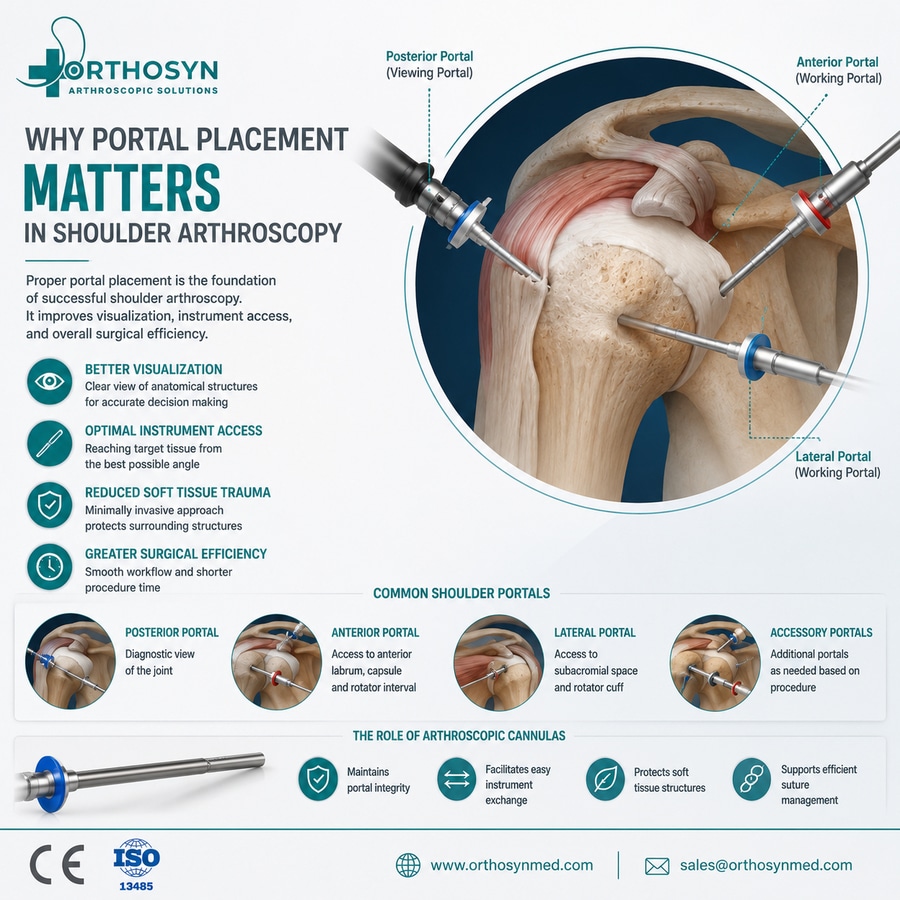
Standard Shoulder Arthroscopy Portals
Several portals are routinely used during shoulder arthroscopy.
The most common include:
Posterior portal
Anterior portal
Anterolateral portal
Lateral portal
Posterolateral portal
Additional accessory portals may be created depending on the surgical technique and pathology.
Improving Visualization
Excellent visualization is one of the greatest advantages of arthroscopic surgery.
Proper portal placement allows surgeons to:
Obtain comprehensive views of the joint
Inspect cartilage surfaces
Evaluate the labrum
Visualize rotator cuff tears
Assess the biceps tendon
Improved visualization supports more accurate diagnosis and precise surgical repair.
Instrument Maneuverability
Successful arthroscopy depends not only on seeing the pathology but also on reaching it effectively.
Properly positioned portals improve:
Instrument alignment
Working angles
Suture management
Anchor insertion
Tissue handling
Poor portal placement may restrict instrument movement and increase technical difficulty.
Portal Placement During Rotator Cuff Repair
Rotator cuff repair often requires multiple portals to optimize both visualization and implant insertion.
Appropriate portal selection facilitates:
Footprint preparation
Anchor placement
Suture passage
Tendon reduction
Final fixation
Each portal contributes to a smooth surgical workflow.
Portal Placement in Shoulder Instability Surgery
Procedures such as Bankart repair require precise access to the anterior glenoid.
Proper portal positioning helps surgeons:
Mobilize the labrum
Prepare the glenoid rim
Insert suture anchors accurately
Pass sutures efficiently
Correct working angles are essential for secure fixation.
Reducing Surgical Risks
Accurate portal placement also improves patient safety.
Potential benefits include:
Reduced risk of neurovascular injury
Less soft tissue damage
Improved instrument control
Reduced operative time
Knowledge of shoulder anatomy is essential when establishing every portal.
Ergonomics in Arthroscopic Surgery
Ergonomics plays an increasingly important role in modern arthroscopy.
Proper portal placement allows surgeons to work comfortably while reducing unnecessary hand movements and instrument conflicts.
Improved ergonomics may contribute to:
Greater surgical precision
Reduced fatigue
More efficient procedures
Portal Placement and Surgical Training
Developing proper portal placement skills is a fundamental part of arthroscopic training.
Young surgeons learn to combine:
Surface anatomy
Arthroscopic visualization
Instrument triangulation
Spatial orientation
Experience gradually improves consistency and procedural efficiency.
Technological Advances
Modern shoulder arthroscopy continues to benefit from technological innovations.
Current developments include:
High-definition arthroscopic cameras
Smaller arthroscopes
Self-punching anchors
Knotless fixation systems
Improved surgical instrumentation
These innovations complement—but do not replace—the importance of accurate portal placement.
Common Challenges
Several factors can make portal placement more difficult.
These include:
Patient anatomy
Previous surgery
Scar tissue
Joint stiffness
Obesity
Careful preoperative planning helps surgeons adapt portal positioning to each patient's anatomy.
Conclusion
Proper portal placement is one of the fundamental principles of successful shoulder arthroscopy. Correctly positioned portals improve visualization, facilitate instrument handling, enhance surgical precision, and contribute to safer, more efficient procedures. Regardless of the implants or surgical techniques being used, thoughtful portal planning remains essential for achieving optimal clinical outcomes.
As arthroscopic techniques continue to evolve, mastering portal placement will remain one of the most valuable skills for orthopedic shoulder surgeons.
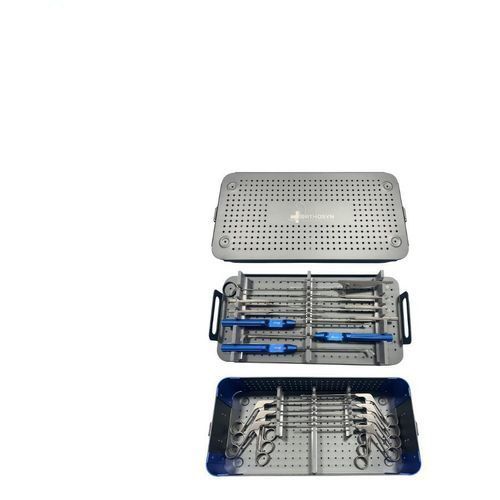
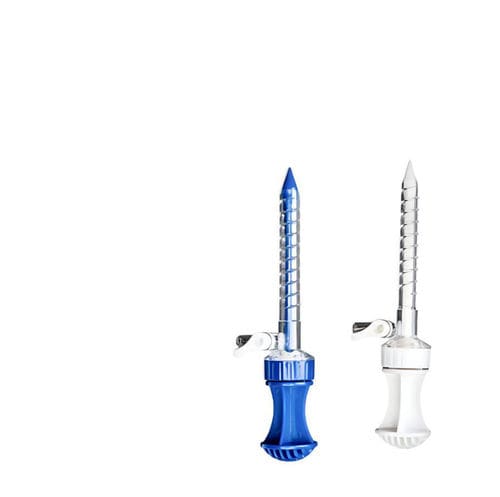
Orthosyn Medikal provides advanced shoulder arthroscopy solutions, including suture anchors, knotless anchor systems, self-punching anchors, and specialized arthroscopic instruments designed to support precise, efficient, and minimally invasive orthopedic procedures.