#Product Trends
Can Hyaluronic Acid Injections Help Delay Knee Replacement Surgery?
A comprehensive overview of how hyaluronic acid injections may help manage knee osteoarthritis symptoms, improve joint function, and potentially postpone knee replacement surgery in appropriately selected patients.
Knee osteoarthritis is one of the most common causes of pain and disability worldwide, affecting millions of adults and becoming increasingly prevalent with age. As cartilage gradually deteriorates, patients often experience pain, stiffness, swelling, and difficulty performing daily activities. While total knee replacement remains an effective solution for advanced disease, many individuals seek non-surgical treatments that can relieve symptoms and maintain mobility before surgery becomes necessary.
Among the available conservative treatment options, intra-articular hyaluronic acid (HA) injections have become widely used for selected patients with symptomatic knee osteoarthritis. By restoring some of the natural properties of synovial fluid, hyaluronic acid injections may improve joint lubrication, reduce mechanical stress, and enhance overall joint function.
Understanding when HA injections are appropriate—and what outcomes patients can realistically expect—is essential for informed treatment planning.
Understanding Knee Osteoarthritis
Osteoarthritis is a progressive degenerative joint disease characterized by the gradual breakdown of articular cartilage.
As the disease progresses, several changes occur within the joint:
Cartilage degeneration
Loss of joint lubrication
Inflammation of the synovial membrane
Bone remodeling
Reduced shock absorption
These changes contribute to pain, stiffness, and reduced mobility.
Why Patients Want to Delay Knee Replacement
Although total knee replacement is highly successful for advanced osteoarthritis, many patients prefer to postpone surgery whenever possible.
Common reasons include:
Remaining physically active
Avoiding major surgery
Reducing surgical risks
Maintaining natural joint anatomy
Personal or professional commitments
For many individuals, conservative treatment plays an important role before surgical intervention is considered.
How Hyaluronic Acid Injections Work
Hyaluronic acid is a naturally occurring component of healthy synovial fluid.
In osteoarthritic knees, both the concentration and quality of natural hyaluronic acid decline.
Injecting hyaluronic acid into the joint aims to:
Improve joint lubrication
Enhance shock absorption
Reduce friction during movement
Support smoother joint mechanics
In addition to these mechanical effects, HA may also influence certain biological processes involved in joint homeostasis.
Which Patients May Benefit?
Hyaluronic acid injections are not appropriate for every patient.
They are most commonly considered for individuals with:
Mild to moderate knee osteoarthritis
Persistent symptoms despite conservative care
Patients wishing to postpone surgery
Patients who are not ideal surgical candidates
Active individuals seeking improved joint function
A thorough clinical assessment is necessary before treatment.
Can HA Injections Delay Knee Replacement?
Research suggests that hyaluronic acid injections may help some patients postpone knee replacement surgery by providing symptom relief and improving joint function.
Potential benefits include:
Reduced knee pain
Improved walking ability
Greater joint mobility
Enhanced quality of life
Delayed need for surgery in selected patients
However, HA injections do not reverse cartilage loss or cure osteoarthritis.
Their primary role is symptom management as part of a comprehensive treatment strategy.
Clinical Evidence
Numerous clinical studies have evaluated the effectiveness of hyaluronic acid injections for knee osteoarthritis.
Many have reported improvements in:
Pain relief
Joint function
Walking tolerance
Patient satisfaction
The degree and duration of improvement vary depending on disease severity, product characteristics, injection technique, and individual patient factors.
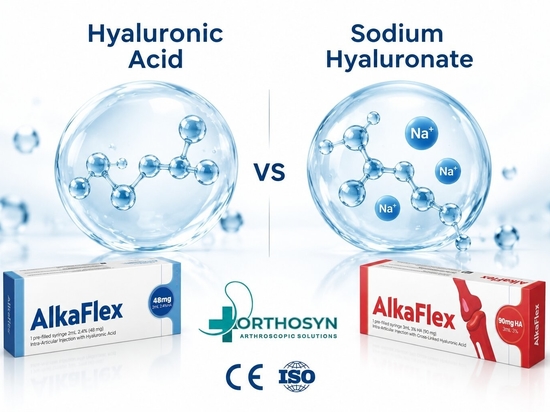
Cross-Linked vs Linear Hyaluronic Acid
Modern hyaluronic acid injections are available in both linear and cross-linked formulations.
Cross-linked HA generally provides:
Higher viscosity
Longer intra-articular residence time
Potentially longer-lasting symptom relief
Linear HA products typically offer:
Excellent injectability
Good joint distribution
Well-established clinical safety
Treatment selection should be based on clinical evaluation and physician preference.
Combining HA with Other Conservative Treatments
Optimal management of knee osteoarthritis usually involves multiple treatment strategies.
Hyaluronic acid injections are often combined with:
Physical therapy
Weight management
Strengthening exercises
Low-impact aerobic activity
Lifestyle modifications
A multidisciplinary approach frequently provides the greatest long-term benefit.
Safety Profile
Hyaluronic acid injections have been used worldwide for many years and generally demonstrate an excellent safety profile.
Most side effects are mild and temporary.
Possible reactions include:
Temporary injection-site pain
Mild swelling
Transient joint stiffness
Serious complications are uncommon when injections are performed using appropriate techniques.
When Is Knee Replacement Still Necessary?
Despite successful conservative treatment, some patients eventually require total knee replacement.
Surgery may become appropriate when:
Pain becomes severe
Daily activities are significantly limited
Conservative treatments no longer provide adequate relief
Joint degeneration becomes advanced
The timing of surgery should always be determined through shared decision-making between the patient and the orthopedic specialist.
Conclusion
Hyaluronic acid injections have become an established non-surgical option for managing the symptoms of knee osteoarthritis. Although they cannot regenerate damaged cartilage or eliminate the need for future surgery, they may help selected patients reduce pain, improve mobility, and postpone knee replacement while maintaining an active lifestyle. When incorporated into a comprehensive treatment plan that includes rehabilitation and lifestyle modification, HA injections can play an important role in preserving joint function and enhancing quality of life.
Individual treatment decisions should always be based on clinical evaluation, patient expectations, and the severity of osteoarthritis.
Orthosyn Medikal manufactures advanced intra-articular hyaluronic acid injection solutions designed to support joint lubrication, improve mobility, and help patients manage knee osteoarthritis through high-quality orthopedic care.