#Product Trends
Why Arthroscopic Cannulas Are Essential in Minimally Invasive Joint Surgery
Discover how arthroscopic cannulas improve surgical access, protect soft tissues, and enhance procedural efficiency during modern minimally invasive orthopedic procedures.
Minimally invasive arthroscopic surgery has become the gold standard for diagnosing and treating a wide range of joint disorders. By using small portals instead of large incisions, surgeons can perform complex procedures while minimizing tissue damage, reducing postoperative pain, and accelerating patient recovery. One of the key instruments that makes these procedures possible is the arthroscopic cannula.
Although often overlooked compared with arthroscopes, anchors, and specialized implants, arthroscopic cannulas play a critical role in maintaining portal access, protecting surrounding soft tissues, and facilitating the smooth exchange of surgical instruments throughout the procedure.
Understanding the function and advantages of arthroscopic cannulas highlights why they are indispensable in modern orthopedic surgery.
What Is an Arthroscopic Cannula?
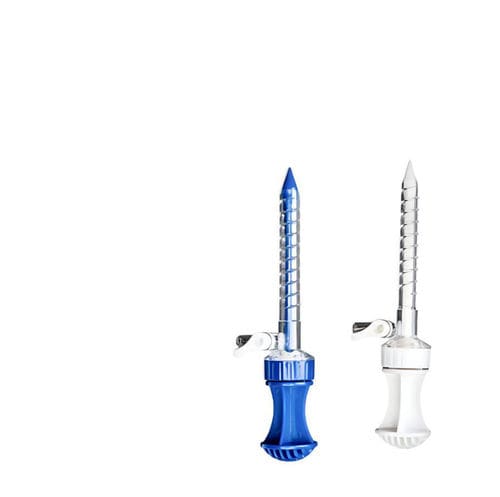
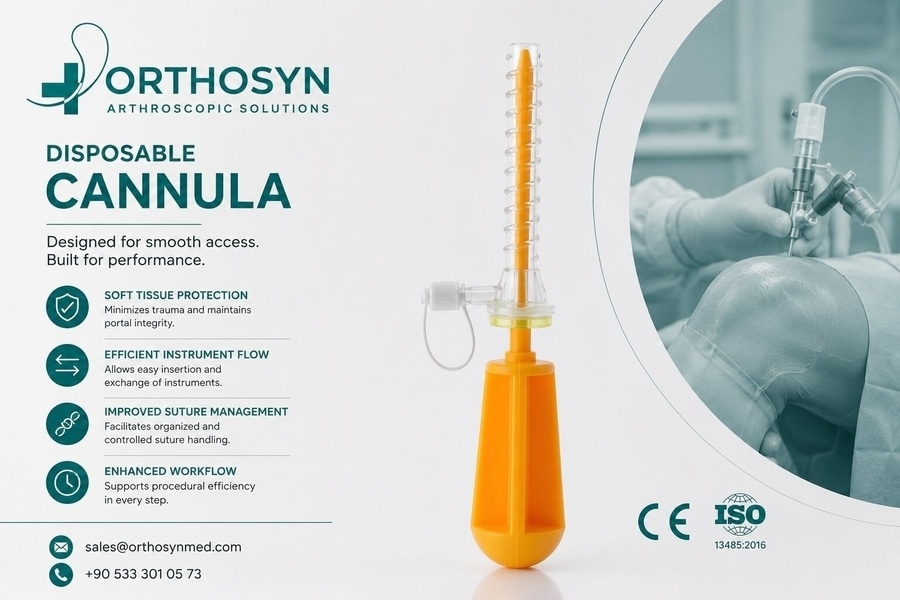
An arthroscopic cannula is a hollow tubular instrument inserted through an arthroscopic portal to provide a protected pathway between the skin and the joint cavity.
Its primary functions include:
Maintaining portal access
Guiding surgical instruments
Protecting surrounding soft tissues
Facilitating suture management
Supporting continuous instrument exchange
Cannulas are available in different diameters and lengths to accommodate various procedures and joint anatomies.
Why Are Cannulas Important?
Without a cannula, repeated insertion and removal of instruments may cause unnecessary trauma to the surrounding tissues.
Cannulas help:
Minimize soft tissue damage
Reduce portal enlargement
Protect muscles and tendons
Improve procedural efficiency
Maintain consistent surgical access
These benefits contribute to safer and more controlled arthroscopic procedures.
Improving Instrument Management
During arthroscopy, multiple instruments are exchanged repeatedly.
Cannulas allow surgeons to efficiently introduce and remove:
Arthroscopes
Suture passers
Knot pushers
Graspers
Shavers
Burrs
RF probes
Anchors
Smooth instrument exchange reduces interruptions and improves surgical workflow.
Supporting Suture Management
Modern arthroscopic procedures often involve multiple sutures and implants.
Cannulas facilitate:
Organized suture handling
Reduced suture tangling
Easier suture retrieval
Improved visualization
Efficient knot management
Effective suture organization becomes increasingly important during complex soft tissue repairs.
Protecting Soft Tissue
Repeated passage of instruments through soft tissues can increase surgical trauma.
Cannulas act as protective sleeves that help reduce:
Skin irritation
Muscle injury
Tendon abrasion
Portal tissue damage
Instrument-related trauma
Protecting healthy tissues contributes to improved postoperative recovery.
Applications Across Arthroscopic Procedures
Arthroscopic cannulas are routinely used in numerous orthopedic procedures.
Shoulder Arthroscopy
Used during:
Rotator cuff repair
Bankart repair
SLAP repair
Biceps procedures
Labral reconstruction
Knee Arthroscopy
Commonly used for:
Meniscal repair
ACL reconstruction
Cartilage procedures
Loose body removal
Synovectomy
Hip Arthroscopy
Cannulas facilitate access during:
Labral repair
Femoroacetabular impingement (FAI) treatment
Cartilage preservation procedures
Other Joints
Cannulas are also widely used in elbow, ankle, and wrist arthroscopy.
Design Features of Modern Cannulas
Modern arthroscopic cannulas are designed to maximize both efficiency and tissue protection.
Common features include:
Transparent construction for better visualization
Threaded or smooth outer surfaces
Flexible or rigid materials
Various diameter options
Low-profile design
Compatibility with obturators
Instrument selection depends on the procedure and surgeon preference.
Improving Surgical Efficiency
Well-designed cannulas contribute to a smoother operative workflow.
Potential advantages include:
Faster instrument exchange
Reduced operative time
Improved procedural organization
Better visualization
Increased surgeon confidence
Efficient access systems benefit both surgeons and operating room teams.
Future Developments
Continuous innovation is improving arthroscopic access technology.
Current developments include:
Enhanced biocompatible materials
Improved low-friction designs
Better suture management systems
Procedure-specific cannulas
Greater ergonomic compatibility
These advancements aim to further simplify minimally invasive orthopedic surgery.
Conclusion
Arthroscopic cannulas are far more than simple access sleeves. They provide protected portal access, improve instrument handling, support efficient suture management, and minimize soft tissue trauma throughout arthroscopic procedures. By enabling smooth instrument exchange and maintaining a safe surgical pathway, cannulas contribute significantly to the precision, efficiency, and success of modern minimally invasive joint surgery.
As arthroscopic techniques continue to evolve, high-quality cannulas will remain fundamental instruments for orthopedic surgeons performing advanced sports medicine procedures.
Orthosyn Medikal manufactures high-quality arthroscopic cannulas designed to provide secure portal access, facilitate efficient instrument exchange, protect soft tissues, and support advanced minimally invasive orthopedic procedures.