#Product Trends
Why Is Hyaluronic Acid Used in Knee Osteoarthritis? | AlkaFlex
Learn why intra-articular hyaluronic acid is used in the non-surgical management of knee osteoarthritis, how it interacts with the synovial environment, and which formulation characteristics should be considered when evaluating viscosupplementation.
TITLE
Why Is Hyaluronic Acid Used in Knee Osteoarthritis? | AlkaFlex
SUBTITLE
Learn why intra-articular hyaluronic acid is used in the non-surgical management of knee osteoarthritis, how it interacts with the synovial environment, and which formulation characteristics should be considered when evaluating viscosupplementation.
DESCRIPTION
Knee osteoarthritis (OA) is a progressive joint disorder involving more than the gradual loss of articular cartilage. Changes can also occur in the synovial membrane, synovial fluid, subchondral bone, menisci, ligaments, and surrounding tissues, affecting the overall mechanical and biological environment of the knee.
One component of this environment is hyaluronic acid (HA), also known as hyaluronan. HA is naturally present in synovial fluid and contributes to its viscosity, viscoelasticity, lubrication, and mechanical behavior.
In an osteoarthritic knee, the properties of the synovial environment can change. This provides part of the rationale for intra-articular hyaluronic acid injections, commonly referred to as viscosupplementation.
The basic concept can be summarized as:
Knee Osteoarthritis → Altered Synovial Environment → Intra-Articular HA Administration → Viscosupplementation → Support of Joint Lubrication and Mechanical Function
Hyaluronic acid injections are therefore used as one option within the broader non-surgical management of knee osteoarthritis. They do not replace cartilage, reverse every structural change associated with OA, or eliminate the underlying disease.
What Is Knee Osteoarthritis?
Knee osteoarthritis is a joint disorder characterized by structural and biological changes involving multiple components of the knee.
Although cartilage degeneration is one of its best-known features, OA should not be understood simply as “worn cartilage.”
Changes may involve:
- Articular cartilage
- Subchondral bone
- Synovial membrane
- Synovial fluid
- Menisci
- Ligaments
- Joint capsule
- Periarticular muscles and tissues
Patients may experience symptoms such as pain, stiffness, reduced mobility, difficulty with weight-bearing activities, and limitations during daily activities.
The severity of symptoms does not always correspond directly to the degree of structural change seen on imaging.
What Is Hyaluronic Acid?
Hyaluronic acid is a naturally occurring glycosaminoglycan found throughout the human body.
Within synovial joints such as the knee, HA is an important component of synovial fluid.
Its molecular structure contributes to the characteristic rheological properties of this fluid.
HA is associated with:
- Joint lubrication
- Synovial fluid viscosity
- Viscoelastic behavior
- Load distribution
- Cushioning
- Mechanical support during joint movement
These properties help explain why HA became an important material in the development of intra-articular viscosupplementation.
What Is Synovial Fluid?
Synovial fluid is the specialized biological fluid found inside synovial joints.
It is not simply water.
It contains multiple components, including:
- Water
- Hyaluronan
- Lubricating molecules
- Proteins
- Electrolytes
- Other biological constituents
Its composition allows it to participate in lubrication and the mechanical environment of the joint.
In a healthy knee, synovial fluid helps the femoral and tibial articular surfaces move smoothly while the joint repeatedly experiences compression, shear, rotation, and changing mechanical loads.
Why Is Hyaluronic Acid Important in Synovial Fluid?
HA contributes significantly to the rheological and viscoelastic characteristics of synovial fluid.
Two concepts are particularly important.
Lubrication
During joint movement, the articular surfaces must move relative to one another with minimal friction.
HA contributes to the synovial environment that supports smooth movement.
Viscoelasticity
Synovial fluid demonstrates both viscous and elastic characteristics.
Its mechanical response can vary according to the type and speed of movement.
A simplified concept is:
Slow Movement → Greater Viscous Behavior → Lubrication
Rapid Mechanical Loading → Viscoelastic Response → Cushioning and Load Management
HA contributes to these properties, although it is not the only structure responsible for absorbing or distributing forces in the knee.
What Happens to the Joint Environment in Knee Osteoarthritis?
OA changes the mechanical and biological environment of the knee.
The synovial environment may also change, including characteristics associated with endogenous HA.
These changes can affect the rheological behavior of synovial fluid.
At the same time, other OA-related changes may develop in cartilage, bone, menisci, synovium, and surrounding structures.
This is important because viscosupplementation does not attempt to replace all of these structures.
Instead, it targets one component of the joint environment: the intra-articular synovial environment.
Why Is Hyaluronic Acid Injected into an Osteoarthritic Knee?
The rationale is based largely on supplementing the properties of the synovial environment with an HA-based formulation.
This approach is known as:
Viscosupplementation
The basic principle can be represented as:
Intra-Articular HA Injection → HA-Based Formulation Enters Synovial Joint → Interaction with Synovial Environment → Support of Rheological and Viscoelastic Properties
The objective should not be interpreted as physically rebuilding the joint.
Instead, HA injection is a non-surgical treatment option used in selected patients as part of osteoarthritis management.
What Is Viscosupplementation?
Viscosupplementation refers to the intra-articular administration of HA-based formulations.
The term originates from the idea of supplementing the viscosity and viscoelastic characteristics of synovial fluid.
Depending on the specific formulation, an HA injection may differ in:
- Molecular weight
- Concentration
- Total HA dose
- Injection volume
- Linear or cross-linked structure
- Rheological properties
- Number of injections
- Manufacturing method
Therefore, “HA injection” does not describe one identical formulation shared by every product.
How Does Hyaluronic Acid Support Joint Lubrication?
One of the fundamental functions associated with synovial HA is lubrication.
The knee undergoes thousands of movement cycles during normal daily activity.
During flexion, extension, walking, standing, and other activities, joint surfaces continuously move relative to one another.
HA contributes to the properties of the synovial environment that facilitate this movement.
The concept can be simplified as:
Hyaluronic Acid → Synovial Fluid Properties → Lubrication → Support for Smooth Joint Movement
However, joint lubrication is a complex biological process and is not produced by HA alone.
How Does Hyaluronic Acid Support Cushioning?
The knee is exposed to repeated mechanical loads during activities such as:
- Walking
- Climbing stairs
- Standing from a seated position
- Running
- Changing direction
- Sports activities
HA contributes to the viscoelastic properties of synovial fluid.
This means the fluid can demonstrate different mechanical behavior depending on the forces applied to it.
This contributes to the overall ability of the synovial environment to manage mechanical loading.
However:
HA ≠ A Physical Shock-Absorbing Pad
The knee's overall load-management system also involves cartilage, menisci, subchondral bone, ligaments, muscles, tendons, and joint geometry.
Does Hyaluronic Acid Reduce Knee Osteoarthritis Pain?
HA injections are used clinically as an option for symptomatic knee osteoarthritis, particularly in selected patients managed non-surgically.
However, individual responses vary.
A patient's response can depend on numerous factors, including:
- OA severity
- Patient characteristics
- Joint condition
- Synovial environment
- Activity level
- HA formulation
- Injection protocol
- Concomitant treatment
- Clinical assessment
Therefore, HA should not be described as producing an identical result in every patient.
Does Hyaluronic Acid Cure Knee Osteoarthritis?
No.
Intra-articular HA should not be presented as a cure for osteoarthritis.
OA is a complex joint disorder involving structural and biological changes that cannot simply be reversed by injecting synovial fluid components.
A more accurate distinction is:
HA Injection = Non-Surgical Symptom-Management / Viscosupplementation Option
HA Injection ≠ Cure for Osteoarthritis
The role of HA should therefore be considered within a broader OA management strategy.
Does Hyaluronic Acid Regenerate Knee Cartilage?
HA injection should not automatically be described as regenerating lost articular cartilage.
Articular cartilage has a highly specialized extracellular matrix and structural organization.
An HA formulation injected into the joint does not reproduce this architecture.
Therefore:
HA Injection ≠ Cartilage Replacement
and:
Viscosupplementation ≠ Cartilage Resurfacing
Claims of cartilage regeneration require specific supporting evidence and should not be assumed simply because a product contains HA.
Why Can HA Be Considered Before Knee Replacement?
Knee osteoarthritis exists across a spectrum of severity.
Not every patient with knee OA requires immediate joint replacement surgery.
Non-surgical management can include combinations of:
- Exercise and rehabilitation
- Weight management where appropriate
- Activity modification
- Pharmacological approaches where appropriate
- Intra-articular treatment options
- Other patient-specific conservative strategies
HA injections may be considered as one of these non-surgical options in appropriately selected patients.
However, this does not mean HA can prevent or indefinitely postpone knee replacement in every patient.
Surgical decisions depend on symptoms, structural disease, functional limitations, previous treatments, patient characteristics, and clinical assessment.
When Might Hyaluronic Acid Be Considered?
The decision to use intra-articular HA should be individualized.
Factors that may be considered include:
- Diagnosis and severity of knee OA
- Symptom pattern
- Functional limitations
- Previous conservative treatment
- Contraindications or limitations of other options
- Patient expectations
- Product-specific indication
- Physician assessment
Clinical recommendations regarding HA also vary among professional guidelines, healthcare systems, and patient populations.
Therefore, patient selection remains important.
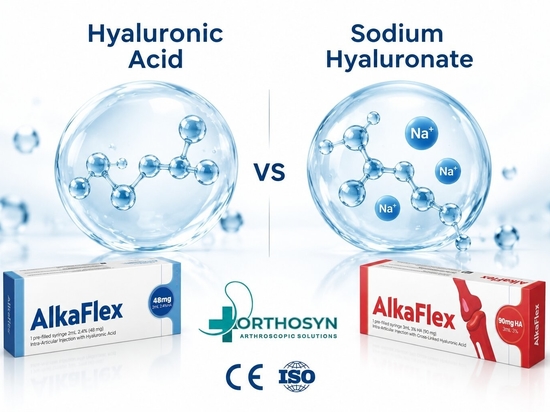
Is Hyaluronic Acid the Same as Sodium Hyaluronate?
They are closely related but describe different chemical forms.
Hyaluronic acid refers to the acid form, while sodium hyaluronate is the sodium salt of hyaluronic acid.
In medical terminology, “hyaluronic acid” is frequently used as a broader category term for HA-based products.
Therefore:
Hyaluronic Acid → General HA Terminology
Sodium Hyaluronate → Sodium Salt Form of HA
This naming difference alone does not determine the clinical performance of an intra-articular formulation.
What Is the Difference Between Linear and Cross-Linked Hyaluronic Acid?
HA formulations can differ in molecular architecture.
Linear Hyaluronic Acid
Linear or non-cross-linked HA contains polymer chains without an intentionally created cross-linked network.
Its characteristics depend on factors such as molecular weight, concentration, total dose, and formulation.
Cross-Linked Hyaluronic Acid
Cross-linked HA contains molecular connections created between HA polymer chains.
Cross-linking can modify:
- Rheological behavior
- Viscoelastic properties
- Resistance to degradation
- Residence characteristics
- Mechanical properties
However:
Cross-Linked HA ≠ Automatically Better Clinical Outcome
Cross-linking is one formulation characteristic and should not be treated as proof of clinical superiority.
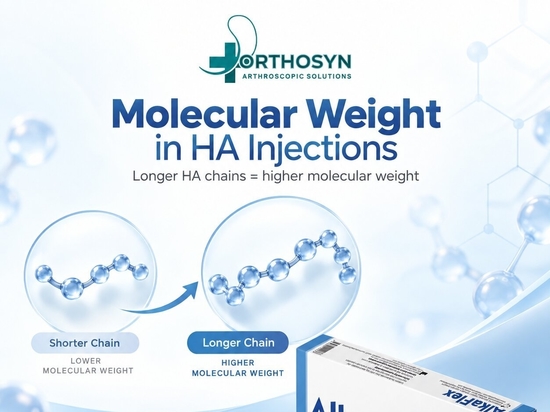
Why Does Molecular Weight Matter?
Molecular weight describes the approximate size of HA polymer chains.
In simplified terms:
Longer Polymer Chains → Higher Molecular Weight
Shorter Polymer Chains → Lower Molecular Weight
Molecular weight can influence characteristics such as viscosity, polymer interactions, and rheological behavior.
However, it is only one part of the formulation.
A complete comparison should also consider concentration, total dose, volume, molecular architecture, and other product-specific characteristics.
Does a Higher HA Concentration Mean a Better Injection?
Not necessarily.
Concentration indicates the amount of HA within a given volume.
For example:
HA Concentration = mg/mL
But concentration is not the same as total HA dose.
The relationship is:
HA Concentration × Injection Volume = Total HA Amount
A higher concentration therefore does not automatically mean a higher-quality product or a better clinical outcome.
Does a Higher HA Dose Mean Better Results?
Not automatically.
Total HA dose is an important product characteristic, but it should not be interpreted independently.
For meaningful comparison, factors can include:
- Molecular weight
- Concentration
- Total dose
- Injection volume
- Linear or cross-linked structure
- Rheological properties
- Administration protocol
- Product-specific evidence
Therefore:
Higher HA Dose ≠ Automatically Better Clinical Result
Why Do Some HA Products Require One Injection and Others Multiple Injections?
HA products can use different treatment protocols.
Depending on the formulation and applicable instructions for use, treatment may involve:
- A single injection
- Multiple injections administered according to a defined schedule
The number of injections cannot be determined simply from the words “hyaluronic acid.”
It depends on the specific product and its approved or applicable administration protocol.
How Are Hyaluronic Acid Knee Injections Administered?
HA is administered intra-articularly, meaning directly into the joint space.
A typical clinical process may involve:
Patient Evaluation → Identification of the Knee Joint → Aseptic Preparation → Intra-Articular Injection → Post-Injection Guidance
The procedure should be performed by an appropriately qualified healthcare professional according to the product's instructions for use and relevant clinical practice.
HA vs Corticosteroid Injection: Are They the Same?
No.
HA and corticosteroid injections are different treatment approaches.
Corticosteroids are pharmacological anti-inflammatory agents.
HA viscosupplementation uses an HA-based formulation and is associated with supplementation of the synovial environment.
Their mechanisms, indications, expected response patterns, precautions, and administration strategies are not identical.
The appropriate option depends on the clinical situation.
HA vs PRP: Are They the Same?
No.
Platelet-rich plasma (PRP) and HA are fundamentally different.
HA is a defined biomaterial associated with synovial fluid and viscosupplementation.
PRP is an autologous blood-derived preparation containing a concentrated platelet component, with composition that can vary according to preparation method.
They should therefore not be treated as interchangeable simply because both can be administered intra-articularly in certain clinical contexts.
What Should Be Compared Between HA Knee Injections?
Looking only at the amount printed on the package provides an incomplete comparison.
A broader evaluation can include:
Parameter Why It Matters
Molecular weight Influences polymer characteristics
HA concentration Indicates HA amount per unit volume
Total HA dose Indicates total HA delivered
Injection volume Influences total formulation administered
Linear vs cross-linked Describes molecular architecture
Viscoelastic properties Relevant to rheological behavior
Manufacturing source Identifies production origin
Injection protocol Defines administration schedule
Product indication Defines intended clinical application
No single parameter should automatically be interpreted as proof that one HA formulation is clinically superior to another.
Does the Source of Hyaluronic Acid Matter?
HA can be produced using different manufacturing approaches.
Historically, some HA products have used animal-derived sources.
HA can also be manufactured using microbial or bacterial fermentation.
The source should therefore be evaluated independently of parameters such as molecular weight, concentration, dose, or cross-linking.
AlkaFlex HA formulations use hyaluronic acid produced through bacterial fermentation and are not derived from animal sources.
Why Is Hyaluronic Acid Still Relevant in Knee OA Management?
HA remains clinically relevant because it addresses an important component of the knee joint environment: synovial fluid and its rheological characteristics.
The rationale can be summarized as:
Natural HA in Synovial Fluid → Lubrication + Viscoelasticity + Load Management
Knee OA → Altered Joint and Synovial Environment
Intra-Articular HA → Viscosupplementation of the Synovial Environment
This explains the biological and mechanical rationale for using HA-based injections in selected patients with symptomatic knee osteoarthritis.
It does not imply that HA corrects every pathological component of OA.
AlkaFlex Hyaluronic Acid Injections for Viscosupplementation
AlkaFlex by Orthosyn Medikal includes intra-articular hyaluronic acid formulations developed for viscosupplementation, including linear and cross-linked HA options with different formulation characteristics.
The AlkaFlex portfolio includes different configurations that can be evaluated according to:
- Molecular weight
- HA concentration
- Total HA dose
- Injection volume
- Linear or cross-linked structure
- Viscoelastic characteristics
- Injection protocol
AlkaFlex HA is manufactured using bacterial fermentation, providing a non-animal-source approach to HA production.
AlkaFlex Hyaluronic Acid Injections
Selection of a particular formulation should always be based on its applicable indication, instructions for use, patient characteristics, and professional clinical assessment.
Conclusion
Hyaluronic acid is used in knee osteoarthritis because it is naturally associated with the lubrication, viscosity, viscoelasticity, and mechanical behavior of synovial fluid.
Knee osteoarthritis can alter both the structural components of the joint and its synovial environment. Intra-articular HA injections are used as viscosupplementation, introducing an HA-based formulation directly into the joint as part of non-surgical management for appropriately selected patients.
The concept can be summarized as:
Knee Osteoarthritis → Altered Synovial Environment → Intra-Articular Hyaluronic Acid → Viscosupplementation → Support for Synovial Fluid Properties and Joint Mechanics
However, HA injection should not be confused with cartilage replacement, cartilage resurfacing, or a cure for osteoarthritis.
Different HA products can vary substantially in molecular weight, concentration, total dose, injection volume, molecular structure, cross-linking, rheological properties, manufacturing source, and injection protocol.
AlkaFlex by Orthosyn Medikal provides linear and cross-linked intra-articular hyaluronic acid formulations manufactured using bacterial fermentation, offering different formulation strategies for viscosupplementation where the specific product indication, patient characteristics, and clinical assessment are appropriate.