#Product Trends
Knotless vs Knotted Suture Anchors: What Are the Differences in Arthroscopic Repair?
Understanding how knotless and knotted suture anchor systems differ in fixation technique, suture management, surgical workflow, and their applications in modern arthroscopic soft tissue repair.
Suture anchors are fundamental components of modern arthroscopic surgery, providing fixation between soft tissue and bone in procedures involving the shoulder and other joints. As arthroscopic techniques have evolved, surgeons can choose between two major fixation concepts: knotted suture anchors and knotless suture anchors.
Both systems are designed to achieve reliable tissue-to-bone fixation, but they differ significantly in how sutures are secured, how tension is controlled, and how the repair is completed.
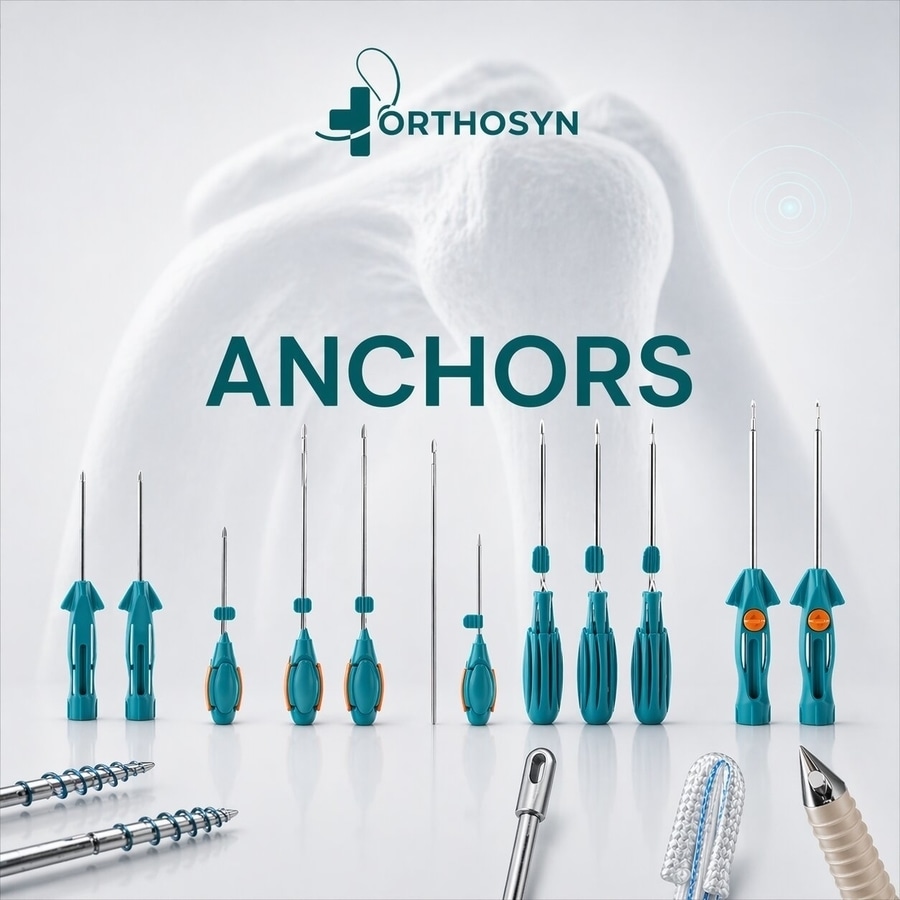
The Orthosyn arthroscopy portfolio includes both conventional suture anchor systems and knotless fixation solutions, allowing surgeons to select an implant according to the anatomy, repair configuration, tissue quality, and preferred surgical technique.
What Is a Knotted Suture Anchor?
A conventional suture anchor is inserted into bone with one or more high-strength sutures attached to the implant. The sutures are passed through the target tissue and subsequently secured using arthroscopic knots.
This technique allows the surgeon to control tissue positioning and tension through the knot-tying process.
Knotted anchor systems may provide:
Direct control over knot configuration
Flexible suture management
Multiple repair configurations
Familiar techniques for experienced arthroscopic surgeons
Reliable tissue-to-bone fixation
Orthosyn offers both PEEK Suture Anchors and Titanium Suture Anchors for different arthroscopic fixation requirements.
What Is a Knotless Suture Anchor?
Knotless anchors secure the suture without requiring the surgeon to create an arthroscopic knot.
After the suture is passed through the tissue, it is tensioned and secured through the fixation mechanism of the anchor. This approach can simplify certain repair techniques and reduce the number of procedural steps associated with arthroscopic knot tying.
Potential advantages include:
Elimination of arthroscopic knot tying
Simplified suture management
Controlled tissue tensioning
Reduced knot-related bulk
Efficient surgical workflow
Reproducible fixation techniques
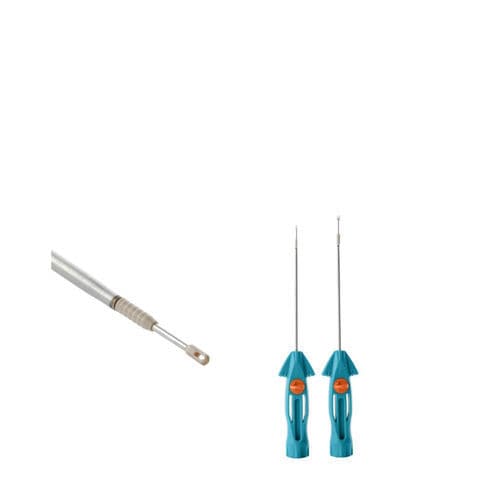
The Orthosyn portfolio includes both PEEK + PEEK Knotless Anchors – Push Lock System and PEEK + Titanium Knotless Anchors.
Key Differences Between Knotless and Knotted Anchors
The most obvious difference is the method used to secure the repair.
Fixation Technique
Knotted anchors:
The suture is passed through the tissue and secured using an arthroscopic knot.
Knotless anchors:
The suture is tensioned and secured directly through the anchor's fixation mechanism without requiring knot tying.
Suture Management
Knotted techniques require careful management of multiple suture limbs during the procedure. This becomes particularly important when several anchors are used.
Knotless techniques can simplify suture organization by eliminating the knot-tying stage.
Tissue Tensioning
With knotted anchors, final tissue tension is influenced by suture positioning and knot construction.
Knotless systems allow the surgeon to tension the tissue before completing anchor fixation, providing another approach to controlling the final repair configuration.
Knot Profile
Traditional arthroscopic knots create a small amount of additional material above the repaired tissue.
Knotless fixation eliminates this knot stack, creating a lower-profile construct in areas where minimizing intra-articular material may be desirable.
Does Knotless Mean Better?
Not necessarily.
Knotless and knotted anchors should be considered different surgical tools rather than competing technologies where one universally replaces the other.
The appropriate system depends on factors such as:
Type of tissue being repaired
Anatomical location
Bone quality
Repair configuration
Number of anchors required
Surgeon experience
Preferred tensioning technique
In many arthroscopic procedures, both fixation concepts can be valuable.
Applications in Rotator Cuff Repair
Rotator cuff reconstruction is one of the most common applications of suture anchor technology.
Knotted anchors can provide considerable flexibility when surgeons want to create specific suture configurations and individually control arthroscopic knots.
Knotless anchors are frequently incorporated into modern repair constructs where controlled tensioning, efficient suture management, and a low-profile repair are desired.
Depending on the technique, surgeons may also combine different anchor concepts within the same repair.
Applications in Labral Repair
Suture anchors are also essential in procedures such as:
Bankart repair
SLAP repair
Glenoid labral reconstruction
Shoulder instability procedures
Because the glenoid provides relatively limited bone stock, implant dimensions, placement strategy, and the number of anchors may become particularly important.
Another option for bone-preserving fixation is the Orthosyn Soft / All-Suture Anchor system, which uses a small bone tunnel and an all-suture fixation concept.
Anchor Material Also Matters
The distinction between knotted and knotless fixation is only one aspect of implant selection.
Anchor material can also influence surgical preference.
PEEK
PEEK is a high-performance polymer widely used in orthopedic implants. It offers radiolucency and eliminates permanent metallic material from the anchor body.
Titanium
Titanium has a long history in orthopedic fixation and provides a strong metallic implant platform.
PEEK + Titanium
Hybrid designs combine different materials within the fixation system and provide another option according to surgical requirements.
All-Suture Construction
Soft anchors minimize the amount of rigid implant material and can require smaller bone tunnels, making them particularly relevant when preservation of bone stock is an important consideration.
The Importance of High-Strength Sutures
Anchor performance cannot be considered independently from the suture.
Modern arthroscopic repair systems rely on high-strength sutures capable of maintaining fixation while the repaired tissue undergoes biological healing.
Suture characteristics can influence:
Tissue compression
Load distribution
Knot security in knotted techniques
Tensioning in knotless techniques
Overall repair configuration
The combination of the anchor, suture, and surgical technique ultimately determines the complete fixation construct.
Arthroscopic Instruments Complete the System
Successful anchor placement also depends on appropriate instrumentation.
Modern arthroscopic instruments support each stage of the procedure, including:
Bone preparation
Anchor insertion
Tissue manipulation
Suture passing
Suture retrieval
Knot tying
Suture cutting
Instruments such as guides, drills, suture passers, graspers, knot pushers, and suture cutters work together with the selected anchor system to create an efficient arthroscopic workflow.
Choosing the Appropriate Anchor
There is no universal anchor suitable for every arthroscopic repair.
Surgeons should evaluate the complete clinical situation, including:
Anatomy
Bone quality
Tissue quality
Required fixation strength
Available bone stock
Surgical approach
Repair configuration
Surgeon preference
Having access to different anchor technologies allows the fixation strategy to be adapted to the specific procedure rather than forcing every repair into a single implant concept.
Conclusion
Knotted and knotless suture anchors represent two established approaches to arthroscopic soft tissue fixation. Knotted anchors provide traditional knot-based fixation with considerable flexibility in suture configuration, while knotless systems eliminate arthroscopic knot tying and can simplify suture management, tensioning, and workflow.
The optimal choice depends on the anatomy, tissue and bone quality, repair strategy, and surgeon preference. Rather than viewing one technology as universally superior, modern arthroscopic surgery benefits from having multiple fixation options available for different clinical situations.
Orthosyn Medikal provides a comprehensive arthroscopic fixation portfolio including PEEK Suture Anchors, Titanium Suture Anchors, PEEK + PEEK Knotless Anchors, PEEK + Titanium Knotless Anchors, Soft / All-Suture Anchors, high-strength sutures, and specialized arthroscopic instruments—supporting surgeons with multiple solutions for modern soft tissue repair.