#Product Trends
PEEK vs Titanium Suture Anchors: Which Material Is Used in Arthroscopic Repair?
Explore the differences between PEEK and titanium suture anchors, their material characteristics, fixation concepts, and applications in modern arthroscopic soft tissue repair.
Suture anchors are essential fixation devices in modern arthroscopic surgery. They are designed to secure soft tissues such as tendons, ligaments, and labral tissue to bone and are widely used in procedures including rotator cuff repair, Bankart repair, SLAP repair, and other orthopedic soft tissue reconstructions.
Among the materials used for rigid suture anchors, PEEK (polyether ether ketone) and titanium are two established options. Both can provide reliable tissue-to-bone fixation, but they differ significantly in material composition, imaging characteristics, implant design, and surgical considerations.
Understanding these differences can help surgeons select an anchor system according to the anatomical location, bone quality, repair technique, imaging requirements, and individual clinical situation.
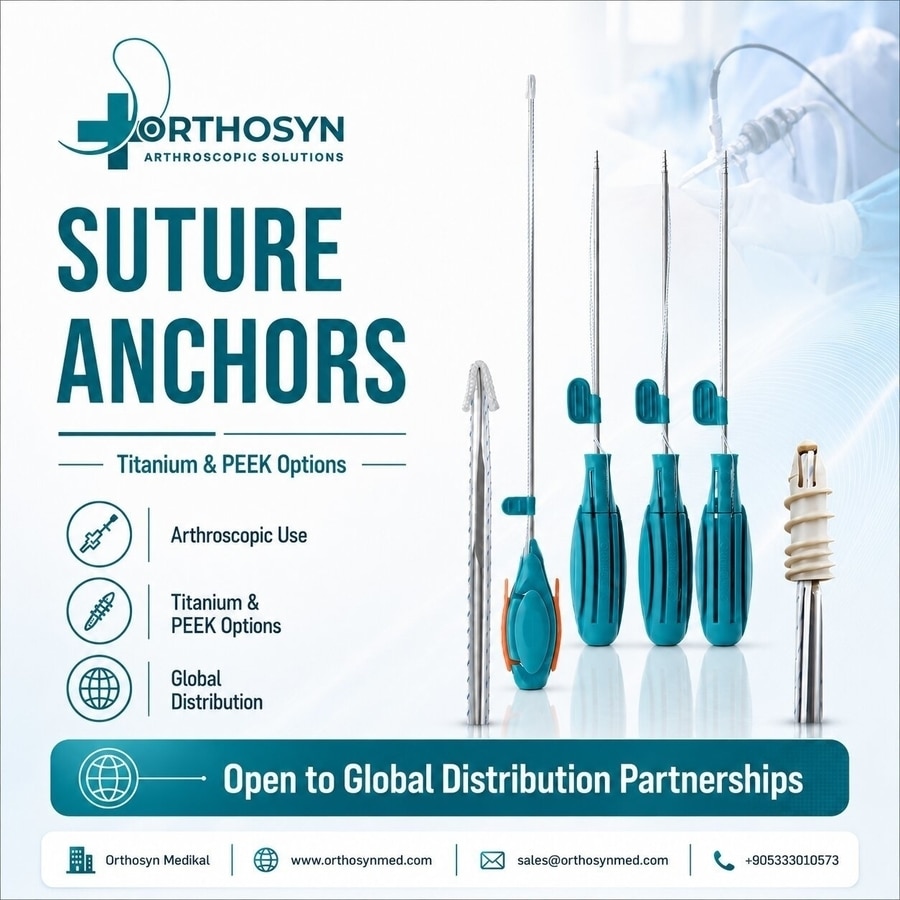
The Orthosyn arthroscopy portfolio includes PEEK Suture Anchors, Titanium Suture Anchors, as well as knotless and all-suture fixation alternatives.
What Is a PEEK Suture Anchor?
PEEK is a high-performance thermoplastic polymer widely used in orthopedic and spinal implants.
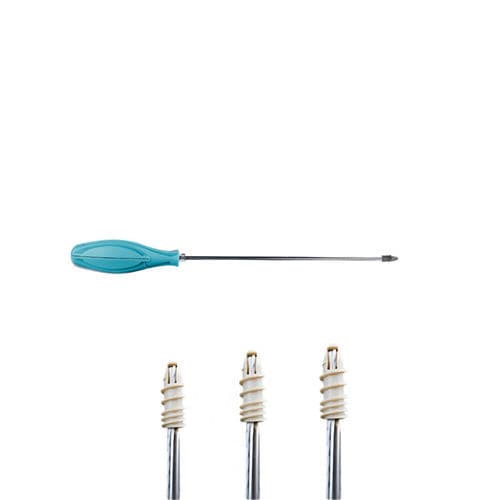
In arthroscopic repair, PEEK anchors provide a rigid fixation platform while avoiding a permanent metallic anchor body. Their material characteristics make them particularly useful when postoperative imaging and implant visibility are important considerations.
Potential characteristics of PEEK anchors include:
Radiolucent polymer construction
High mechanical strength
Good biocompatibility
Resistance to biological degradation
No permanent metallic anchor body
Compatibility with modern high-strength sutures
Orthosyn offers PEEK Suture Anchors for arthroscopic soft tissue fixation.
What Is a Titanium Suture Anchor?
Titanium has been used extensively in orthopedic implants for decades and remains an established material for suture anchor fixation.
Titanium anchors provide a metallic fixation platform with high mechanical strength and long-term material stability. Their threaded or specially designed implant geometry allows them to engage the surrounding bone and provide secure fixation.
Potential characteristics include:
High mechanical strength
Long history of orthopedic use
Strong bone engagement
Excellent material stability
Compact implant designs
Compatibility with high-strength sutures
The Orthosyn portfolio includes Titanium Suture Anchors for a range of arthroscopic repair applications.
PEEK vs Titanium: What Are the Main Differences?
Both materials can be used successfully in arthroscopic fixation, but their characteristics differ.
Material Composition
PEEK:
A high-performance polymer with mechanical properties suitable for orthopedic implant applications.
Titanium:
A metallic biomaterial with a long history of use in orthopedic fixation.
This fundamental material difference influences several aspects of implant behavior and postoperative assessment.
Imaging Characteristics
One of the most notable differences between PEEK and titanium is their appearance during medical imaging.
PEEK
PEEK is radiolucent, meaning the implant body is less visible on conventional X-rays. It can also reduce certain imaging artifacts compared with metallic implants.
This may help clinicians evaluate surrounding anatomical structures during postoperative follow-up.
Titanium
Titanium is radiopaque and therefore clearly visible on X-ray imaging.
Its visibility can be useful when evaluating implant position, although metallic implants may produce more imaging artifact than polymer-based alternatives in some imaging modalities.
Fixation and Bone Engagement
Anchor material alone does not determine fixation performance.
The stability of a suture anchor depends on several factors, including:
Anchor diameter
Implant geometry
Thread design
Bone quality
Insertion technique
Anatomical location
Suture configuration
Both PEEK and titanium anchors can be engineered with designs intended to provide effective engagement with bone.
Applications in Rotator Cuff Repair
Rotator cuff repair is one of the most common applications of suture anchors.
During the procedure, the anchor is inserted into the humeral head and the attached sutures are used to secure the torn tendon back to its anatomical insertion area.
Both PEEK and titanium anchors may be used depending on:
Surgeon preference
Bone quality
Repair configuration
Anchor dimensions
Imaging considerations
Surgical technique
The choice should therefore be based on the complete fixation strategy rather than material alone.
Applications in Bankart and Labral Repair
Suture anchors are also widely used in shoulder instability procedures, including Bankart and other labral repairs.
In these procedures, multiple anchors may be positioned around the glenoid rim to restore the labrum to its anatomical position.
Because available bone stock can be limited, surgeons may consider:
Anchor diameter
Distance between anchors
Insertion angle
Bone quality
Implant material
Number of fixation points
When preservation of bone stock is a priority, alternative fixation concepts may also be considered.
Orthosyn's Soft / All-Suture Anchors provide an additional option based on an all-suture construction and smaller bone tunnels.
What About Knotless Anchors?
Material selection and fixation technique are separate considerations.
A surgeon may also choose a knotless fixation system, which secures the suture without requiring a traditional arthroscopic knot.
Orthosyn provides two different knotless configurations:
PEEK + PEEK Knotless Anchor – Push Lock System
This configuration uses a PEEK-based fixation concept for knotless arthroscopic repair.
PEEK + Titanium Knotless Anchor
This hybrid configuration combines PEEK and titanium components within a knotless fixation system.
These alternatives demonstrate that modern anchor selection involves not only choosing between PEEK and titanium but also selecting the appropriate fixation mechanism for the intended repair.
The Role of High-Strength Sutures
Regardless of anchor material, the suture itself is a critical part of the fixation construct.
High-strength sutures are designed to maintain tissue fixation while biological healing progresses.
Important factors include:
Suture strength
Tissue passage
Load distribution
Knot security when applicable
Resistance to abrasion
Suture configuration
The overall performance of an arthroscopic repair therefore depends on the interaction between the anchor, suture, bone, tissue, and surgical technique.
Is PEEK Better Than Titanium?
There is no universal answer.
PEEK and titanium each offer different material characteristics, and neither should automatically be considered superior for every arthroscopic procedure.
PEEK may be considered when:
Radiolucency is desirable
Reduced metallic imaging artifact is preferred
A non-metallic rigid implant is required
Titanium may be considered when:
A metallic fixation system is preferred
Implant visibility on X-ray is useful
A well-established metallic orthopedic material is desired
Ultimately, implant selection should be based on the individual clinical situation.
Beyond PEEK and Titanium: All-Suture Anchors
Modern arthroscopic fixation is no longer limited to rigid PEEK or titanium implants.
All-suture anchors use high-strength suture material as the primary fixation structure and generally require smaller bone tunnels than conventional rigid anchors.
Potential advantages include:
Reduced bone removal
Small insertion diameter
Minimal rigid implant material
Greater flexibility when multiple anchors are required
Bone-preserving fixation strategy
The Orthosyn Soft / All-Suture Anchor System expands the available fixation options beyond conventional rigid anchor materials.
Choosing the Appropriate Suture Anchor
Selecting an anchor should involve more than comparing implant materials.
Surgeons should consider:
Anatomical location
Bone quality
Tissue quality
Type of repair
Anchor diameter
Required number of fixation points
Knotted or knotless technique
Imaging requirements
Revision considerations
Surgeon experience and preference
A comprehensive arthroscopy portfolio allows the surgeon to select the fixation concept most appropriate for the individual procedure.
Conclusion
PEEK and titanium are both established materials used in arthroscopic suture anchor systems. PEEK provides a strong, radiolucent, non-metallic implant option, while titanium offers a durable metallic fixation platform with a long history of orthopedic use.
The decision between PEEK and titanium should not be based on material alone. Anchor geometry, bone quality, anatomical location, suture configuration, fixation technique, and surgical objectives all contribute to the final implant selection.
Modern arthroscopic surgery also provides alternatives such as knotless and all-suture systems, giving surgeons a broader range of fixation strategies for different soft tissue repair requirements.
Explore the Orthosyn arthroscopic anchor portfolio:
Orthosyn PEEK Suture Anchors
Orthosyn Titanium Suture Anchors
Orthosyn PEEK + PEEK Knotless Anchors
Orthosyn PEEK + Titanium Knotless Anchors
Orthosyn Soft / All-Suture Anchors
Orthosyn Medikal provides PEEK, titanium, knotless, and all-suture anchor solutions together with high-strength sutures and specialized arthroscopic instruments, supporting a comprehensive approach to modern arthroscopic soft tissue repair.