#Product Trends
Hyaluronic Acid Concentration: Does a Higher HA Dose Make a Difference? | AlkaFlex
Understanding how hyaluronic acid concentration, total HA dose, molecular weight, cross-linking technology, and injection protocol can influence viscosupplementation strategies for knee osteoarthritis.
Hyaluronic acid injections are widely used as a non-surgical treatment option for patients with knee osteoarthritis. However, not all hyaluronic acid formulations are the same. Products can differ considerably in HA concentration, total dose, injection volume, molecular weight, cross-linking technology, and recommended treatment protocol.
This raises an important question: Does a higher hyaluronic acid dose necessarily mean a better treatment?
The answer is more complex than simply comparing the number of milligrams in a syringe. A higher HA dose can change the characteristics of a formulation, but clinical performance depends on the complete product design rather than concentration alone.
The AlkaFlex Hyaluronic Acid Injection portfolio from Orthosyn Medikal includes different hyaluronic acid formulations developed to provide options for various viscosupplementation approaches.
What Does Hyaluronic Acid Concentration Mean?
HA concentration indicates how much hyaluronic acid is contained within a specific volume of solution.
For example, two products may contain different amounts of hyaluronic acid even when their syringe volumes are similar. Conversely, products containing the same total HA dose may have different concentrations if their injection volumes differ.
For this reason, three values should be distinguished:
HA concentration – the amount of hyaluronic acid per milliliter.
Total HA dose – the total quantity of hyaluronic acid delivered during an injection.
Injection volume – the total volume of solution administered into the joint.
These parameters are related, but they are not interchangeable.
Why Does HA Dose Matter?
Hyaluronic acid is naturally present in synovial fluid and contributes to the viscoelastic properties of the joint environment.
In osteoarthritis, the concentration and molecular characteristics of endogenous hyaluronic acid may change. Intra-articular viscosupplementation is designed to supplement the synovial environment with exogenous HA.
A formulation containing a higher total HA dose delivers more hyaluronic acid during the injection. However, the amount of HA is only one component of the overall formulation.
Factors such as molecular weight, molecular structure and cross-linking can substantially affect the physical properties of the injected HA.
Is Higher Concentration Always Better?
Not necessarily.
It may appear logical that a higher concentration should automatically provide a stronger or longer-lasting effect, but hyaluronic acid formulations cannot be evaluated accurately by concentration alone.
A clinically relevant comparison should consider:
Total HA dose
HA concentration
Molecular weight
Linear or cross-linked structure
Rheological properties
Injection volume
Number of injections in the treatment protocol
Manufacturing and purification process
Therefore, a 90 mg formulation cannot be considered superior to a 60 mg or 40 mg formulation simply because the numerical dose is higher.
The entire formulation and intended treatment protocol must be considered.
Concentration vs Total Dose
This distinction is particularly important when comparing hyaluronic acid injections.
Imagine two hypothetical formulations:
A product containing 60 mg in 2 mL provides a concentration of 30 mg/mL.
A product containing 60 mg in 3 mL provides a concentration of 20 mg/mL.
Both deliver the same total quantity of hyaluronic acid—60 mg—but their concentrations differ.
This demonstrates why terms such as high-dose HA and high-concentration HA should not automatically be treated as equivalent.
Molecular Weight Is Another Important Factor
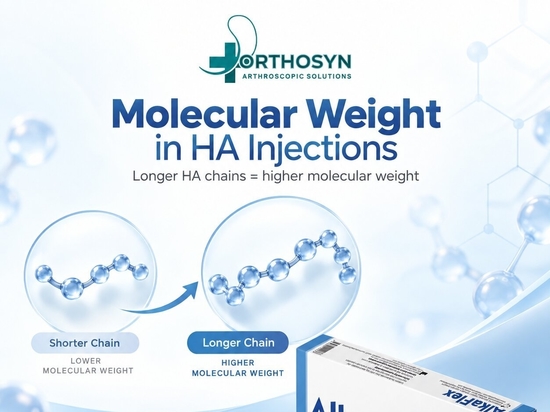
Molecular weight is one of the major characteristics differentiating hyaluronic acid formulations.
HA products may contain molecules with different molecular weight profiles, which can influence their physical and rheological behavior.
When evaluating an intra-articular HA product, clinicians may therefore consider the relationship between:
concentration + molecular weight + molecular structure + injection protocol
rather than focusing exclusively on the milligram value.
The AlkaFlex range has been developed around different HA formulation strategies, allowing different concentrations and product characteristics to be considered according to the intended viscosupplementation approach.
What Is the Role of Cross-Linked Hyaluronic Acid?
Cross-linking modifies the physical structure of hyaluronic acid by creating connections between HA molecular chains.
Compared with linear HA, cross-linked formulations are generally designed to increase resistance to degradation and modify viscoelastic characteristics.
This means that two products containing similar quantities of hyaluronic acid may behave differently if one is linear and the other is cross-linked.
Consequently, comparing only the HA dose can overlook one of the most important differences between formulations.
The AlkaFlex Hyaluronic Acid Injection range includes both linear and cross-linked HA options for different viscosupplementation strategies.
High-Dose HA and Single-Injection Strategies
Higher total HA doses are often associated with formulations designed for single-injection treatment protocols.
The concept is straightforward: rather than dividing treatment across several injections, a larger quantity of HA can be administered during one intra-articular injection when supported by the specific product formulation and instructions for use.
Potential practical considerations of a single-injection approach include:
Fewer injection appointments
Reduced number of intra-articular procedures
Greater convenience for some patients
Simplified treatment scheduling
However, injection frequency should always follow the approved protocol of the specific product.
Multiple-Injection Protocols Still Have a Role
A higher-dose single injection does not make multiple-injection protocols obsolete.
Different HA formulations are developed around different therapeutic strategies. Some products are intended for a single injection, while others use a series of injections.
The appropriate protocol depends on:
Product formulation
Indication
Patient characteristics
Severity and symptoms of osteoarthritis
Physician assessment
Approved instructions for use
Therefore, the number of injections should not be used independently as a measure of product quality.
AlkaFlex Hyaluronic Acid Formulations
Orthosyn Medikal's AlkaFlex portfolio includes different hyaluronic acid injection options, allowing clinicians and distribution partners to evaluate formulations according to HA dose, concentration, structure and treatment strategy.
The portfolio includes linear and cross-linked hyaluronic acid formulations across different HA quantities, including higher-dose options developed for intra-articular use.
Explore the complete AlkaFlex Hyaluronic Acid Injections portfolio.
By offering multiple formulations rather than a single HA concentration, AlkaFlex provides different options for viscosupplementation according to product characteristics and clinical requirements.
What Should Be Considered When Comparing HA Injections?
When evaluating hyaluronic acid injections, concentration should be considered as part of a broader product profile.
Important parameters include:
HA concentration in mg/mL
Total HA dose per syringe
Injection volume
Molecular weight
Linear or cross-linked HA
Cross-linking technology where applicable
Number of injections per treatment course
Source and manufacturing process
Sterility and product quality
Intended use and clinical documentation
This provides a more meaningful comparison than simply asking which syringe contains the highest number of milligrams.
Does a Higher HA Dose Produce Better Clinical Results?
A higher dose does not automatically guarantee a better clinical outcome.
Patient response to viscosupplementation can vary considerably, and treatment outcomes may depend on factors including osteoarthritis severity, patient characteristics, joint condition, injection technique and the specific HA formulation used.
For this reason, HA dose should be considered one element of product selection rather than an independent predictor of clinical success.
Clinical decisions should always be made by qualified healthcare professionals according to the patient's condition and the approved use of the selected product.
Why Product Design Matters More Than a Single Number
When comparing viscosupplementation products, marketing attention can easily focus on numbers such as 40 mg, 60 mg, 72 mg or 90 mg.
However, these values tell only part of the story.
A comprehensive assessment considers how much HA is delivered, its concentration, molecular characteristics, whether it is linear or cross-linked, how the formulation behaves within the joint environment, and how the treatment protocol is designed.
This is why AlkaFlex hyaluronic acid injections are better understood as a portfolio of different viscosupplementation solutions rather than simply as products ranked according to HA dose.
Conclusion
Hyaluronic acid concentration and total HA dose are important characteristics of an intra-articular viscosupplement, but higher does not automatically mean better.
A higher-dose formulation delivers more hyaluronic acid per injection, while a higher concentration delivers more HA per unit of volume. Neither parameter should be evaluated independently from molecular weight, cross-linking, injection volume, rheological characteristics and treatment protocol.
The most appropriate formulation depends on the individual clinical situation and the intended viscosupplementation strategy.
AlkaFlex by Orthosyn Medikal offers a range of linear and cross-linked hyaluronic acid injections developed for intra-articular viscosupplementation, providing different HA concentrations and dosing options for different treatment approaches.
Explore AlkaFlex
View AlkaFlex Hyaluronic Acid Injections
AlkaFlex Hyaluronic Acid Injections | Orthosyn Medikal — solutions for intra-articular viscosupplementation and joint care.