#Product Trends
Why Anchor Diameter Matters in Arthroscopic Soft Tissue Repair | Orthosyn
Understanding how suture anchor diameter can influence bone preservation, fixation strategy, anchor placement, and the number of fixation points in modern arthroscopic soft tissue repair.
Suture anchors are fundamental components of modern arthroscopic soft tissue repair. They are used to secure tendons, ligaments, and other soft tissues to bone in procedures such as rotator cuff repair, Bankart repair, SLAP repair, and other shoulder stabilization procedures.
When selecting a suture anchor, surgeons consider several characteristics, including implant material, fixation mechanism, suture configuration, anchor length, and anchor diameter.
Anchor diameter may appear to be a simple dimensional specification, but it directly affects how much bone must be prepared for implantation and how anchors can be positioned within the available bone stock.
In general, smaller-diameter anchors require smaller bone tunnels, while larger anchors require greater bone preparation. However, anchor selection should never be based on diameter alone. Bone quality, anatomical location, implant design, fixation requirements, and surgical technique must all be considered.
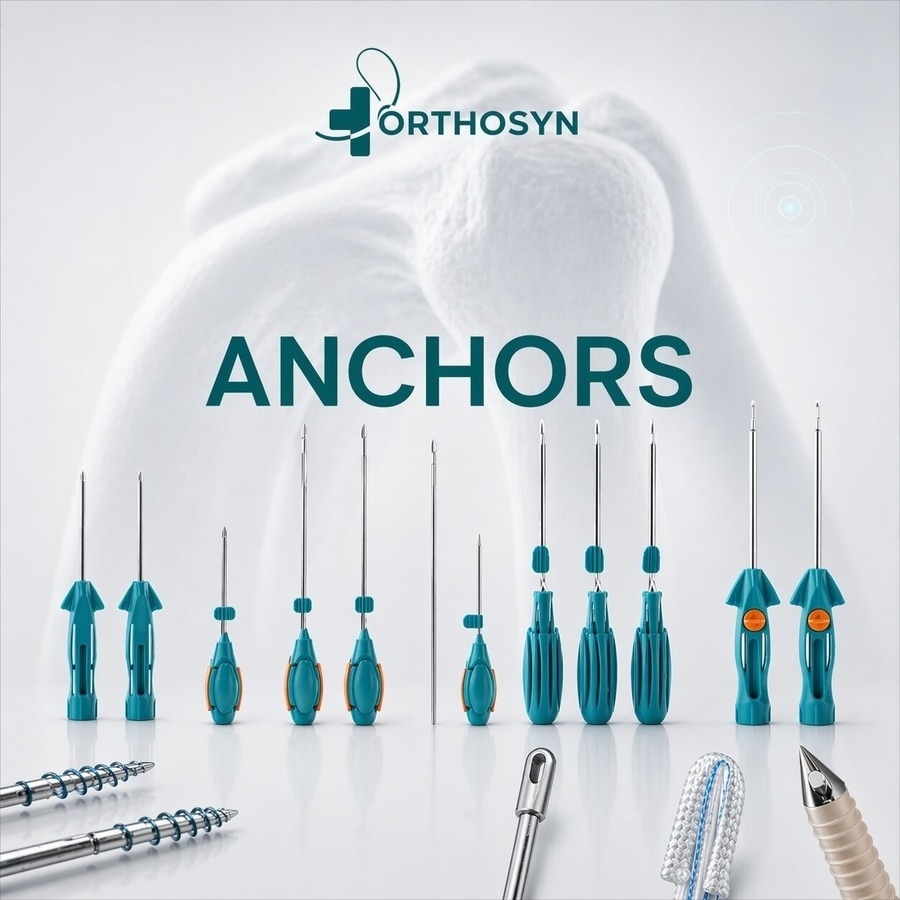
The Orthosyn arthroscopy portfolio includes titanium, PEEK, knotless, and soft / all-suture anchor technologies designed for different arthroscopic fixation strategies.
What Is Suture Anchor Diameter?
Anchor diameter refers to the width of the implant that is inserted into the bone.
Depending on the design, arthroscopic anchors may range from very small soft anchors to larger rigid PEEK or titanium anchors.
Diameter influences:
The size of the bone tunnel
The amount of bone removed during preparation
Available spacing between anchors
Implant footprint
Placement options in limited anatomical areas
Revision possibilities
Overall fixation strategy
For this reason, diameter is an important consideration when planning arthroscopic tissue-to-bone repair.
Why Does Anchor Diameter Matter?
Every anchor requires a certain amount of bone for placement.
When a rigid anchor is inserted, a bone socket or tunnel is generally prepared according to the dimensions and insertion technique of the implant.
A larger anchor typically requires a larger preparation area.
A smaller anchor can reduce the amount of bone removed during implantation.
This becomes particularly relevant when:
Multiple anchors are required
Available bone stock is limited
Anchors must be positioned close together
The anatomical area is small
Revision surgery may be considered in the future
Bone preservation is an important part of the repair strategy
Anchor diameter therefore affects more than implant size—it can influence the architecture of the entire repair construct.
Smaller Anchors and Bone Preservation
One of the main reasons for using smaller-diameter anchors is bone preservation.
Smaller implants generally require smaller bone tunnels, which means less bone needs to be removed during anchor placement.
This can be particularly valuable in procedures where several fixation points are required within a relatively small anatomical area.
However, smaller does not automatically mean better.
The selected anchor must still provide fixation appropriate for the intended procedure, bone quality, tissue characteristics, and surgical technique.
The objective is therefore not simply to select the smallest possible anchor, but to choose an appropriate balance between bone preservation and fixation requirements.
Why Anchor Diameter Matters When Multiple Anchors Are Used
Many arthroscopic repairs require more than one anchor.
For example, multiple fixation points may be used to restore tissue attachment across a broader anatomical area.
Each anchor occupies a certain amount of bone.
As anchor diameter increases, the amount of bone required around each fixation point also becomes an important consideration.
Smaller-diameter anchors can potentially allow:
More fixation points within available bone stock
Reduced overlap between bone tunnels
Greater flexibility in anchor positioning
Preservation of bone between adjacent anchors
This is one reason why small-diameter and all-suture anchors have become important options in modern arthroscopic repair.
Anchor Diameter and Bone Tunnel Size
Anchor diameter and bone tunnel size are closely related, although the exact preparation depends on the specific implant system.
For conventional rigid anchors, the prepared tunnel generally needs to accommodate the anchor body.
As anchor diameter decreases, the required tunnel can also become smaller.
This relationship is especially important when comparing conventional rigid anchors with soft / all-suture anchors.
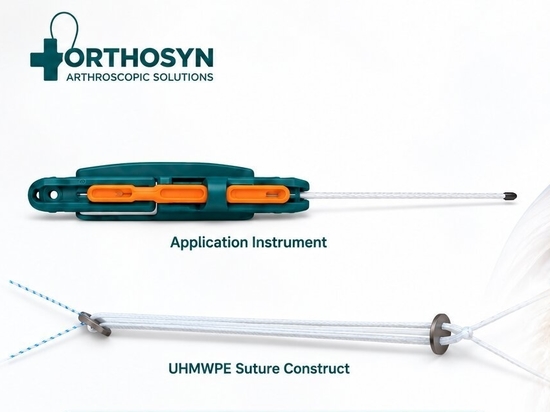
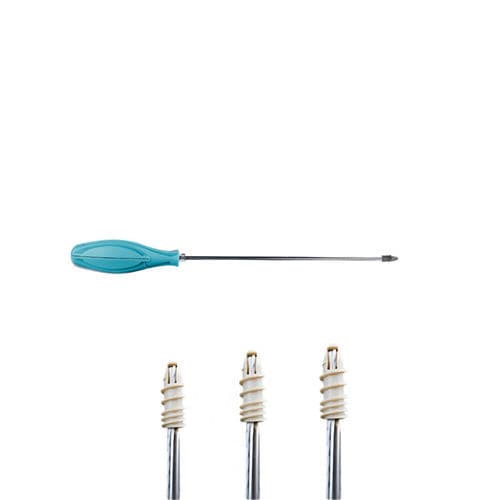
Unlike traditional anchors with a rigid implant body, all-suture anchors use high-strength suture material as the primary fixation structure.
This allows very small insertion diameters and supports a bone-preserving approach.
Explore the Orthosyn Soft / All-Suture Anchors.
Why Are Soft / All-Suture Anchors Available in Small Diameters?
Soft anchors are specifically designed to minimize the size of the bone tunnel required for fixation.
Rather than relying on a large rigid implant body, the suture-based structure expands or changes configuration after deployment to create fixation within the bone.
This concept enables smaller insertion diameters.
Orthosyn Soft / All-Suture Anchors are available in multiple diameter options, allowing different fixation strategies depending on anatomical and procedural requirements.
The main potential advantage is straightforward:
smaller insertion diameter → smaller bone tunnel → greater preservation of bone stock.
This can be particularly useful when multiple fixation points are planned.
Does a Larger Anchor Provide Stronger Fixation?
Not automatically.
It may seem intuitive to assume that a larger anchor always provides stronger fixation, but anchor performance cannot be predicted from diameter alone.
Fixation depends on several factors:
Anchor geometry
Implant material
Bone quality
Insertion technique
Anchor length
Thread design
Fixation mechanism
Suture strength
Loading direction
Anatomical location
A larger diameter can provide a greater implant-bone interface in certain designs, but this does not mean that diameter alone determines fixation strength.
Similarly, a smaller anchor should not automatically be interpreted as weaker.
Modern anchor systems use different mechanisms to achieve fixation, and these mechanisms must be evaluated as part of the complete implant design.
Anchor Diameter and Bone Quality
Bone quality is another important consideration.
The same anchor may behave differently in dense cortical bone compared with lower-density cancellous bone.
When selecting an anchor, surgeons may therefore consider:
Bone density
Cortical thickness
Anatomical region
Previous anchor sites
Existing bone tunnels
Bone loss
Revision status
Anchor diameter is only one part of this decision.
The objective is to select an implant whose dimensions and fixation mechanism are appropriate for the available bone.
Anchor Diameter in Rotator Cuff Repair
Rotator cuff repair can require several anchors depending on tear size and repair configuration.
Anchors may be incorporated into:
Single-row repair
Double-row repair
Medial-row fixation
Lateral-row fixation
Suture bridge constructs
When multiple anchors are used, preserving adequate bone between fixation points becomes important.
Anchor diameter, placement angle, spacing, and implant design therefore need to be considered together.
Orthosyn offers different rigid anchor technologies for arthroscopic soft tissue fixation, including PEEK Suture Anchors and Titanium Suture Anchors.
Anchor Diameter in Labral Repair
Anchor diameter can be particularly relevant in labral repair because the available bone stock around the glenoid is limited.
Multiple anchors may be required along the glenoid rim during procedures such as Bankart repair.
In these situations, surgeons may consider:
Available glenoid bone stock
Number of required fixation points
Distance between anchors
Anchor insertion angle
Tunnel diameter
Existing bone defects
Previous anchor placement
Smaller-diameter anchors may provide additional flexibility when several fixation points must be positioned within a restricted anatomical area.
This is one of the applications where soft / all-suture anchor technology can be particularly relevant.
Does a Smaller Anchor Allow More Fixation Points?
Potentially, yes.
Because smaller anchors generally require smaller bone tunnels, they may allow additional fixation points within the same anatomical region compared with larger implants.
However, the actual number and position of anchors should be determined by the surgical repair strategy rather than by implant diameter alone.
Adequate spacing between tunnels remains important.
The goal is not to maximize the number of anchors, but to create an appropriate repair construct while preserving available bone.
Anchor Diameter and Revision Surgery
Bone preservation may also become important if revision surgery is required.
Previous anchor placement can leave:
Bone tunnels
Implant material
Local bone defects
Reduced available bone stock
A bone-preserving primary repair strategy may leave more options for future fixation if another procedure becomes necessary.
This does not mean that smaller anchors should always be selected because revision may occur. Rather, preservation of bone stock is one factor that can be considered when choosing an implant.
Diameter Is Not the Same as Anchor Material
Anchor diameter and anchor material are separate characteristics.
Rigid anchors can be manufactured from materials such as:
PEEK
Titanium
Soft / all-suture anchors use high-strength suture material as the principal fixation structure.
Orthosyn provides several anchor technologies, including:
Orthosyn PEEK Suture Anchors
Orthosyn Titanium Suture Anchors
Orthosyn Soft / All-Suture Anchors
Each technology has different characteristics, and diameter should be evaluated together with material and fixation mechanism.
What About Knotless Anchors?
Diameter is also relevant when selecting knotless fixation systems.
Knotless anchors eliminate the need for a traditional arthroscopic knot by securing the suture through the implant's fixation mechanism.
Depending on the procedure, these systems can be incorporated into different repair configurations.
Orthosyn offers:
PEEK + PEEK Knotless Anchors – Push Lock System
PEEK + Titanium Knotless Anchors
When choosing a knotless anchor, diameter should be considered alongside implant material, fixation mechanism, required tension, anatomical location, and bone quality.
Small Diameter vs Large Diameter: Is One Better?
There is no universal answer.
Smaller-Diameter Anchors
Potential considerations include:
Smaller bone tunnels
Greater bone preservation
More flexibility in limited anatomical areas
Potential for multiple fixation points
Potential advantages in bone-preserving strategies
Larger-Diameter Anchors
Potential considerations include:
Different implant-bone interface
Compatibility with specific fixation mechanisms
Use in procedures requiring particular anchor geometries
Different options for suture loading and repair configuration
Neither category is automatically superior.
The appropriate diameter depends on the clinical application and the complete fixation strategy.
What Should Be Considered When Selecting Anchor Diameter?
Anchor diameter should be evaluated together with several other factors:
Anatomical location
Available bone stock
Bone quality
Tissue quality
Number of required anchors
Distance between fixation points
Anchor material
Implant geometry
Fixation mechanism
Suture configuration
Repair technique
Possibility of previous or future anchor sites
Considering these parameters together provides a more meaningful approach than selecting an anchor based solely on diameter.
Orthosyn Suture Anchor Portfolio
Orthosyn Medikal offers multiple technologies for arthroscopic soft tissue fixation:
Orthosyn PEEK Suture Anchors
Orthosyn Titanium Suture Anchors
Orthosyn PEEK + PEEK Knotless Anchors – Push Lock System
Orthosyn PEEK + Titanium Knotless Anchors
Orthosyn Soft / All-Suture Anchors
This range enables different approaches to implant material, anchor diameter, fixation mechanism, and repair configuration in modern arthroscopic surgery.
Conclusion
Anchor diameter is an important consideration in arthroscopic soft tissue repair because it directly influences bone tunnel size, bone preservation, anchor spacing, and available fixation options.
Smaller-diameter anchors can reduce the amount of bone required for implantation and may provide advantages when multiple fixation points are needed within limited bone stock.
However, smaller does not automatically mean better, and larger does not automatically mean stronger.
Anchor diameter should always be evaluated together with bone quality, anatomical location, implant design, fixation mechanism, tissue characteristics, and surgical technique.
Orthosyn Medikal offers PEEK, titanium, knotless, and Soft / All-Suture anchor technologies in different configurations to support modern arthroscopic soft tissue repair and bone-preserving fixation strategies.