#Product Trends
What Is Remplissage and How Are Suture Anchors Used?
Learn how the remplissage procedure is used in arthroscopic shoulder stabilization, why suture anchors are placed in a Hill-Sachs lesion, and how anchor selection contributes to posterior capsulotenodesis.
Shoulder instability can involve more than a detached or damaged labrum. In patients with recurrent anterior shoulder instability, repeated dislocation may create a compression defect on the posterolateral aspect of the humeral head known as a Hill-Sachs lesion.
When this defect has the potential to engage with the anterior glenoid rim and contribute to recurrent instability, surgeons may consider additional procedures alongside anterior stabilization.
One of these techniques is remplissage.
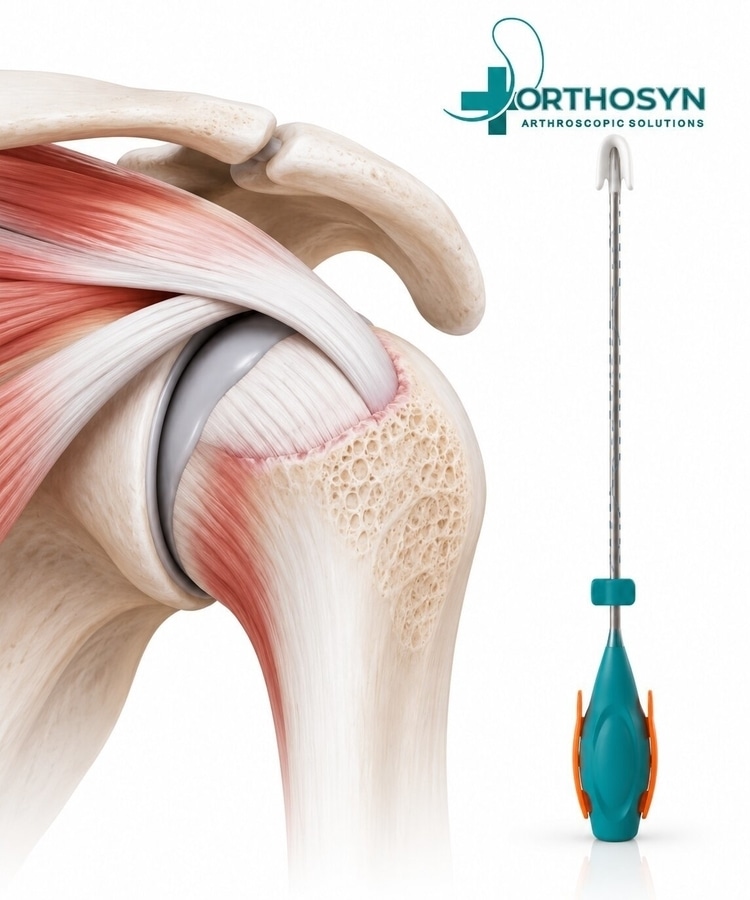
Remplissage is an arthroscopic procedure in which the posterior capsule and infraspinatus tendon are secured into the Hill-Sachs defect, effectively making the defect extra-articular and reducing its ability to engage the glenoid rim.
Suture anchors play a central role in this procedure by creating fixation points within the humeral head defect.
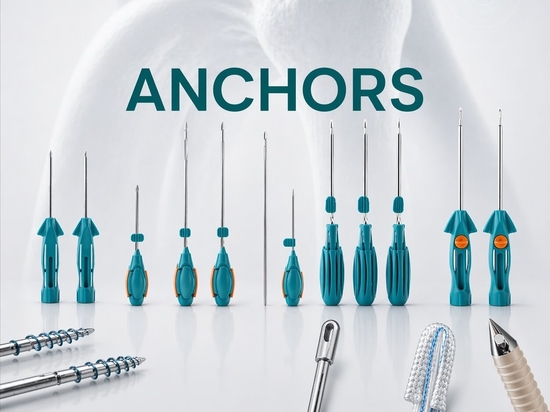
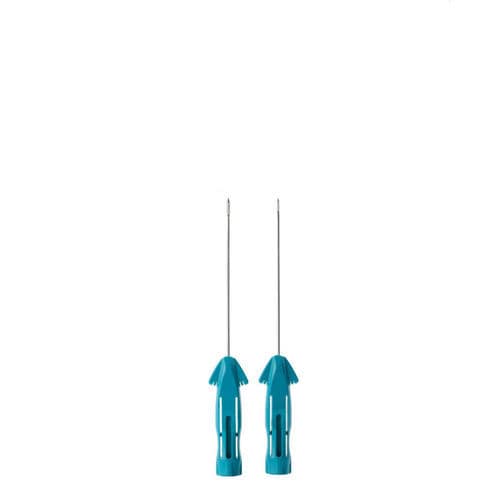
The Orthosyn arthroscopy portfolio includes multiple anchor technologies that can support different arthroscopic soft tissue fixation strategies, including PEEK, titanium, knotless, and soft / all-suture anchors.
What Is a Hill-Sachs Lesion?
A Hill-Sachs lesion is an impaction defect of the posterolateral humeral head that can develop during anterior shoulder dislocation.
When the humeral head dislocates anteriorly, it can impact against the anterior edge of the glenoid. This contact may create a depression in the humeral head.
Not every Hill-Sachs lesion requires additional surgical treatment.
The clinical significance depends on factors such as:
Size and location of the defect
Glenoid bone loss
Shoulder instability pattern
Whether the lesion is engaging or non-engaging
Glenoid track relationship
Patient activity level
Previous instability episodes
This is why remplissage is not automatically performed whenever a Hill-Sachs lesion is present.
What Does “Remplissage” Mean?
The word remplissage comes from French and means “filling.”
In shoulder surgery, however, the procedure does not literally fill the bone defect with a graft or implant.
Instead, the posterior capsule and infraspinatus tendon are fixed into the Hill-Sachs defect.
This converts the intra-articular surface of the defect into an extra-articular area and helps prevent the lesion from engaging with the glenoid rim during shoulder movement.
The procedure is commonly performed arthroscopically and may be combined with an anterior stabilization procedure such as a Bankart repair.
Why Is Remplissage Performed?
The primary objective of remplissage is to reduce the contribution of a clinically relevant Hill-Sachs lesion to recurrent anterior shoulder instability.
During certain shoulder positions, an engaging or off-track Hill-Sachs lesion may interact with the anterior glenoid rim.
This interaction can contribute to recurrent instability even when the labrum has been repaired.
By securing the posterior capsule and infraspinatus into the defect, remplissage changes the interaction between the humeral head defect and the glenoid.
The procedure may therefore be considered as part of a broader shoulder stabilization strategy.
How Are Suture Anchors Used in Remplissage?
Suture anchors provide fixation points inside the Hill-Sachs defect.
After the lesion has been identified arthroscopically, the bone surface may be prepared to create an appropriate fixation bed.
One or more suture anchors can then be positioned within the defect.
The sutures associated with these anchors are passed through the:
Posterior shoulder capsule
Infraspinatus tendon
The sutures are subsequently secured so that these tissues are brought into contact with the prepared Hill-Sachs defect.
The exact number, position, and type of anchors depend on the surgical technique, defect characteristics, bone quality, and surgeon preference.
What Is Capsulotenodesis in Remplissage?
The term capsulotenodesis describes the fixation of both capsular and tendon tissue.
In remplissage, the posterior capsule and infraspinatus tendon are fixed to the humeral head at the site of the Hill-Sachs lesion.
This tissue-to-bone fixation is one of the central mechanical principles of the procedure.
Suture anchors create the fixation points that allow the surgeon to bring these tissues into the defect and maintain their position.
For this reason, anchor placement and suture management are important parts of the remplissage technique.
Where Are the Anchors Positioned?
Unlike Bankart repair, where anchors are generally positioned along the glenoid rim, remplissage anchors are placed in the humeral head at the Hill-Sachs defect.
This distinction is important.
In a combined Bankart repair and remplissage procedure, two different anatomical areas are being addressed:
Bankart repair: fixation is performed at the anterior glenoid/labrum.
Remplissage: fixation is performed at the posterior humeral head defect using the posterior capsule and infraspinatus.
Suture anchors can therefore be used in both parts of the operation but for different anatomical and mechanical purposes.
How Many Anchors Are Used for Remplissage?
There is no universal number of anchors for every remplissage procedure.
Different techniques may use one or more fixation points depending on:
Hill-Sachs lesion dimensions
Shape and orientation of the defect
Desired tissue coverage
Anchor design
Suture configuration
Bone quality
Surgeon preference
The objective is not simply to maximize the number of anchors. The fixation construct should be planned according to the individual anatomy and surgical strategy.
Why Does Anchor Placement Matter?
Anchor placement influences how the posterior capsule and infraspinatus are brought into the Hill-Sachs defect.
The position of each fixation point can affect:
Tissue capture
Distribution of fixation
Contact between tissue and bone
Suture orientation
Available bone between anchors
Overall repair configuration
The surgeon must therefore consider both the geometry of the defect and the dimensions of the selected anchor.
This is also where anchor diameter can become relevant, particularly when multiple fixation points are planned within a limited area of bone.
What Types of Suture Anchors Can Be Used?
Different anchor technologies can be incorporated into arthroscopic soft tissue fixation depending on the chosen technique.
PEEK Suture Anchors
PEEK provides a rigid, non-metallic anchor option for tissue-to-bone fixation.
Orthosyn offers PEEK Suture Anchors for arthroscopic soft tissue repair.
Titanium Suture Anchors
Titanium anchors provide another rigid fixation option and have a long history of use in arthroscopic surgery.
Explore Orthosyn Titanium Suture Anchors.
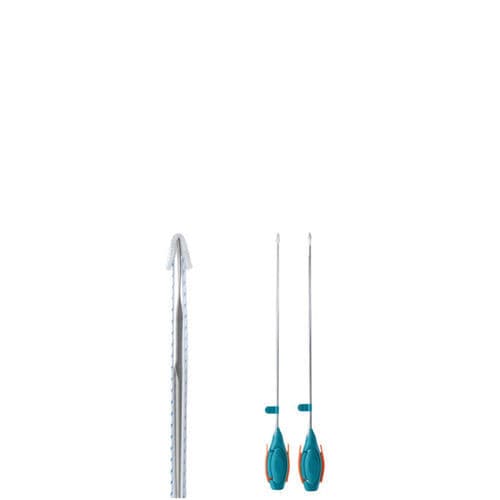
Soft / All-Suture Anchors
Soft anchors use high-strength suture material as the primary fixation structure rather than a conventional rigid anchor body.
Their smaller insertion diameter can support bone-preserving fixation strategies, particularly when several fixation points are required.
Explore Orthosyn Soft / All-Suture Anchors.
The appropriate anchor technology depends on bone quality, defect anatomy, surgical technique, fixation requirements, and surgeon preference.
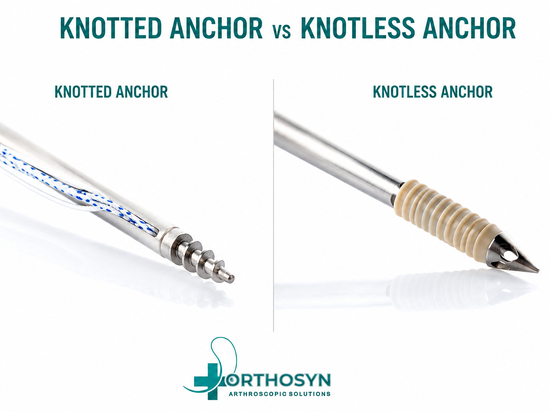
Can Knotless Anchors Be Used in Shoulder Stabilization?
Knotless technology provides another approach to arthroscopic tissue fixation.
Instead of securing the repair with a traditional arthroscopic knot, the suture is captured through the fixation mechanism of the implant.
Potential considerations include:
Reduced knot management
Controlled suture tensioning
Different repair configurations
Elimination of traditional knot stacks
Orthosyn offers both PEEK + PEEK Knotless Anchors – Push Lock System and PEEK + Titanium Knotless Anchors for arthroscopic soft tissue fixation.
The use of a knotted or knotless construct depends on the specific stabilization technique and the surgeon's preferred repair configuration.
Remplissage vs Bankart Repair: What Is the Difference?
Although remplissage and Bankart repair can be performed during the same operation, they address different components of shoulder instability.
Feature Bankart Repair Remplissage
Primary anatomy Anterior glenoid/labrum Posterolateral humeral head
Main pathology addressed Labral/capsular injury Hill-Sachs lesion
Tissue fixation Labrum/capsule to glenoid Infraspinatus/posterior capsule into defect
Anchor location Glenoid rim Hill-Sachs defect
Primary objective Restore anterior soft tissue stabilization Reduce engagement of the humeral head defect
The procedures can therefore complement each other in selected patients rather than serving as direct alternatives.
Why Is Remplissage Often Combined with Bankart Repair?
Anterior shoulder instability can involve both soft tissue injury and bone defects.
A Bankart repair addresses the anterior capsulolabral injury, while remplissage addresses the humeral-sided Hill-Sachs defect.
In selected cases, treating only the anterior labral injury may not adequately address the mechanical contribution of an engaging or off-track Hill-Sachs lesion.
Combining the procedures allows the surgeon to address both components within the overall stabilization strategy.
However, the appropriate treatment depends on the amount of glenoid bone loss, Hill-Sachs characteristics, patient factors, and the complete instability pattern.
Does Remplissage Affect Shoulder Motion?
Because the procedure incorporates the infraspinatus tendon and posterior capsule into the Hill-Sachs defect, its potential influence on shoulder motion—particularly external rotation—is an important consideration.
The clinical effect can vary according to factors such as:
Surgical technique
Anchor position
Amount of tissue incorporated
Tension applied
Size of the lesion
Rehabilitation
Patient-specific anatomy
For this reason, the goal is to achieve sufficient stabilization without unnecessarily overtensioning the posterior structures.
Why Is Suture Management Important?
Remplissage involves working in the posterior shoulder and managing sutures through the posterior capsule and infraspinatus.
Depending on the technique, the surgeon may need to control multiple suture limbs while simultaneously performing other components of the stabilization procedure.
Effective suture management can help:
Maintain organized fixation points
Prevent suture entanglement
Control tissue capture
Establish the intended tension
Simplify the final fixation construct
High-strength sutures and appropriate arthroscopic instruments therefore form an important part of the overall fixation system.
What Should Be Considered When Selecting an Anchor for Remplissage?
Anchor selection should not be based on a single characteristic.
Relevant considerations may include:
Hill-Sachs defect anatomy
Available humeral bone stock
Bone quality
Anchor diameter
Anchor length
Implant material
Fixation mechanism
Number of planned fixation points
Suture configuration
Knotted or knotless technique
Surgeon preference
The objective is to select an anchor system appropriate for the anatomy and intended tissue-to-bone fixation strategy.
Orthosyn Suture Anchor Portfolio
Orthosyn Medikal provides different anchor technologies for modern arthroscopic soft tissue fixation:
Orthosyn PEEK Suture Anchors
Orthosyn Titanium Suture Anchors
Orthosyn PEEK + PEEK Knotless Anchors – Push Lock System
Orthosyn PEEK + Titanium Knotless Anchors
Orthosyn Soft / All-Suture Anchors
These technologies provide different options regarding implant material, anchor diameter, fixation mechanism, and suture management for arthroscopic soft tissue repair.
Conclusion
Remplissage is an arthroscopic shoulder stabilization technique used to address selected Hill-Sachs lesions associated with anterior shoulder instability.
During the procedure, suture anchors are placed within the Hill-Sachs defect and used to secure the posterior capsule and infraspinatus tendon to the humeral head. This helps prevent the defect from engaging with the anterior glenoid rim.
Remplissage may be performed together with Bankart repair when both anterior capsulolabral injury and a clinically relevant Hill-Sachs lesion need to be addressed.
The selection and positioning of suture anchors are therefore important components of the procedure. Anchor diameter, material, fixation mechanism, bone quality, defect anatomy, and suture configuration should all be considered as part of the overall repair strategy.
Orthosyn Medikal offers PEEK, titanium, knotless, and Soft / All-Suture anchor technologies for different arthroscopic soft tissue fixation strategies.