#Product Trends
How Is a Graft Fixed During ACL Reconstruction? | Orthosyn
Learn how ACL graft fixation works, how femoral and tibial fixation differ, and how cortical buttons and interference screws are used to secure a graft during anterior cruciate ligament reconstruction.
Anterior cruciate ligament (ACL) reconstruction is one of the most common ligament reconstruction procedures performed in the knee. Instead of simply repairing the damaged ACL, the procedure typically uses a graft to replace the function of the injured ligament.
Once the graft has been prepared and positioned through the femoral and tibial bone tunnels, it must be securely fixed.
This fixation is critical because the graft needs sufficient initial stability while biological incorporation takes place.
Several fixation concepts are available for ACL reconstruction. Two of the most widely used are:
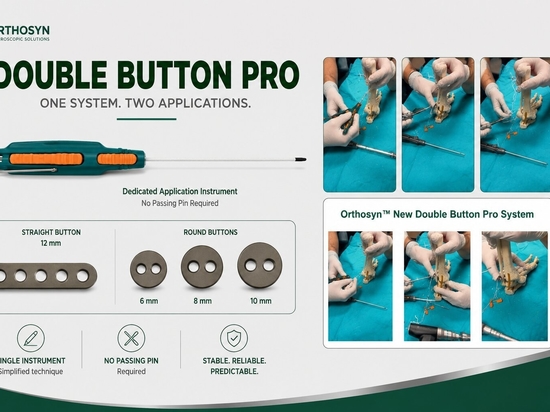
Cortical fixation with buttons
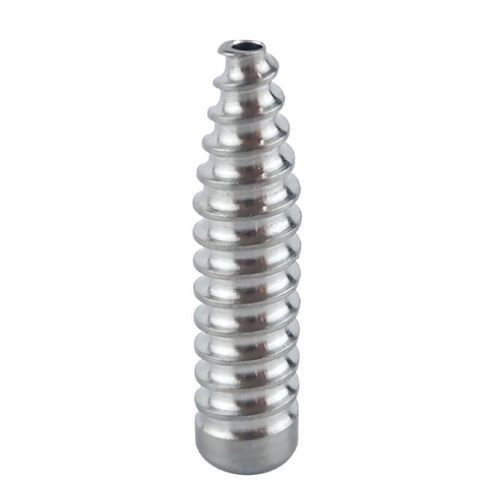
Interference fixation with screws
Depending on the graft type, tunnel preparation, surgical technique, and surgeon preference, different fixation methods may be used on the femoral and tibial sides.
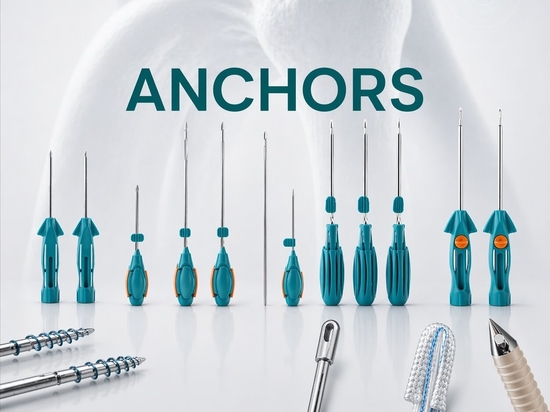
Orthosyn provides ACL reconstruction solutions including femoral cortical fixation systems, titanium interference screws, PEEK interference screws, and bioabsorbable interference screws for different ligament reconstruction strategies.
What Is an ACL Graft?
An ACL graft is the tissue used to reconstruct the damaged anterior cruciate ligament.
Different graft sources may be selected depending on the surgical strategy, including:
Hamstring tendon grafts
Patellar tendon grafts
Quadriceps tendon grafts
Allografts
The graft is prepared according to the chosen reconstruction technique and then positioned within tunnels or sockets created in the femur and tibia.
Once positioned, the graft must be fixed securely at both ends.
Why Is Graft Fixation Important?
Immediately after ACL reconstruction, the graft has not yet biologically integrated with the surrounding bone.
During this early period, the fixation system provides mechanical stability.
The fixation construct must help maintain:
Graft position
Appropriate graft tension
Stability within the bone tunnels
Resistance to displacement during the initial healing period
Over time, biological integration occurs between the graft and surrounding tissues.
Therefore, graft fixation acts as an important mechanical connection during the early phase following reconstruction.
Where Is the ACL Graft Fixed?
The reconstructed ACL extends between the femur and tibia.
Accordingly, fixation is required on both sides:
Femoral Fixation
The upper end of the graft is secured on the femoral side.
Tibial Fixation
The lower end of the graft is secured on the tibial side.
The same fixation method does not necessarily need to be used on both sides.
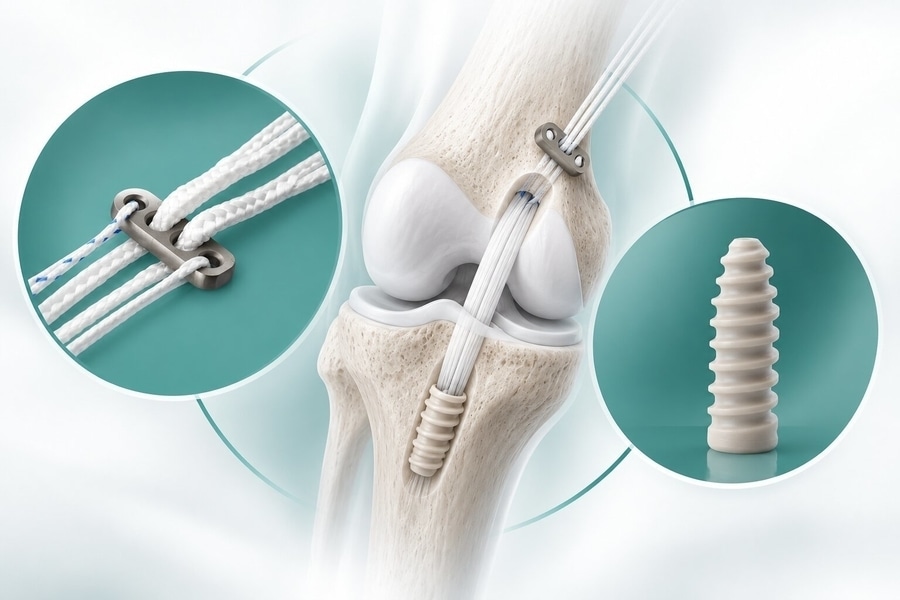
For example, a surgeon may use cortical button fixation on the femoral side and an interference screw on the tibial side.
This is a common example of hybrid fixation using two different mechanical principles.
What Is Cortical Button Fixation?
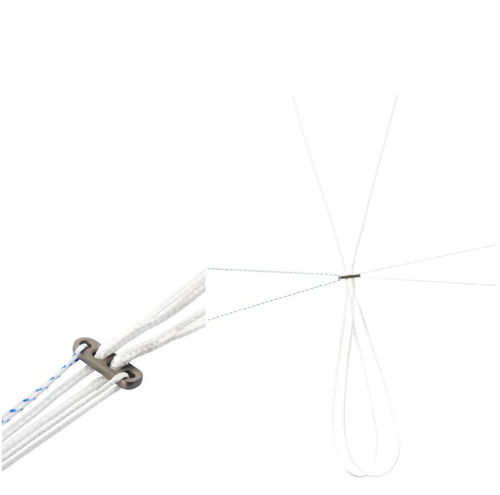
Cortical button fixation is a form of suspensory fixation.
In this technique, the graft is connected to a loop associated with a small button. The button passes through the prepared femoral tunnel and is positioned against the outer cortical surface of the femur.
Once properly positioned, the button provides a cortical support point while the graft remains suspended within the femoral tunnel or socket.
The basic principle can be summarized as:
Graft → Loop → Cortical Button → Femoral Cortex
Rather than compressing the graft directly against the tunnel wall, the system suspends the graft from the cortical fixation point.
How Does a Femoral Button Work?
During ACL reconstruction, a tunnel or socket is prepared in the femur.
The graft and fixation system are advanced through the tunnel.
The cortical button passes beyond the cortical bone and is then positioned so that it rests against the external cortex.
Once the button is correctly seated, it prevents the fixation system from returning through the tunnel.
This provides a secure suspensory fixation point for the graft.
Femoral cortical fixation systems may use different loop concepts, including:
Fixed-loop systems
Adjustable-loop systems
Different button geometries
The appropriate design depends on the surgical technique and graft preparation method.
What Is Fixed-Loop Fixation?
A fixed-loop cortical button has a predetermined loop length.
The surgeon selects the appropriate loop size according to factors such as:
Femoral tunnel length
Socket depth
Graft length
Desired graft position
Once the button has passed through the cortex and is seated correctly, the fixed loop determines the relationship between the button and the graft.
Fixed-loop systems provide a straightforward suspensory fixation concept with a predefined loop length.
What Is Interference Screw Fixation?
Interference screw fixation works differently from cortical button fixation.
Instead of suspending the graft from the outer cortex, an interference screw is inserted between the graft and the wall of the bone tunnel.
As the screw is advanced, it creates compression between:
Graft → Interference Screw → Bone Tunnel
This compression helps secure the graft within the tunnel.
Interference screws are commonly used for ACL and PCL reconstruction and may be used on the tibial or femoral side depending on the surgical technique.
Why Are Interference Screws Commonly Used on the Tibial Side?
The tibial tunnel provides an important site for graft fixation during ACL reconstruction.
After the graft has been positioned and appropriately tensioned, an interference screw can be inserted alongside the graft within the tibial tunnel.
The screw helps compress the graft against the tunnel wall.
Several factors may influence screw selection:
Tunnel diameter
Graft diameter
Graft type
Bone quality
Screw diameter
Screw length
Implant material
Surgeon preference
The objective is to achieve appropriate fixation without unnecessarily damaging the graft during insertion.
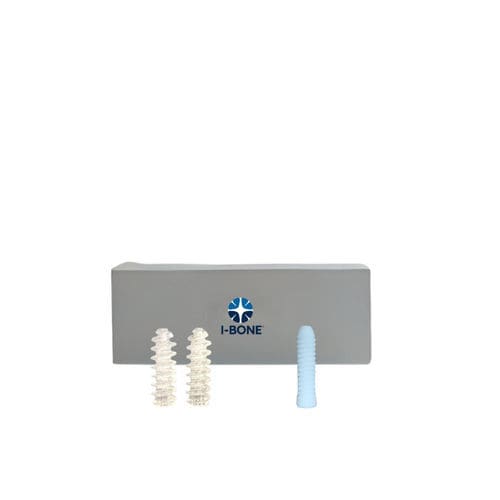
Titanium Interference Screws
Titanium interference screws are rigid metallic implants used for graft fixation in ligament reconstruction.
Potential characteristics include:
High mechanical rigidity
Established use in ACL/PCL reconstruction
Direct interference fixation
Availability in different diameters and lengths
The appropriate screw dimensions should be selected according to the prepared tunnel, graft dimensions, bone quality, and surgical technique.
PEEK Interference Screws
PEEK is a non-metallic polymer widely used in orthopedic implants.
PEEK interference screws provide another option for graft fixation within the bone tunnel.
Potential characteristics include:
Non-metallic implant construction
Rigid interference fixation
Different diameter and length options
Use in ligament reconstruction procedures
As with any interference screw, appropriate sizing is important for achieving the intended relationship between the graft, implant, and bone tunnel.
Bioabsorbable Interference Screws
Bioabsorbable interference screws provide an alternative to permanent metallic or PEEK implants.
These screws are manufactured from materials designed to undergo gradual degradation after implantation.
Orthosyn's ligament reconstruction portfolio includes bioabsorbable interference screw options for ACL/PCL fixation.
Material selection should be considered together with mechanical requirements, surgical technique, degradation characteristics, and the intended clinical application.
Cortical Button vs Interference Screw: What Is the Difference?
The primary difference is the mechanism used to secure the graft.
Feature Cortical Button Interference Screw
Fixation concept Suspensory fixation Interference fixation
Main support Cortical bone Bone tunnel
Graft fixation Suspended through loop Compressed against tunnel wall
Typical application Commonly femoral Commonly tibial or femoral
Implant location Cortical surface Inside bone tunnel
Key consideration Button seating and loop configuration Screw/tunnel/graft sizing
Neither fixation concept should automatically be considered superior.
The appropriate method depends on graft type, tunnel technique, bone quality, fixation strategy, and surgeon preference.
Why Is Graft Tension Important?
The graft must be appropriately tensioned before final fixation.
Insufficient tension may result in excessive graft laxity, while excessive tension can alter the mechanics of the reconstructed knee.
During reconstruction, the surgeon therefore controls graft position and tension before completing final fixation.
The fixation system then helps maintain the intended graft position during the initial healing period.
Graft tensioning should always be considered together with tunnel placement and fixation technique rather than as an isolated step.
Why Does Tunnel Placement Matter?
Even a strong fixation system cannot compensate for inappropriate tunnel positioning.
Femoral and tibial tunnel placement determines the anatomical path of the reconstructed ligament.
Tunnel preparation therefore affects:
Graft orientation
Graft length
Fixation position
Knee biomechanics
Relationship between the graft and surrounding structures
For this reason, tunnel placement, graft preparation, tensioning, and fixation must function as a complete reconstruction strategy.
How Is the Graft Fixed Step by Step?
Although techniques vary, the general fixation process can be summarized as follows:
The graft is prepared.
Femoral and tibial tunnels or sockets are created.
Passing sutures or guide systems are positioned.
The graft is advanced into the prepared tunnels.
Femoral fixation is established.
Graft position and tension are controlled.
Tibial fixation is completed.
Final graft tension and knee stability are assessed.
The exact sequence may vary according to graft type and fixation system.
Does Graft Type Affect Fixation?
Yes.
Different graft types can influence the selected fixation strategy.
For example, soft-tissue grafts and grafts containing bone blocks have different mechanical interfaces within the tunnel.
Important considerations include:
Graft diameter
Graft length
Number of graft strands
Presence or absence of a bone block
Tunnel dimensions
Fixation method
Desired graft position
The fixation system should therefore be selected as part of the overall graft preparation and reconstruction plan.
What Determines the Size of an Interference Screw?
Interference screw dimensions should be selected in relation to the prepared tunnel and graft.
Relevant parameters include:
Tunnel diameter
Graft diameter
Bone quality
Graft type
Screw material
Screw geometry
Fixation technique
Using an inappropriate screw size may affect fixation or increase the risk of graft damage.
For this reason, screw diameter should not be selected independently from the rest of the reconstruction.
Why Is Bone Quality Important?
Both cortical button fixation and interference fixation depend on the surrounding bone, although they interact with it differently.
A cortical button relies on appropriate cortical support.
An interference screw relies on the relationship between the screw, graft, and bone tunnel.
Bone quality can therefore influence fixation strategy, implant selection, and surgical technique.
This is particularly relevant when dealing with reduced bone density, previous tunnels, revision reconstruction, or compromised bone stock.
ACL vs PCL Graft Fixation
Many of the same fundamental fixation concepts can also be used in posterior cruciate ligament (PCL) reconstruction.
Both procedures involve:
Graft preparation
Bone tunnel creation
Graft passage
Femoral and tibial fixation
Tension management
However, ACL and PCL reconstruction differ anatomically and technically, so tunnel orientation, graft positioning, instrumentation, and fixation strategy must be adapted accordingly.
Orthosyn ACL/PCL Reconstruction Solutions
Orthosyn Medikal provides different solutions for ligament reconstruction, including:
Femoral cortical fixation systems
Fixed-loop button systems
Titanium interference screws
PEEK interference screws
Bioabsorbable interference screws
ACL/PCL guides and instrumentation
Passing pins and guidewires
These products support different approaches to graft passage, femoral fixation, tibial fixation, and ligament reconstruction.
Conclusion
During ACL reconstruction, the graft must be securely fixed to the femur and tibia while biological incorporation takes place.
Two major fixation principles are commonly used:
Cortical button fixation suspends the graft from the cortical bone through a loop-and-button system.
Interference screw fixation secures the graft by compressing it against the wall of the bone tunnel.
A reconstruction may therefore combine femoral cortical button fixation with tibial interference screw fixation, depending on the selected surgical technique.
The optimal fixation strategy depends on graft type, tunnel dimensions, bone quality, implant design, graft tension, and surgeon preference.
Orthosyn Medikal offers cortical fixation systems, titanium, PEEK and bioabsorbable interference screws, together with ACL/PCL reconstruction instruments, to support different ligament reconstruction techniques.