#Product Trends
Rethinking Blood Gas & Electrolyte Testing: How the Seamaty SG1 Simplifies Point-of-Care Diagnostics
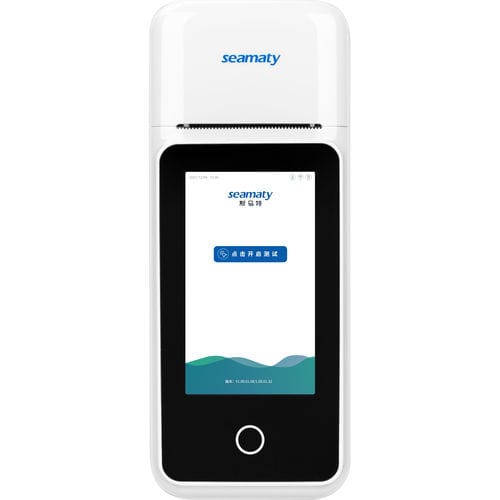
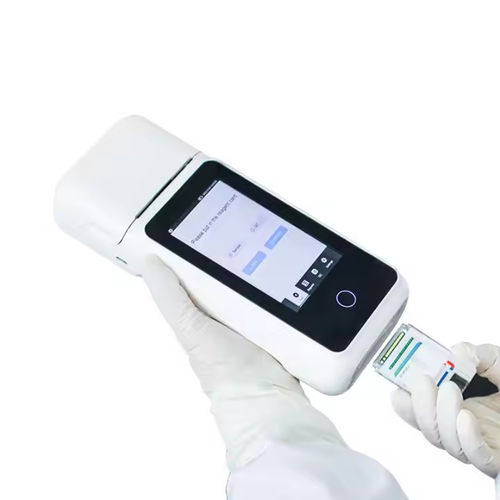
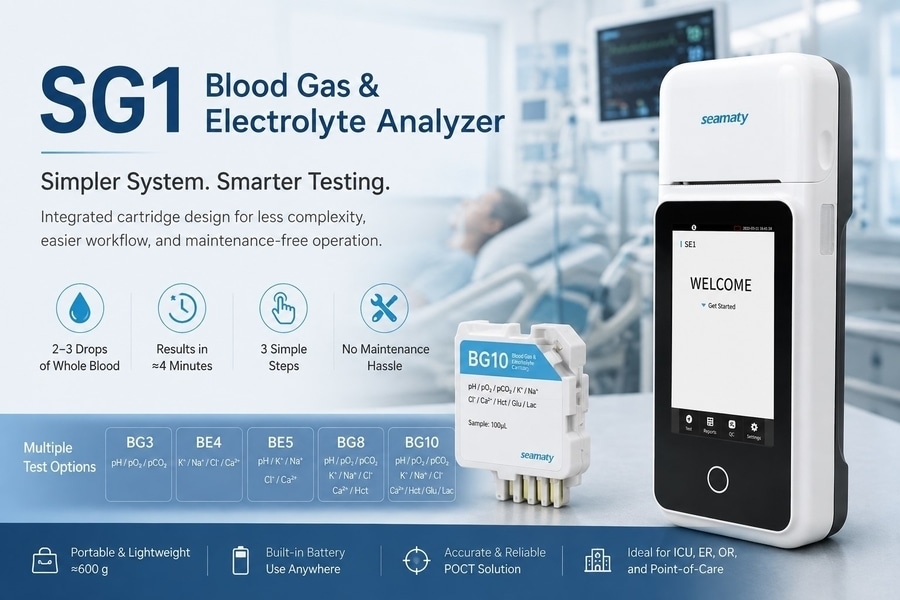
Seamaty SG1 Blood Gas & Electrolyte Analyzer
Blood gas and electrolyte testing plays an important role in emergency care, intensive care, surgery, and other clinical settings where rapid physiological information can support timely medical decisions. However, conventional electrolyte and blood gas testing systems can involve complex workflows, including fluidic tubing, multiple reagent containers, external waste management, calibration procedures, and routine maintenance.
For healthcare facilities looking to bring testing closer to the patient, these requirements can create unnecessary operational complexity.
The Seamaty SG1 Blood Gas & Electrolyte Analyzer takes a different approach. Instead of relying on a traditional system architecture built around multiple consumable components and fluid pathways, the SG1 is designed around a single-use integrated test cartridge, combining key testing components and biosensors into a compact testing platform.
The result is a simpler workflow, fewer system components, and a more convenient approach to point-of-care blood gas and electrolyte testing.
1、From Complex Fluidics to an Integrated Cartridge
Traditional blood gas and electrolyte analyzers may require a combination of reagent systems, tubing, calibration solutions, waste containers, and other supporting components. While these systems can provide comprehensive testing capabilities, their infrastructure also introduces additional steps for operators and laboratory staff.
The Seamaty SG1 is designed to reduce this complexity through its integrated cartridge architecture.
Each single-use cartridge incorporates the necessary biosensor configuration for its specific testing menu. Instead of managing multiple reagent bottles and external waste systems during routine testing, the operator works with a compact test cartridge designed specifically for the analyzer.
This architecture can help simplify the overall testing process while reducing the number of components that operators need to handle.
2、A Simpler Workflow for Point-of-Care Testing
The SG1 is designed around a straightforward three-step workflow:
2.1. Add the sample
Apply just 2–3 drops of whole blood to the test cartridge.
2.2. Insert the cartridge
Place the cartridge into the analyzer.
2.3. Read the result
The system provides test results in approximately 4 minutes.
The analyzer accepts arterial or venous whole blood, with a sample volume of approximately 100 μL.
For point-of-care environments, simplifying these steps can be particularly valuable. Emergency departments, ICUs, operating rooms, clinics, and other decentralized testing locations may need rapid results without adding complicated laboratory procedures to the clinical workflow.
3、Less Maintenance, Less Operational Complexity
One of the major considerations when selecting a blood gas or electrolyte analyzer is not simply analytical performance, but also what is required to keep the system running every day.
Traditional wet-reagent systems can involve routine management of reagents, tubing, calibration solutions, waste containers, and other fluidic components. These tasks can consume staff time and introduce additional maintenance requirements.
The SG1's dry, single-use cartridge approach is designed to minimize this operational burden.
The integrated cartridge brings the testing components and sensors together in one disposable unit. This means operators do not need to repeatedly manage a complex network of fluidic components during routine testing.
The analyzer also features real-time QC and calibration, helping simplify routine operation.
In practical terms, the system is designed to shift the workflow from:
● Manage → Calibrate → Connect → Test → Clean → Maintain
toward a more streamlined:
● Sample → Insert Cartridge → Test → Result
This is particularly relevant for healthcare environments where simplicity and turnaround time are important.
4、One Cartridge, Multiple Testing Options
Simplification does not mean sacrificing testing flexibility.
The SG1 supports multiple cartridge configurations, allowing healthcare facilities to select the testing menu according to their clinical requirements. Depending on the cartridge, the system can measure blood gas, electrolyte, metabolic, and hematocrit parameters.
Available configurations include:
● BG3: pH, pO₂, pCO₂
● BE4: K⁺, Na⁺, Cl⁻, Ca²⁺
● BE5: pH, K⁺, Na⁺, Cl⁻, Ca²⁺
● BG7: pH, pO₂, pCO₂, K⁺, Na⁺, Ca²⁺, Cl⁻
● BG8: pH, pO₂, pCO₂, K⁺, Na⁺, Cl⁻, Ca²⁺, Hct
● BG10: pH, pO₂, pCO₂, K⁺, Na⁺, Cl⁻, Ca²⁺, Hct, Glu, Lac
This cartridge-based approach allows different departments or facilities to choose the testing combination that best fits their needs, rather than maintaining a single fixed testing configuration.
5、Designed for Testing Where the Patient Is
Another important advantage of the SG1 architecture is its portability.
Weighing approximately 600 g and equipped with a built-in battery, the analyzer can be used directly at the patient's side, in an examination room, in emergency environments, or in field settings.
The compact design is particularly suitable for situations where moving samples to a centralized laboratory may delay clinical decision-making.
With results available in approximately four minutes, the SG1 can provide blood gas and electrolyte information closer to the point of care.
Potential application scenarios include:
● Emergency Departments – rapid assessment of respiratory, acid-base, and electrolyte status
● ICUs – monitoring critically ill patients
● Operating Rooms – blood gas and electrolyte monitoring during procedures
● Internal Medicine – assessment of acid-base and electrolyte disorders
● Prehospital and Field Care – decentralized testing when laboratory infrastructure is limited
6、Why System Architecture Matters
When comparing blood gas and electrolyte analyzers, it is easy to focus only on parameters, analytical performance, and turnaround time.
However, system architecture can have an equally important impact on the user experience.
A system that requires multiple reagent containers, tubing, calibration solutions, waste management, and regular maintenance may be appropriate for a centralized laboratory environment. But in decentralized or point-of-care settings, every additional component can create another operational step.
The Seamaty SG1 approaches the problem from a different perspective: simplify the system first, then simplify the workflow.
By integrating key testing components and sensors into a single-use cartridge, the SG1 is designed to reduce the complexity traditionally associated with blood gas and electrolyte testing.
The concept is straightforward:
● Fewer components.
● Fewer manual steps.
● Less maintenance.
● A simpler testing workflow.
7、Bringing Blood Gas & Electrolyte Testing Closer to the Patient
Modern healthcare is increasingly moving diagnostic testing toward the point of care. For hospitals, clinics, emergency services, and decentralized healthcare facilities, the ideal analyzer is not necessarily the system with the most complicated infrastructure. It is the system that can provide the required information efficiently while fitting naturally into the clinical workflow.
The Seamaty SG1 Blood Gas & Electrolyte Analyzer combines a compact handheld platform with an integrated single-use cartridge design, simple three-step operation, multi-parameter testing, and rapid results.
By rethinking how the analyzer, sensors, and consumables work together, the SG1 offers a practical approach to reducing operational complexity in point-of-care blood gas and electrolyte testing.
For healthcare providers seeking a portable blood gas analyzer, point-of-care electrolyte analyzer, or simplified blood gas and electrolyte testing solution, the Seamaty SG1 represents a different way to think about diagnostic workflow—less complexity, simpler operation, and testing designed around the needs of modern point-of-care environments.
8、Learn More About the Seamaty SG1
Explore the Seamaty SG1 Blood Gas & Electrolyte Analyzer to learn more about its cartridge-based testing architecture, available test menus, specifications, and point-of-care applications.