#Product Trends
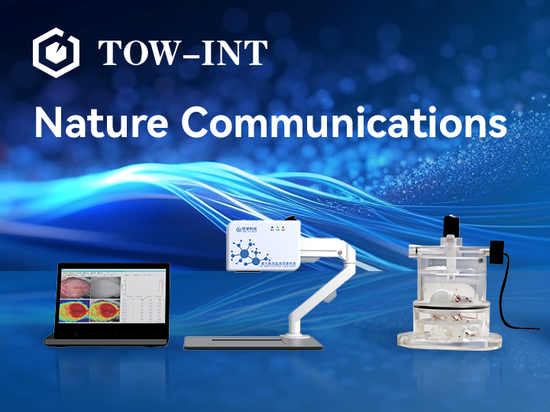
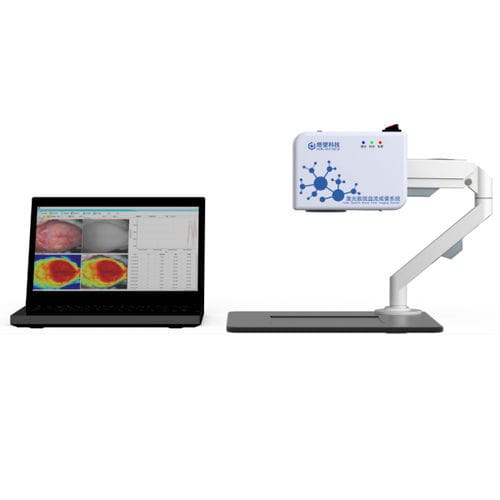
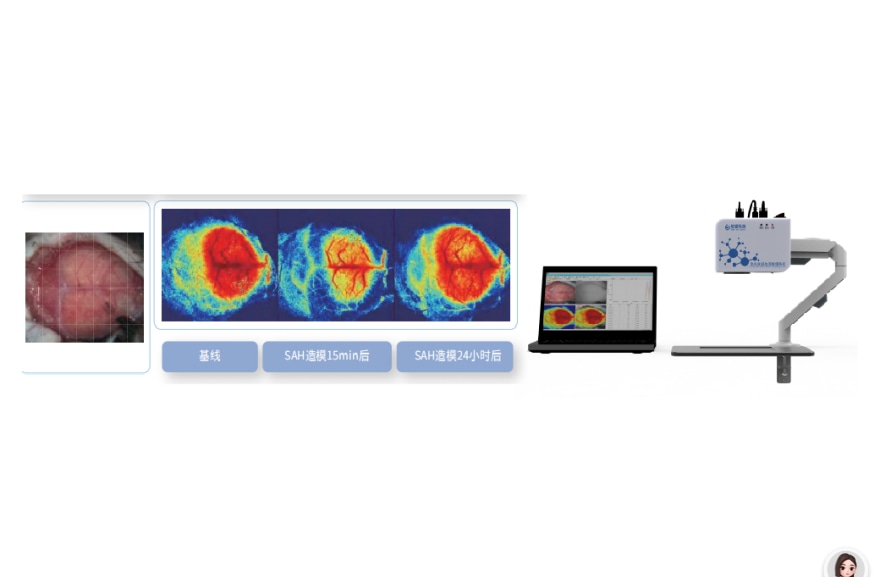
【New Product Release】Laser Speckle Blood Flow Imager (LSI-BFI)
Applications of LSCI in Medical Research.
Development History
The origins of Laser Speckle Contrast Imaging (LSCI) can be traced back to the invention of lasers in the 1960s, when scientists first observed random interference patterns (speckles) formed by laser light scattering on rough surfaces. In the 1970s, the fluctuating characteristics of speckles caused by dynamic scatterers, such as flowing blood, were revealed. During the 1980s–1990s, foundational theoretical work by researchers like Fercher and Briers established methods for analyzing blood flow using speckle contrast. However, the technology’s adoption was limited by imaging hardware constraints at the time. After 2000, the emergence of high-resolution cameras enabled real-time LSCI imaging. Post-2010, advancements in multimodal technology integration (e.g., combining LSCI with OCT) and the development of portable devices accelerated its clinical translation. The introduction of AI algorithms further improved the accuracy of quantitative analysis.
System Principles
Laser Speckle Imaging Principle: When a target is illuminated by a laser beam, the reflected light forms a random interference pattern (comprising bright and dark regions), known as a laser speckle pattern. If the target remains stationary, the speckle pattern remains unchanged. If the target moves—such as red blood cells flowing within tissue—the speckle pattern fluctuates accordingly. The rate of speckle pattern changes depends on the velocity of moving targets within the monitored area: faster movement results in more pronounced speckle variations. The rate of speckle fluctuation is quantified as speckle contrast, and this contrast is correlated with blood flow velocity. This principle underlies LSCI’s use in assessing blood perfusion.
System Advantages
LSCI’s core strengths lie in its non-invasiveness, real-time capability, and high spatial resolution. Clinically, it avoids risks associated with contrast agents and invasive procedures, enabling real-time monitoring of intraoperative cerebral blood flow, burn depth assessment, and evaluation of diabetic retinopathy. Its cost is significantly lower than devices like OCT. In research, LSCI serves as a critical tool for studying microcirculation mechanisms (e.g., cerebral blood flow regulation) and evaluating drug efficacy (e.g., anti-tumor angiogenesis therapies).
Applicable Field
1. Monitoring Spinal Cord Blood Flow
2. Monitoring Ischemic Lower Limb Blood Perfusion
3. Monitoring Cerebral Blood Flow
Applications include stroke, drug addiction, Alzheimer’s disease, and autism.
4. Monitoring Tumor Vascular Imaging
5. Monitoring Renal Microcirculatory Blood Perfusion
6. Monitoring Mesenteric Blood Perfusion
7. Monitoring Cutaneous Blood Perfusion
8. Monitoring Gastroscopic Blood Flow Imaging
9. Monitoring Ocular Blood Flow (e.g., Retinopathy Diagnosis)
10. Monitoring Gastroscopic Blood Flow Imaging
11. Blood Flow Studies in Animal Models (e.g., Stroke) and Vascular Response Testing in Drug Development
New Product Introduction
Recently, Tow-int Tech has launched a free trial offer for this product. Interested parties can contact us.
Contact us now!
We are committed to making your research easier, more accurate, and more efficient and helping you build confidence in your data! We have provided services for a large number of customers, giving us rich experiences in offering customized, professional solutions according to your needs.
References
[1]Ishikawa M, Sekizuka E, Oshio C, et al. Platelet adhesion and arteriolar dilation in the photothrombosis: observation with the rat closed cranial and spinal windows[J]. Journal of the neurological sciences, 2002, 194(1): 59-69.
[2]苏昊,郑启新,骆清铭.激光散斑成像技术监测脊髓血流动力学的实验研究[J].华中科技大学学报(医学版),2009,38(01):106-109.
[3]Mehrotra S, Liu Y Z, Nwaiwu C A, et al. Real-time quantification of bowel perfusion using Laparoscopic Laser Speckle Contrast Imaging (LSCI) in a porcine model[J]. BMC surgery, 2023, 23(1): 261.
[4]张欢,王康,李韪韬,等.基于光纤胃镜的血流成像系统设计[J].医疗卫生装备,2020,41(10):13-17.
[5]王淼,洪嘉驰,周非凡,等.激光散斑成像技术在脑科学研究中的应用[J].生物化学与生物物理进展,2021,48(08):922-937.
[6]Mennes O A, Van Netten J J, Van Baal J G, et al. Assessment of microcirculation in the diabetic foot with laser speckle contrast imaging[J]. Physiological measurement, 2019, 40(6): 065002.
[7]李世征,贾轶东,袁媛.黑参煎剂对小鼠下肢缺血模型血管新生影响的机制研究[J].陕西中医,2021,42(09):1179-1182.
[8]Sugiyama T, Araie M, Riva C E, et al. Use of laser speckle flowgraphy in ocular blood flow research[J]. Acta ophthalmologica, 2010, 88(7): 723-729.