#Industry News
【J. Adv. Res. 】 TOW-INT Animal Energy Metabolism Monitoring System Helps Reveal the Mechanism of Alginate Oligosaccharides
CAU research reveals AOS prevent obesity by boosting brown fat energy expenditure, not GM. Tow-Int metabolic systems validated the findings.
Abstract
September 1, 2025 – Professor Jiang Zhengqiang (National Science Fund for Distinguished Young Scholars, corresponding author) and Professor Yang Shaoqing (National Science Fund for Excellent Young Scholars, corresponding author) from the College of Food Science and Nutritional Engineering at China Agricultural University published a research paper titled “Alginate oligosaccharides prevent and treat obesity by promoting brown fat thermogenesis rather than regulating gut microbiota” in the internationally authoritative journal Journal of Advanced Research (Top, Q1, IF2024=13).
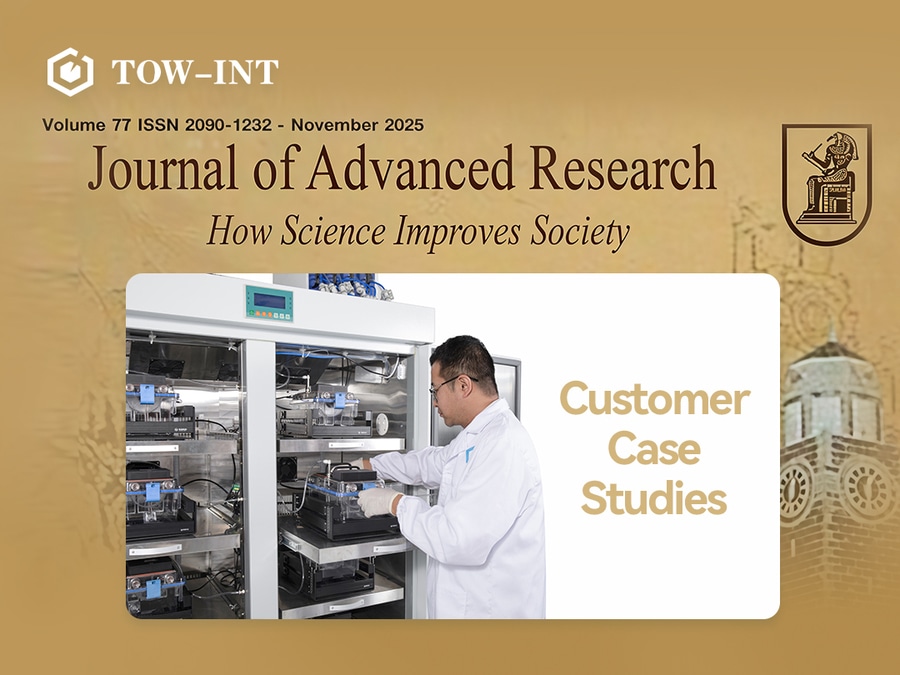
This study systematically revealed a new mechanism by which Alginate Oligosaccharides (AOSs) effectively prevent and treat obesity – by promoting brown adipose tissue thermogenesis and enhancing energy metabolism, rather than relying on the regulation of gut microbiota. In this research, TOW-INT's Animal Energy Metabolism Monitoring System provided crucial data support for the accurate measurement of energy metabolism parameters, serving as one of the core experimental instruments.
Research Background
Obesity has become a global public health problem, closely associated with metabolic diseases such as type 2 diabetes, non-alcoholic fatty liver disease, and cardiovascular diseases. While commonly used anti-obesity drugs like Orlistat and Liraglutide have some efficacy, they face issues such as significant side effects and weight regain after discontinuation. Therefore, finding safe and effective natural active ingredients has become a research hotspot.
As a naturally sourced functional oligosaccharide, alginate oligosaccharides have been reported to possess various physiological activities such as antioxidant, anti-inflammatory, and immunomodulatory effects. However, their specific mechanism in preventing and treating obesity remained unclear. This study is the first to systematically elucidate, through multi-model and multi-omics approaches, a new pathway by which AOSs combat obesity by activating brown fat and enhancing energy metabolism, independent of the gut microbiota.
Research Design and Key Findings
1. AOSs Significantly Prevent and Treat Obesity, with Efficacy Comparable to Orlistat
Using a 12-week obesity prevention model and an 8-week treatment model, the study found that 1000 mg/kg of AOSs significantly inhibited high-fat diet-induced weight gain, fat accumulation, and hepatic steatosis, with effects comparable to the positive control drug Orlistat. Notably, AOSs did not reduce food intake but even increased energy intake to some extent, suggesting that their mechanism of action might be related to enhancing energy expenditure.
2. Antibiotic Intervention Did Not Diminish the Effects of AOSs, Suggesting a Gut Microbiota-Independent Mechanism
To further verify whether AOSs act through modulating the gut microbiota, the research team used broad-spectrum antibiotics to deplete the gut microbiota. The results showed that even when the gut microbiota was ablated, AOSs still effectively improved obesity and related metabolic indicators, indicating that their mechanism of action is independent of the gut microbiota.
3. AOSs Enhance Energy Metabolism and Activate Brown Fat Thermogenesis
After monitoring the experimental mice using TOW-INT's Animal Energy Metabolism Monitoring System, researchers found that the AOSs-treated group showed significantly increased oxygen consumption (VO₂), carbon dioxide production (VCO₂), and energy expenditure (EE), along with a decreased respiratory exchange ratio (RER), indicating that the body utilized more fat as an energy source. Further studies revealed that AOSs significantly increased the expression of key thermogenic genes and proteins such as UCP1, PGC1α, and PRDM16 in brown adipose tissue, promoting mitochondrial biogenesis and function, thereby enhancing thermogenic capacity.
4. AOSs Ameliorate Systemic Inflammation and Oxidative Stress
To clarify the function of LEC-derived CTSS, the study constructed a Prox1-creER²; Ctssflox/flox conditional knockout mouse model. After tamoxifen induction, LEC-specific Ctss knockout significantly delayed the degradation rate of extravasated erythrocytes in CLNs and effectively ameliorated SAH-induced neurological deficits and neuroinflammation. Similarly, systemic administration of the small-molecule CTSS inhibitor LY3000328 also produced consistent neuroprotective effects.
5. Intraperitoneal Injection of AOSs Was Also Effective, Suggesting Systemic Action
The study also found that even intraperitoneal injection of a low dose of AOSs (200 mg/kg) significantly ameliorated metabolic disorders in obese mice, further confirming that AOSs might act directly on metabolic tissues via the circulatory system, rather than solely through local intestinal effects.
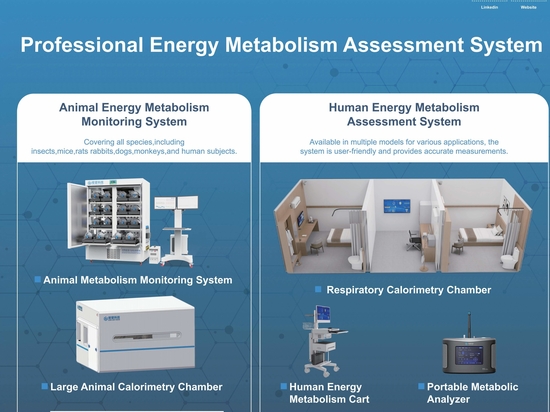
TOW-INT Animal Energy Metabolism Monitoring System: The "Gold Standard" for Energy Metabolism Research
In this study, TOW-INT's Animal Energy Metabolism Monitoring System undertook the critical task of measuring energy metabolism parameters, providing direct, reliable, and high-precision data support for the finding that AOSs enhance energy expenditure and promote fat oxidation. Using this system, researchers continuously monitored parameters such as VO₂, VCO₂, RER, and EE in mice, clarifying the mechanism by which AOSs combat obesity through enhancing brown fat thermogenesis and whole-body energy metabolism.
System Advantages Include:
High-Precision Gas Analysis: Real-time monitoring of O₂ and CO₂ concentrations for accurate calculation of energy expenditure and substrate utilization.
Long-Term Unattended Operation: Supports simultaneous monitoring of multiple cages, adapting to the needs of long-term metabolic experiments.
Comprehensive Data Visualization: With professional software, enables real-time display of metabolic curves and multi-dimensional analysis.
Compatibility with Various Animal Models: Suitable for mice, rats, aquatic organisms, insects, rabbits, dogs, pigs, cattle, sheep, horses, monkeys, and even humans, widely used in research related to obesity, diabetes, energy metabolism, and more.
Research Implications and Equipment Application Prospects
This study not only provides a solid scientific basis for the development of alginate oligosaccharides as natural anti-obesity ingredients but also offers new perspectives for energy metabolism research. TOW-INT's Animal Energy Metabolism Monitoring System, as a core tool in energy metabolism research, has played a key role in multiple cutting-edge metabolic studies, helping researchers uncover the deep mechanisms of energy balance.
In the future, with the in-depth development of precision nutrition and metabolic health research, the Energy Metabolism Monitoring System will play an even greater value in the following fields:
Functional Food Evaluation: Assessing the energy metabolism effects of components like oligosaccharides, dietary fiber, and polyphenols.
Drug Development: Evaluating the impact of weight-loss drugs, hypoglycemic drugs, etc., on energy expenditure.
Environmental and Behavioral Metabolic Research: Investigating the regulation of energy metabolism by factors like temperature, exercise, and light.
Metabolic Phenotyping of Genetically Edited Models: Analyzing energy metabolism characteristics in models such as UCP1 or PGC1α knockout.
TOW-INT Animal Energy Metabolism Monitoring System – Providing Visible Data Power for Energy Metabolism Research.
【Reference】
[1] Xu Y, Jiang J, Li T, et al. Alginate oligosaccharides prevent and treat obesity by promoting brown fat thermogenesis rather than regulating gut microbiota[J]. Journal of Advanced Research, 2025.