#Industry News
Application of the Non-invasive Pulmonary Function Testing System (NAM) in COPD
Application of Non-Invasive Airway Mechanics (NAM) in COPD
Introduction to COPD
Chronic Obstructive Pulmonary Disease (COPD) is a common chronic disease characterized by persistent airflow limitation, typically associated with an abnormal inflammatory response of the airways and lung tissue to harmful particles or gases. Its main etiological factors include smoking, air pollution, occupational dust exposure, among others. COPD is one of the top three leading causes of disability and mortality worldwide.
Clinically, the pulmonary function testing (PFT) system, measuring the Forced Expiratory Volume in one second (FEV1), is often used as the gold standard for diagnosing COPD and determining its severity. However, COPD exhibits high heterogeneity in clinical manifestations and pathological mechanisms. FEV1 only reflects part of the pathology and is not comprehensive. Therefore, incorporating additional pulmonary function parameters is crucial for accurately identifying the condition of COPD patients [1].
Application of Specific Airway Resistance (sRaw) in COPD Diagnosis
The Non-invasive Airway Mechanics (NAM) system for assessing Specific Airway Resistance (sRaw) offers unique advantages in COPD diagnosis: it is non-invasive, non-interventional, and does not require patient cooperation to perform specific maneuvers. Clinically, it holds irreplaceable value, especially for patients who cannot actively cooperate with pulmonary function testing, such as infants, young children, or critically ill patients.
Researchers have compared the relative roles of FEV1 and sRaw in COPD diagnosis. Results indicate that sRaw and FEV1 are equally effective in detecting abnormalities in COPD patients [2].
Application of the Non-invasive Pulmonary Function Testing System (NAM) in COPD Modeling
NAM holds greater value in animal experiments. Invasive pulmonary function testing (PFT) systems require animals to be anesthetized and undergo surgical intubation. Post-testing, the animals are euthanized, preventing continuous monitoring. In contrast, NAM employs a non-invasive, non-interventional method, using the sRaw parameter to assess airway resistance. It is suitable for evaluating COPD modeling and facilitates long-term tracking of modeling efficacy [3].
Application of the (NAM) in COPD Drug Efficacy Evaluation
Researchers treated COPD rats with different doses of Bufei Jianpi Granules (BJG) and assessed various pulmonary function parameters using the NAM double-chamber plethysmography system. Results showed that the sRaw in BJG treatment groups was significantly reduced compared to the COPD model group, indicating a significant therapeutic effect of BJG in lowering airway resistance in COPD rats. The therapeutic effect of the high-dose BJG group (BJGH) was comparable to that of aminophylline (AMINOPH) [4].
Non-invasive Pulmonary Function Testing System (NAM)
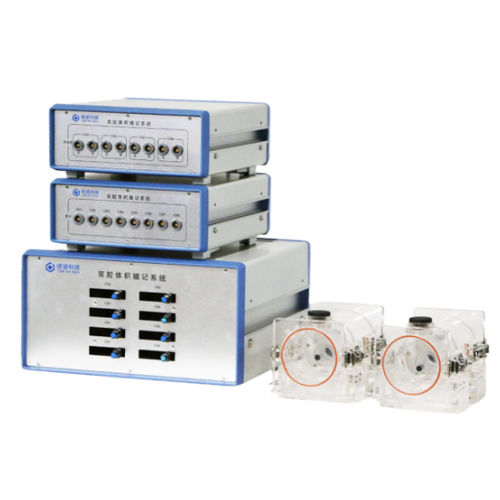
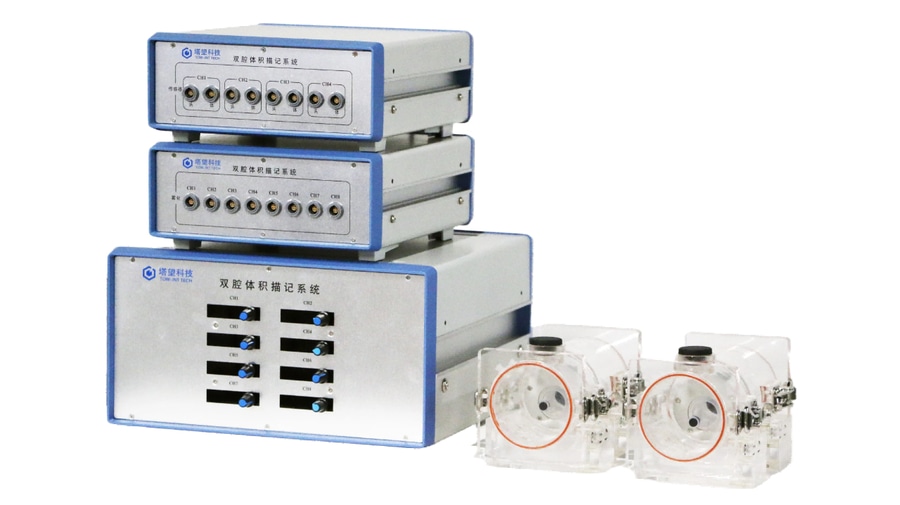
The Non-Invasive Airway Mechanics (NAM) system, also known as the double-chamber plethysmography (DCP) system, uses two separate chambers to isolate the animal's head and body within a head chamber and a body chamber. This allows separate measurement of nasal airflow and thoracic flow. By analyzing the delay between nasal airflow relative to thoracic flow, parameters such as Specific Airway Resistance (sRaw) and Specific Airway Conductance (sGaw) can be obtained, enabling a more accurate assessment of animal airway resistance.
The system features an adjustable bias flow system providing fresh air to prevent CO₂ accumulation. It is suitable for long-term monitoring of conscious, restrained animals. It enables rapid monitoring of large batches of animals without the need for surgery or anesthesia. (For more details, click to view our previous feature: [Product Introduction] Invasive Pulmonary Function Testing: WBP vs. NAM)
References
[1]S. Kakavas et al.Pulmonary function testing in COPD: looking beyond the curtain of FEV1.Primary Care Respiratory Medicine(2021) 31:23
[2]K. Simon et al. Should We Measure the FEV1 or the Specific Resistance of the Airways An Evaluation in Patients with Either COPD, Chronic Dyspnea or Chronic Cough.Open Journal of Respiratory Diseases(2012) 2, 31-36
[3]M. Shukla et al.Carryover of cigarette smoke effects on hematopoietic cytokines to F1 mouse litters. Molecular Immunology(2011) 48, 15–16
[4]Yang X-X, et al.(2022),Pharmacological effects of Bufei Jianpi granule on chronic obstructive pulmonary disease and its metabolism in rats.Front. Pharmacol. 13:1090345.