#Industry News
【Technical Review】Application and Case Analysis of Whole Body Plethysmography (WBP) in Respiratory Research
Unveiling Respiratory Mechanisms: How Whole Body Plethysmography (WBP) Powers Research with Case Studies
Introduction:
Whole Body Plethysmography (WBP), as a non-invasive and efficient respiratory function assessment technology, has been widely used in basic and preclinical research on respiratory system diseases. This article presents four representative cases to systematically demonstrate the critical role of WBP in exploring asthma mechanisms, allergic immunotherapy, antiviral drug development, and acute lung injury intervention studies. These studies not only highlight the technical advantages of WBP in quantifying airway hyperresponsiveness and dynamically monitoring lung function but also provide important evidence for the development of targeted therapeutic strategies. In the future, we will continue to share more application cases of WBP in various disease models to support innovation and development in the field of respiratory research.
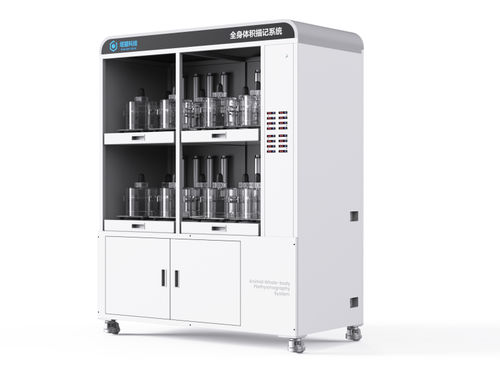
Our independently developed Unrestrained Whole Body Plethysmography (WBP) system by Tow-Int Tech enables pulmonary function and airway reactivity testing in conscious, freely moving small animals. It eliminates the need for invasive tracheotomy and anesthesia, making the experimental process simple, efficient, and suitable for long-term tracking studies.
During experiments, the animal is placed in a sealed plethysmography chamber connected to a sensor leading outside the chamber. As the animal breathes, the movement of its thoracic cavity causes changes in the internal volume of the chamber. These volume changes are converted into electrical signals via a pressure transducer and amplifier. After computer processing, the respiratory curve is displayed on the screen, and parameters such as tidal volume (TV), peak expiratory flow (PEF), and respiratory rate can be calculated using specialized software.
The system can be expanded to connect with a nebulizer for drug administration within the chamber, enabling the establishment of respiratory disease models such as cough and asthma. The WBP system can detect and record changes in standard respiratory parameters and airway hyperresponsiveness during provocation, thereby evaluating the degree of bronchoconstriction.
Case 1: Asthma Research
In 2024, Kaimeng Liu et al. published an article titled "Trim27 aggravates airway inflammation and oxidative stress in asthmatic mice via potentiating the NLRP3 inflammasome" in the International Immunopharmacology journal. The study aimed to validate the effect of Trim27 on asthma symptoms and reveal its role in promoting NLRP3 inflammasome activation. After the final ovalbumin (OVA) challenge, airway hyperresponsiveness (AHR) in mice was assessed by administering increasing doses of inhaled methacholine. The results showed that, compared to asthmatic mice treated with mock lentiviral particles, those treated with Trim27 short hairpin RNA (shRNA) exhibited lower lung function index Penh values, as detailed in Figure 2B. The experimental process utilized Tow-Int Tech's Whole Body Plethysmography (WBP) system for comprehensive respiratory parameter detection in the experimental groups, including Penh values.
Case 2: Allergy Research
In April 2025, K. Tabynov et al. published a research paper titled "*Comparison of rArt v 1-based sublingual and subcutaneous immunotherapy in a murine model of asthma*" in the npj Vaccines journal. The researchers used Tow-Int Tech's Whole Body Plethysmography (WBP) system to conduct comprehensive respiratory parameter detection on the experimental groups. The results indicated that airway resistance (Penh values) was significantly reduced in all sublingual immunotherapy (SLIT) and subcutaneous immunotherapy (SCIT) groups, approaching the levels observed in the negative control group.
Case 3: Drug Mechanism Research
Researchers from Ocean University of China, including Yan Zhang et al., published an article titled "Nobiletin, as a Novel PDE4B Inhibitor, Alleviates Asthma Symptoms by Activating the cAMP-PKA-CREB Signaling Pathway" in Molecular Science. The study employed the Whole Body Plethysmography (WBP) system for treatment tracking in mice. The results demonstrated that Nobiletin (a polymethoxyflavone isolated from citrus fruits, known for its important roles in anti-inflammatory, anti-tumor invasion, proliferation, and anti-metastasis effects in in vitro and animal studies) significantly reduced inflammatory cell and cytokine levels in mice and alleviated airway hyperresponsiveness. Furthermore, through extensive experiments, the researchers revealed the mechanism of Nobiletin in treating asthma: it exerts anti-asthmatic activity by targeting PDE4B and activating the cAMP-PKA-CREB signaling pathway.
Case 4: Acute Lung Injury (ALI) and Acute Respiratory Distress Syndrome (ARDS)
In 2024, researchers from Nanjing University, including Chen-Xiao Yan, Kena Sun, and Xia Zhu, investigated the mechanism by which Oligomeric Proanthocyanidins (OPCs) alleviate Acute Lung Injury (ALI) via the gut-lung axis by inhibiting neutrophil extracellular trap (NET) formation and inflammatory responses. The article was published in the Journal of Functional Foods. During the experiments, the researchers used Tow-Int Tech's Whole Body Plethysmography (WBP) system to detect lung function-related indicators in different model groups of mice. By administering different concentrations of OPC to septic mice, they found that 60 mg/kg of OPC significantly improved survival rates. Compared to the LPS group, the OPC pretreatment group showed reduced pulmonary hemorrhage and swelling, along with improved lung function, manifested as shortened relaxation time and increased mid-expiratory flow, indicating that OPC can mitigate lung injury.
In summary, Tow-Int Tech's Whole Body Plethysmography (WBP) system demonstrates powerful functionality and applicability in various respiratory disease studies. It not only provides precise quantitative indicators for airway hyperresponsiveness and lung function changes but also offers reliable evidence for drug efficacy evaluation and optimization of treatment strategies. Stay tuned for future series content, where we will further share research cases and application progress of WBP in more areas, such as Chronic Obstructive Pulmonary Disease (COPD) and pulmonary fibrosis.