#Industry News
What is the use of ERCP in training operations?
Endoscopic Retrograde Cholangiopancreatography (ERCP) is a minimally invasive procedure that combines endoscopy and fluoroscopy to diagnose and treat conditions affecting the bile ducts, pancreas, and certain parts of the gastrointestinal tract.
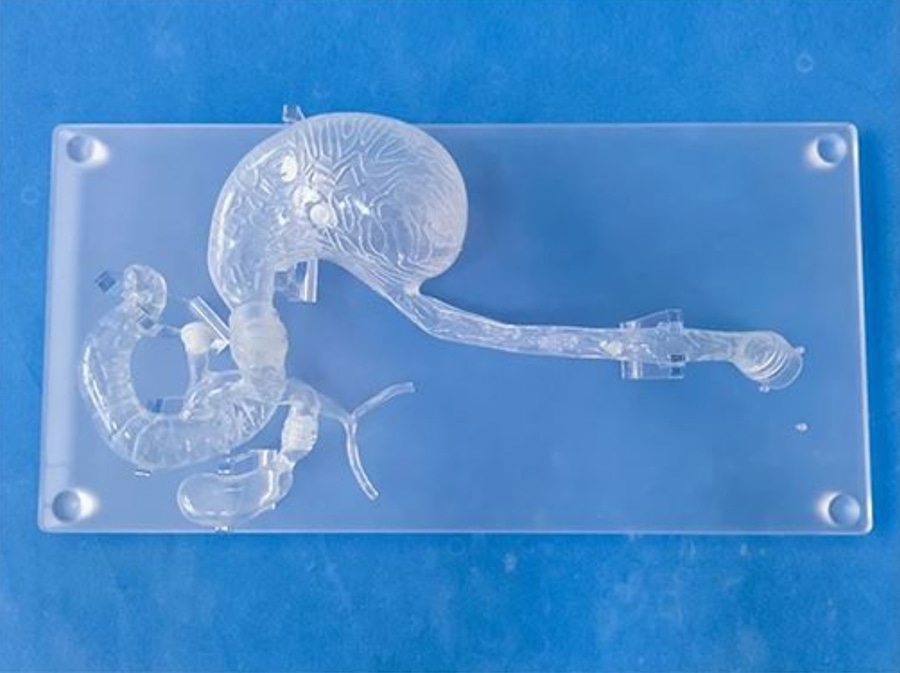
In recent years, the use of simulated operations in the stomach during ERCP has gained popularity and offers several benefits.
One of the primary benefits of simulating operations in the stomach during ERCP is enhanced training and education for medical professionals. Simulated operations provide an opportunity for doctors, gastroenterologists, and endoscopists to practice and refine their skills in a controlled environment. They can learn and master various techniques, such as cannulation of the bile ducts or pancreatic duct, sphincterotomy, and stent placement, without the risks associated with performing these procedures directly on patients. This helps to improve the quality of care and patient outcomes by ensuring that medical professionals are well-trained and experienced in performing ERCP.
Simulated operations also offer the advantage of allowing medical professionals to familiarize themselves with specific anatomical variations and complexities that they may encounter during live procedures. The stomach model used in the simulation can replicate different anatomical variations, such as altered positions, tortuosity of the bile ducts, or strictures. By practicing on simulated models, medical professionals can develop strategies and techniques to overcome these challenges, leading to more successful and precise interventions during actual ERCP procedures.
Furthermore, simulated operations provide a platform for research and innovation in the field of ERCP. It allows researchers and medical device manufacturers to test and evaluate new tools, techniques, and technologies before incorporating them into clinical practice. Researchers can explore new methods, refine existing procedures, and identify potential complications in a controlled environment. This iterative process helps to improve the safety, efficiency, and effectiveness of ERCP procedures. Another significant benefit of simulated operations in the stomach during ERCP is patient safety. By allowing medical professionals to enhance their skills and develop expertise in a simulated setting, the risk of complications and adverse events during live procedures can be reduced. Simulated operations provide an avenue for continuous learning and improvement, minimizing the potential for errors and increasing patient safety.
In conclusion, the use of simulated operations in the stomach during ERCP offers multiple benefits. It enhances the training and education of medical professionals, allows for practice in a controlled environment, familiarizes them with anatomical variations, facilitates research and innovation, and ultimately improves patient safety. Simulated operations contribute to the advancement of ERCP procedures, ensuring better outcomes for patients who require diagnosis or treatment of bile duct or pancreatic conditions