#Product Trends
What are the common causes of bronchial obstruction?
What are the common causes of bronchial obstruction?
First, smoking is the most important factor. According to relevant research data, smokers are 2-8 times more likely to develop chronic bronchitis than non-smokers. This is because nicotine, tar, and hydrogen cyanide in cigarette smoke are substances that strongly damage bronchial wall cells. They can damage the ciliated cells of the bronchial wall, reducing the lung's self-cleaning ability, and stimulate columnar cells to secrete large amounts of mucus, thus blocking the bronchial passages. The free radicals in cigarette smoke can also enter cells and damage lysosomes, leading to enzymatic breakdown of the cells. Second, occupational and environmental factors play a role. Air quality is generally a concern nowadays. When the diameter of smog particles is less than 2.5 micrometers, they can freely enter the terminal bronchioles of the respiratory tract and are extremely difficult to remove. These particles are foreign substances in the body and can cause chronic inflammation, leading to lung tissue obstruction. Third, infection is a significant contributing factor. Lung infections are increasingly common nowadays; viral infections, mycoplasma infections, and some bacterial infections can all cause airway damage. While this may be less common in young people, it requires serious attention in middle-aged and elderly individuals with weakened immune systems.
Generally, we classify pulmonary function based on the degree of bronchial obstruction. The severity of obstruction is categorized into four levels: mild, moderate, severe, and very severe, based on the percentage of expiratory volume per second relative to the predicted value. The thresholds are 80%, 50%, and 30%, respectively. For mild to moderate cases, bronchodilators can be used to alleviate breathing difficulties caused by airway obstruction. For severe and more severe cases, hormone therapy is necessary to combat chronic inflammation.
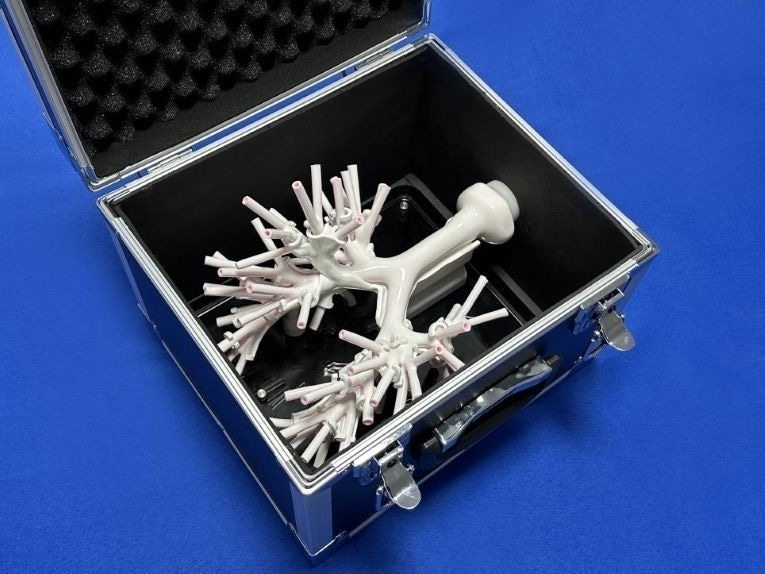
The data in the bronchial intervention simulator is derived from real human respiratory tract CT scans. The bronchi consist of all five lobes and eighteen segments. The terminal bronchus extends to the fifth-order branch, with some branches extending to the sixth and seventh orders. The anatomical structure, color, texture, and endoscopic field of view closely approximate reality. This simulator can be widely used for bronchoscopy operation training, simulating the anatomy training of the trachea and bronchi under bronchoscopy, etc.