#Product Trends
What is Coronary Interventional Treatment?
What is Coronary Interventional Treatment?
Interventional treatment for coronary artery disease refers to percutaneous coronary intervention (PCI). This involves puncturing the femoral or radial artery and, under X-ray guidance, using catheters and other instruments to treat the narrowed or blocked areas of the coronary arteries, restoring blood flow and opening the vessel lumen. Among these procedures, percutaneous transluminal coronary angioplasty (PTCA) and coronary artery stenting are the most common. Other methods include rotational atherectomy, coronary thrombectomy, endovascular angioplasty, and laser angioplasty.
—Percutaneous Transluminal Coronary Angioplasty (PTCA) PTCA broadly encompasses all interventional treatments for coronary artery disease. In a narrower sense, it usually refers to traditional coronary balloon angioplasty, where a balloon catheter is inserted into the narrowed coronary artery. External pressure is applied to inflate the balloon, compressing the plaque causing the narrowing and widening the lumen to restore blood flow.
Compared to open-chest surgery, PTCA is less invasive and has a faster recovery time; however, PTCA alone may lead to a higher incidence of acute coronary artery occlusion and restenosis. Therefore, it is often performed after PTCA, where a stent is placed at the dilated site of the narrowed vessel, known as coronary artery stenting.
—Coronary Artery Stenting
is performed via femoral or radial artery puncture, under X-ray fluoroscopy, using a special catheter and guidewire to deliver a stent to the narrowed or occluded lesion of the coronary artery. The stent expands the narrowed vessel wall using the principle of stent dilation, promoting the restoration of blood flow.
Currently, approximately 50% to 90% of lesions undergoing percutaneous endovascular coronary angioplasty (PTCA) require stent placement. The three most common types of stents are:
1) Bare-metal stents: After implanting a metal stent at the site of the coronary artery lesion, the risk of thrombosis is controlled by oral antiplatelet drugs.
2) Drug-eluting stents: Drug-eluting coatings are attached to bare metal stents, effectively "hiding" the medication within the stent. After implantation, the medication is slowly released within the blood vessel, inhibiting intimal hyperplasia.
3) Biodegradable stents: Stents made from biodegradable materials completely degrade after 2-3 years of service within the blood vessel.
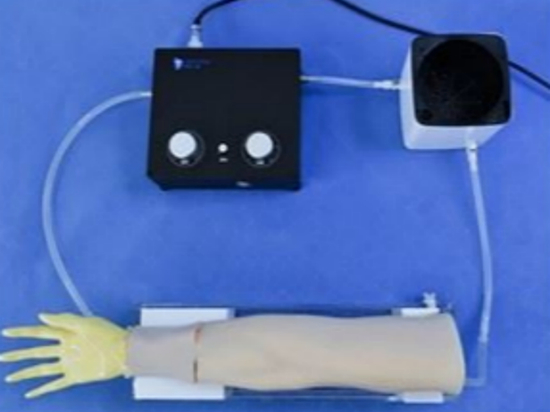
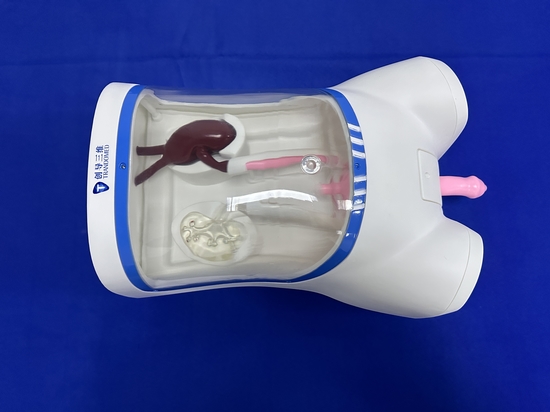
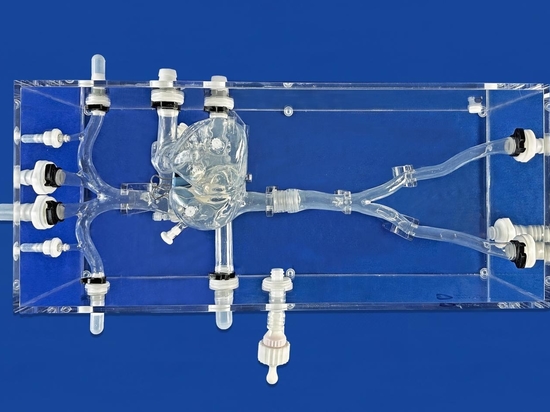
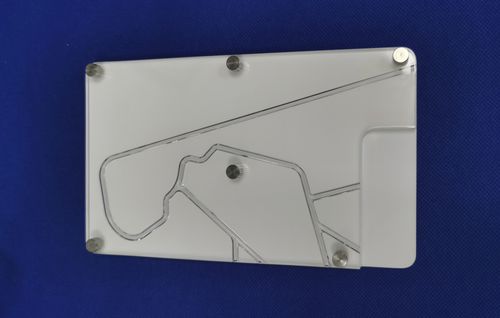
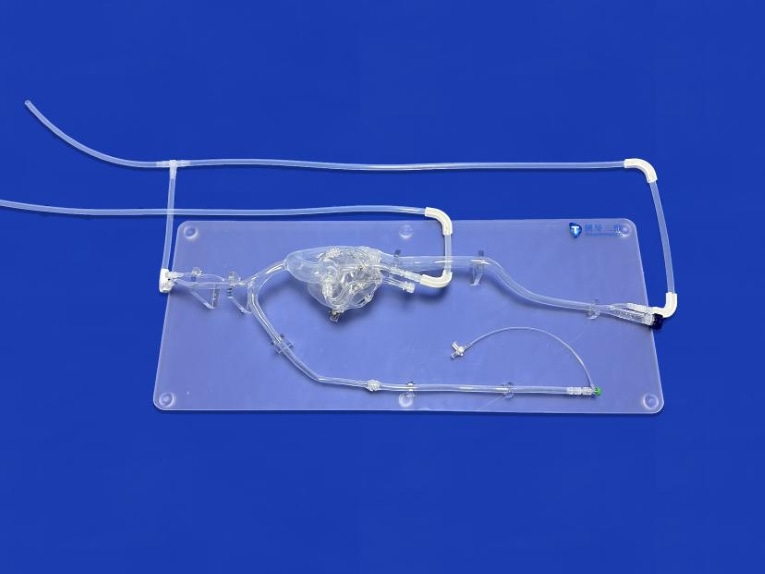
Trando 3D independently developed and designed coronary intervention models, manufactured using 3D printing technology, place the spatial structure of the coronary arteries onto a matching heart model. This model includes the subclavian artery, aorta, kidneys, iliac arteries, and femoral artery. The model can be used for device access and retrieval training, such as coronary stents. It can also be used to simulate various lesions for physician training.